- Donnerstag, 9. April 2026
- Freitag, 10. April 2026
- Samstag, 11. April 2026
- Montag, 13. April 2026
- Dienstag, 14. April 2026
- Mittwoch, 15. April 2026
- Donnerstag, 16. April 2026
- Freitag, 17. April 2026
- Samstag, 18. April 2026
- Sonntag, 19. April 2026
- Montag, 20. April 2026
- Dienstag, 21. April 2026
- Mittwoch, 22. April 2026
- Donnerstag, 23. April 2026
- Freitag, 24. April 2026
- Samstag, 25. April 2026
- Sonntag, 26. April 2026
- Montag, 27. April 2026
- Dienstag, 28. April 2026
- Mittwoch, 29. April 2026
- Donnerstag, 30. April 2026
Orderly feelings in law – an international comparison of legal decision-making
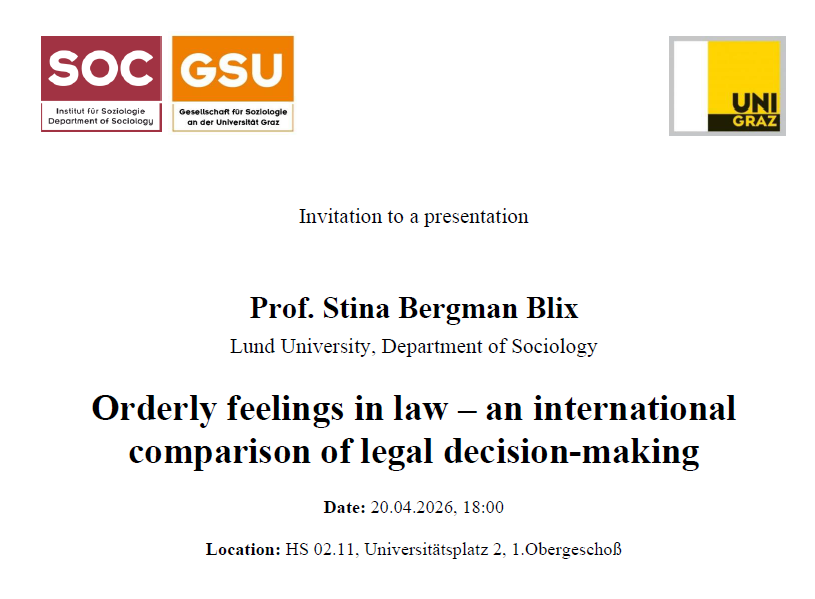
There is a longstanding belief that emotions bring disorder into legal decision-making. Judges and prosecutors should not take decisions in anger or out of pity. But are there also emotions that are essential to legal decision making? Emotions needed to motivate lines of inquiry, assess in-formation, and choose between alternatives. This presentation identifies the orderly feelings in-volved when legal professionals evaluate evidence and decide on guilt in criminal cases. Interest in hearing evidence, doubt in the credibility of witnesses, trust in fellow judges’ sincerity, and certainty to settle on a ruling are all essential emotional components for guiding legal profes-sionals’ assessment of criminal cases. By comparing these orderly feelings in the different legal traditions and emotional cultures of Sweden, Italy, and the United States, we can trace similari-ties and differences in how truth, morality and interpretation play out in the process of evaluating evidence and settling on decisions in court.