Begin of page section:
Page sections:

  • Go to contents (Accesskey 1)
  • Go to position marker (Accesskey 2)
  • Go to main navigation (Accesskey 3)
  • Go to sub navigation (Accesskey 4)
  • Go to additional information (Accesskey 5)
  • Go to page settings (user/language) (Accesskey 8)
  • Go to search (Accesskey 9)

End of this page section. Go to overview of page sections

Begin of page section:
Page settings:

English en
Deutsch de
Search
Login

End of this page section. Go to overview of page sections

Begin of page section:
Search:

Search for details about Uni Graz
Close

End of this page section. Go to overview of page sections


Search

Begin of page section:
Main navigation:

Page navigation:

  • University

    University
    • About the University
    • Organisation
    • Faculties
    • Library
    • Working at University of Graz
    • Campus
    Developing solutions for the world of tomorrow - that is our mission. Our students and our researchers take on the great challenges of society and carry the knowledge out.
  • Research Profile

    Research Profile
    • Our Expertise
    • Research Questions
    • Research Portal
    • Promoting Research
    • Research Transfer
    • Ethics in Research
    • Commission for Scientific Integrity
    Scientific excellence and the courage to break new ground. Research at the University of Graz creates the foundations for making the future worth living.
  • Studies

    Studies
    • Prospective Students
    • Students
  • Community

    Community
    • International
    • Location
    • Research and Business
    • Alumni
    The University of Graz is a hub for international research and brings together scientists and business experts. Moreover, it fosters the exchange and cooperation in study and teaching.
  • Spotlight
Topics
  • Sustainable University
  • Researchers answer
  • Work for us
Close menu

End of this page section. Go to overview of page sections

Begin of page section:
You are here:

University of Graz News They work for tomorrow

End of this page section. Go to overview of page sections

Thursday, 08 November 2018

They work for tomorrow

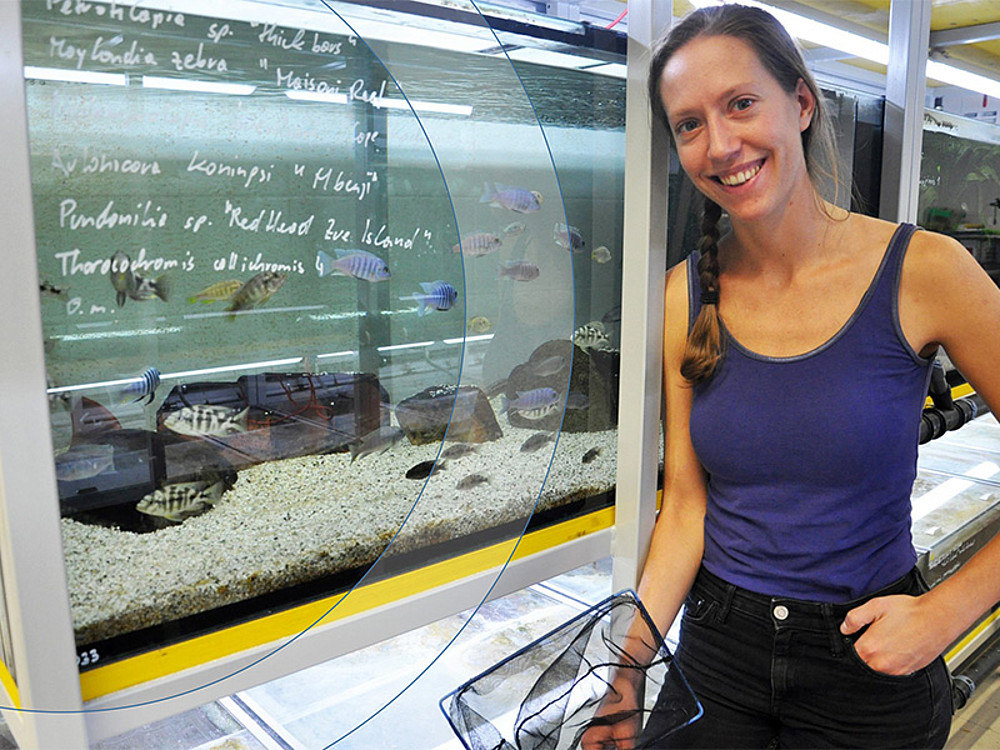
Evolutionsbiologin Angelika Ziegelbecker ist vom Nutzen einer strukturierten Doktoratsausbildung überzeugt. Beim Doctoral Academy Day gibt sie Einblicke in ihre Forschung. Foto: Uni Graz/Schweiger

Evolutionsbiologin Angelika Ziegelbecker ist vom Nutzen einer strukturierten Doktoratsausbildung überzeugt. Beim Doctoral Academy Day gibt sie Einblicke in ihre Forschung. Foto: Uni Graz/Schweiger

Wo die Zukunft zum Beruf wird: Doctoral Academy Day am 9. November

Sie haben die Zukunft im Blick – mit ihrer Forschungsarbeit am Beginn einer wissenschaftlichen Karriere: DoktorandInnen der Universität Graz. Um die NachwuchswissenschafterInnen zu fördern, baut die Universität Graz die strukturierte Doktoratsausbildung aus. Das heißt, DissertantInnen forschen in einem Team zu einem Schwerpunkt, sind mit der Scientific Community gut vernetzt und an der Universität angestellt. Die Doctoral Academy, die exzellente Doktoratsprogramme der Universität Graz bündelt, hat sich zu einem Erfolgsmodell entwickelt.

Beim Doctoral Academy Day am 9. November 2018 geben junge WissenschafterInnen einen Einblick in ihre Arbeiten. So auch Angelika Ziegelbecker. Sie erforscht im Konsortium „Ökologie, Evolution und Umweltwandel“ evolutionäre Mechanismen, die der Diversität von Buntbarschen zugrunde liegen. Sie hat herausgefunden, dass die Angleichung der sozialen Rollen von Weibchen und Männchen, zum Beispiel bei der Konkurrenz um Futter-Reviere, dazu führte, dass weibliche und männliche Fische einander äußerlich ähnlich wurden. Erst kürzlich ist dazu eine Publikation der Universität Graz erschienen, die sie mitverfasst hat. >> mehr erfahren

https://on.uni-graz.at/de/detail/article/wenn-fisch-frauen-hosen-anziehen/Die „Freude am Wissen“ treibt die Evolutionsbiologin an. „Ganz generell bin ich vom Leben fasziniert. Was wir um uns haben, ist durch unglaublich komplexe und zugleich einfache Prozesse entstanden. In diese kann ich als Wissenschafterin hineinschnuppern.“

Ziegelbecker ist vom Nutzen einer strukturierten Doktoratsausbildung voll überzeugt: „Ich kann mich inhaltlich auf meine Arbeit konzentrieren, ohne mich um strukturelle Rahmenbedingungen, vor allem in finanzieller Hinsicht, kümmern zu müssen.“ Die ergänzenden interdisziplinären Angebote, wie zum Beispiel „wie publiziere ich wissenschaftlich“, sowie Forschungswerkstätten stärken sowohl die fachliche Ausbildung als auch das Miteinander. „Alleine im stillen Kämmerlein zu schreiben, hat in allen Wissenschaftszweigen ausgedient“, betont die Doktorandin.
Dazu ist heute neben dem Fachwissen viel mehr gefragt. Das bestätigt auch Ziegelbecker: „Es braucht Eigeninitiative und Teamgeist.“ Offenheit und Flexibilität seien ebenso notwendig, wie Durchhaltevermögen und Kritikfähigkeit. Und: „Der Wille, die eigene Arbeit nach außen an die Öffentlichkeit zu tragen.“

Noch mehr Einblicke und Möglichkeiten zum Austausch bietet der Doctoral Academy Day am kommenden Freitag, den 9. November. Etwa bei Career Talks erfolgreicher DoktoratsabsolventInnen sowie bei einer Public Lecture zu akademischem Netzwerken mit Linda Greve von der Aarhus University.

>> das Programm im Detail

created by Andreas Schweiger

Related news

Higher Education Strategy 2040: Austria’s universities on course for the future

Austria has 77 higher education institutions, which is above the EU average – but does this really make sense? The new Higher Education Strategy 2040 focuses on cooperation rather than mergers. As one of the six largest universities in Austria, the University of Graz plays a central role in this.

Climate research in Greenland: Old data provides new insights

The polar explorer and University of Graz professor Alfred Wegener left behind a unique collection of climate data from Greenland. A research team from the University of Graz is now analysing this 100-year-old treasure trove of data and comparing it with current measurements.

Diversity in nature and science: How we talk about plants and each other

Ginkgo, kiwi, hemp: they exist as male and female plants. Anyone who paid attention in biology class will confirm this. But is this categorisation, established by Carl von Linné almost 300 years ago, still valid today? An interdisciplinary team at the University of Graz is questioning these attributions and using this as a starting point to provide food for thought for gender-sensitive interaction between students, scientific and teaching staff.

Around the world in eight stops: the Long Night of Research at the University of Graz

On 24 April from 5 pm, you can take a short trip around the globe at the University of Graz, discovering pecularities of foreign countries or new local features in the entrance hall of the University Library. The itinerary takes you through introduced animal species, political attitudes and the omnipotence of algorithms. There will also be a programme in the historic reading hall, as well as at the UniGraz@Museum and the University Archive.

Begin of page section:
Additional information:

University of Graz
Universitaetsplatz 3
8010 Graz
Austria
  • Contact
  • Web Editors
  • Moodle
  • UNIGRAZonline
  • Imprint
  • Data Protection Declaration
  • Accessibility Declaration
Weatherstation
Uni Graz

End of this page section. Go to overview of page sections

End of this page section. Go to overview of page sections

Begin of page section:

End of this page section. Go to overview of page sections