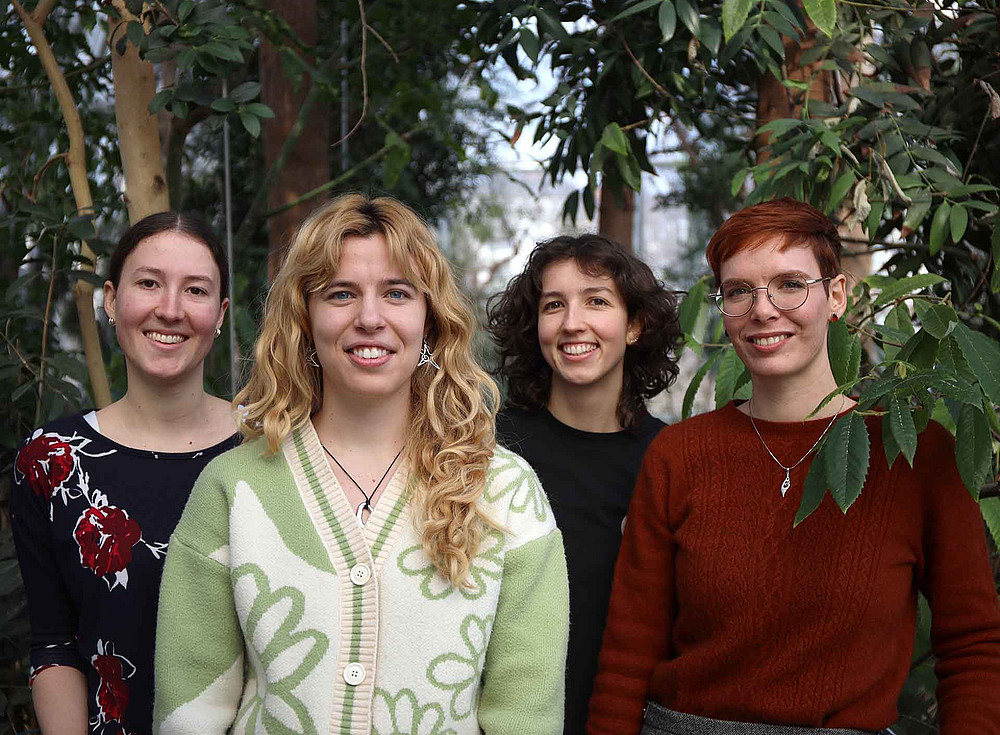
Nature is known to produce many colourful flowers. Far more than the nomenclature developed by Swedish researcher Carl von Linné in the mid-18th century, which is still used today. “The ideas of society and human sexuality at that time were transferred to plants,” explains Sophie Döhrn, a student teacher of history and English.
“Plants reproduce in many different ways and by no means fulfil the stereotypical functions we attribute to them,” affirm biology students Em Hanny and Hannah Schrettle.
Together with Sarah Bürli, scientific director of the Botanical Garden, Döhrn, Hanny and Schrettle now want to do more than just critically examine historical names in the plant world. They take the thoughts about botanical terminology as an opportunity to raise awareness of how we treat each other. “This starts with teaching the use of gender-neutral language, extends to questions about pronouns, and goes as far as avoiding heteronormative assumptions,” the team cites a few examples.
Positive and diverse research culture
“From Roots to Words: Rethinking How We Speak About Plants (and Us)” is the title of the project initiated by the four. The Research Careers Campus supports the project as part of the Research Culture and Integrity Ambassador Grants. Ultimately, the quartet's goal is to help shape a positive and diverse research culture at the University of Graz. The team has set itself the goal of ensuring that a more sensitive approach to one another will also transfer on scientific practice. “There are suggestions for alternative terms and categorisations for plants that are more neutral and inclusive, without compromising scientific precision,” says Sarah Bürli, referring to publications by Madelaine Bartlett and Banu Subramaniam.
The project begins with a survey to the status quo and needs of students and lecturers. ⇒ survey
Based on discussion rounds and workshops, a brochure will be produced to provide food for thought for all disciplines and raise awareness of the topic among students,scientific and teaching staff. At the same time, the project aims to contribute to the strategic goal of the University of Graz to promote equal opportunities, equality and diversity.