Begin of page section:
Page sections:

  • Go to contents (Accesskey 1)
  • Go to position marker (Accesskey 2)
  • Go to main navigation (Accesskey 3)
  • Go to sub navigation (Accesskey 4)
  • Go to additional information (Accesskey 5)
  • Go to page settings (user/language) (Accesskey 8)
  • Go to search (Accesskey 9)

End of this page section. Go to overview of page sections

Begin of page section:
Page settings:

English en
Deutsch de
Search
Login

End of this page section. Go to overview of page sections

Begin of page section:
Search:

Search for details about Uni Graz
Close

End of this page section. Go to overview of page sections


Search

Begin of page section:
Main navigation:

Page navigation:

  • University

    University
    • About the University
    • Organisation
    • Faculties
    • Library
    • Working at University of Graz
    • Campus
    Developing solutions for the world of tomorrow - that is our mission. Our students and our researchers take on the great challenges of society and carry the knowledge out.
  • Research Profile

    Research Profile
    • Our Expertise
    • Research Questions
    • Research Portal
    • Promoting Research
    • Research Transfer
    • Ethics in Research
    • Commission for Scientific Integrity
    Scientific excellence and the courage to break new ground. Research at the University of Graz creates the foundations for making the future worth living.
  • Studies

    Studies
    • Prospective Students
    • Students
  • Community

    Community
    • International
    • Location
    • Research and Business
    • Alumni
    The University of Graz is a hub for international research and brings together scientists and business experts. Moreover, it fosters the exchange and cooperation in study and teaching.
Topics
  • Sustainable University
  • Researchers answer
  • Work for us
Close menu

End of this page section. Go to overview of page sections

Begin of page section:
You are here:

University of Graz News More body awareness than a culture war

End of this page section. Go to overview of page sections

Thursday, 11 June 2026

More body awareness than a culture war

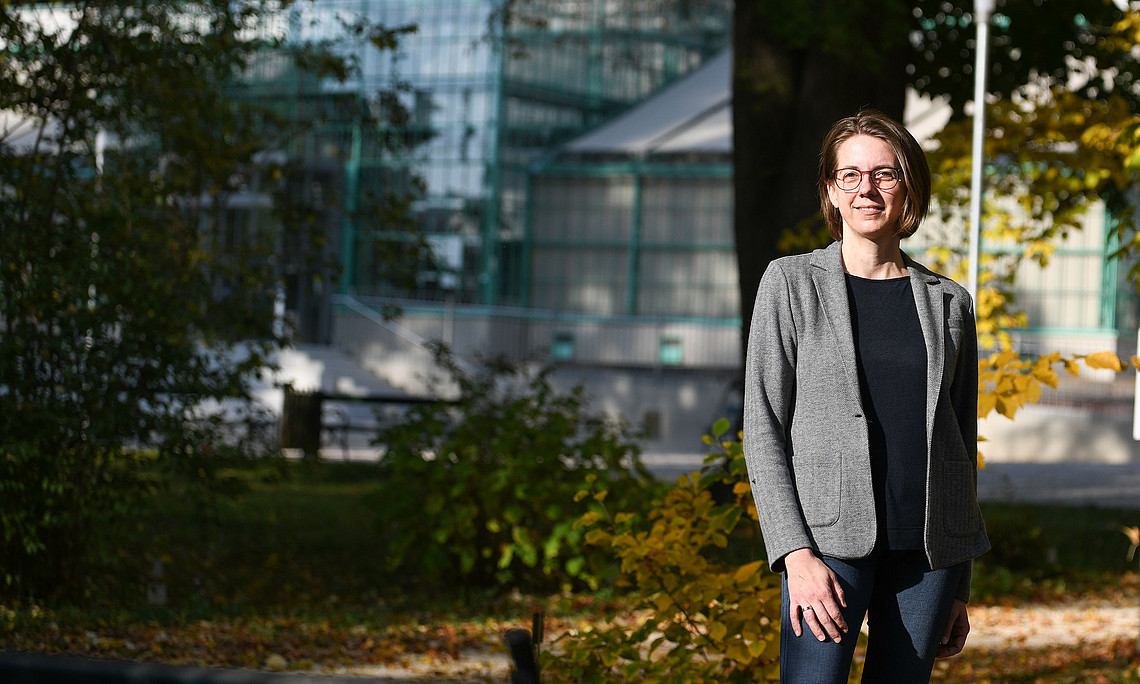
A woman with reddish-brown hair. Plants can be seen in the background

In her doctoral thesis, Gudrun Kern examines the topic of sex education in schools in southern Austria. Photo: Ijob Brandstätter.

In Italy, sex education lessons will in future only be permitted with parental consent, and will be banned entirely in nurseries and primary schools. At the same time, Pride Month highlights why knowledge about the body, relationships, boundaries and diversity is important for young people. A study by the University of Graz shows how important knowledge about the body, contraception, relationship skills and protection against violence is

Sex education in schools is a sensitive issue. This is currently particularly evident in Italy, where, under new legislation, sex education will only be permitted with prior parental consent. In nurseries and primary schools, it will be banned altogether. In Austria, too, sex education is a subject of repeated controversy. The debate quickly turns to values, fears and political conflicts. For young people, however, the focus is usually on very specific questions: How is my body changing? What is contraception? Where are my boundaries? How do I recognise violence? And how do I treat others with respect?

Biologist Gudrun Kern is conducting research on this topic at the University of Graz. Together with Uwe K. Simon, she has investigated what content external providers publicly communicate in sex education workshops. They analysed 67 materials – including websites, workshop descriptions and leaflets – from 17 organisations in Styria, Carinthia and southern Burgenland.

The results contradict a common misconception: external sex education in the regions studied does not focus on supposedly controversial topics. The most frequent topics are body awareness, menstruation, contraception, puberty and biological development. Violence prevention, personal boundaries, protection and age-appropriate teaching also play a central role. “Sex education is rarely just about sex,” says Gudrun Kern. “It’s about safety, informed decisions and taking young people seriously in their development.”

Diversity is part of it

During Pride Month in particular, sexual orientation, gender identity and social diversity come into sharp focus. However, the current debate also shows how quickly these topics become politicised. The University of Graz study makes it clear: “Diversity is an integral part of comprehensive sex education,” says Kern. “But the data from the materials examined clearly show that the organisations cover a very broad range of topics – from body awareness and relationships to protection against violence.”

Protection, consent and self-determination

A particularly prominent theme in the study is the area of protection. Many organisations address violence, legal regulations, personal boundaries, pornography and sexualised violence. In doing so, they align with international standards for comprehensive sexuality education, such as those set out by the WHO or UNESCO.

At the same time, the analysis reveals gaps. The term ‘consent’ rarely features. Decision-making skills, sexual autonomy and positive aspects of sexuality such as pleasure, intimacy or self-confidence are also less prominent than biological or preventive content.

Against the backdrop of international debates, it becomes clear: “Age-appropriate sex education should not be reduced to mere biology or risk prevention. It can help young people to recognise their own boundaries, respect the boundaries of others and make informed decisions.”

Migration as a blind spot

It is striking that migration backgrounds have so far been given scant explicit consideration in the materials. “Issues relating to the body, relationships and sexuality can also be linked to different life experiences, access to information and family circumstances,” explains Kern. More research, more materials and programmes that are grounded in real-life experiences and sensitive to discrimination are needed here.

Sex education has been part of the school curriculum in Austria for decades. However, many teachers do not feel sufficiently prepared to deal with sensitive topics.  For Kern, the topic is also relevant in teacher training. “Those who teach in the future will be confronted with questions about the body, identity, boundaries, social media, relationships and violence prevention. Sex education should be understood less as a controversy and more as a contribution to safety and self-determination,” says Kern. “When young people are informed, they can make better decisions – for themselves and in their interactions with others.”

A degree programme, numerous opportunities

Studying biology at the University of Graz takes you right into the heart of the living world – from tiny cells to entire ecosystems. The focus is on how living organisms function, how they are interconnected, and how biological processes shape our environment. Alongside sound specialist knowledge, practical experience in the laboratory, in the field and with modern methods such as modelling plays a central role. This builds the skills needed to contribute to and help shape major issues of the future such as climate change, biodiversity, health and sustainability. The application deadline for Bachelor’s and Master’s programmes is 15 June! 
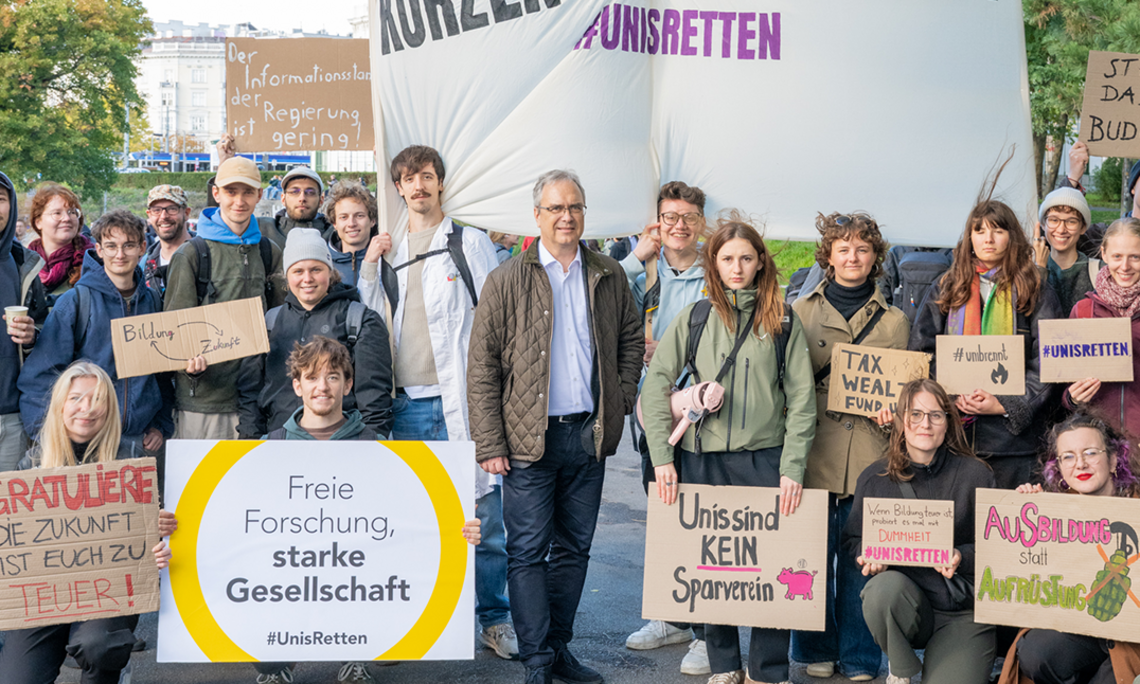
 

created by Konstantin Tzivanopoulos

Related news

Will Austria win the World Cup? Mathematician reveals calculation method

Michael Fischer uses the football tournament as a practical example for highschool lessons.

Survival strategies: How plants respond to drought

According to Geosphere Austria, this spring was the driest in Austria since records began around 170 years ago. The low rainfall put particular pressure on the agricultural sector. And climate change is set to make the situation even worse in the coming decades. We asked Johannes Liesche, a professor at the Department of Biology at the University of Graz, how plants react to water shortages and how they survive periods of drought.

World literature from Austria: Anne-Kathrin Reulecke on Ingeborg Bachmann

On 25 June, Ingeborg Bachmann would have turned 100. To this day, she remains one of the most important German-language authors. Anne-Kathrin Reulecke, Professor of Modern German Literature at the Institute of German Studies, has conducted extensive research into the writer, who died in 1973. The academic explains why Bachmann continues to be influential and what makes her work so special. In addition to her literary analysis, Anne-Kathrin Reulecke shares some reading recommendations.

What matters in the end: moral theologian takes stock of assisted suicide

Since 1 January 2022, assisted suicide has been legal in Austria under certain conditions. This was made possible by a ruling of the Constitutional Court, which overturned the blanket ban on assisting in suicide. Four years on, it is clear that: “Although the legal framework is in place, many pressing questions remain unanswered when it comes to its practical implementation,” says Johann Platzer, a moral theologian at the University of Graz.

Begin of page section:
Additional information:

University of Graz
Universitaetsplatz 3
8010 Graz
Austria
  • Contact
  • Web Editors
  • Moodle
  • UNIGRAZonline
  • Imprint
  • Data Protection Declaration
  • Accessibility Declaration
Weatherstation
Uni Graz

End of this page section. Go to overview of page sections

End of this page section. Go to overview of page sections

Begin of page section:

End of this page section. Go to overview of page sections