Whether you light a match, iron rusts or plants grow through photosynthesis: every chemical reaction in the world arises from the collision of atoms or molecules. This gives rise to interactions that can either break bonds or form new ones. “Understanding these processes and controlling the relevant factors is one of the most fundamental questions in chemistry,” explains Leonhard Grill.
Much like a collision between two cars, the available kinetic energy – that is, the speeds – and the spatial arrangement of the objects involved – for example, whether they collide head-on or merely graze each other at the edges – determine the outcome of the impact. “Whilst these factors can be identified and controlled very effectively in vehicles, doing so at the level of individual atoms and molecules is a major challenge,” the researcher explains. The energy of the particles can, for example, be controlled via temperature or electric fields. However, the exact geometry during the impact is much more difficult to determine.
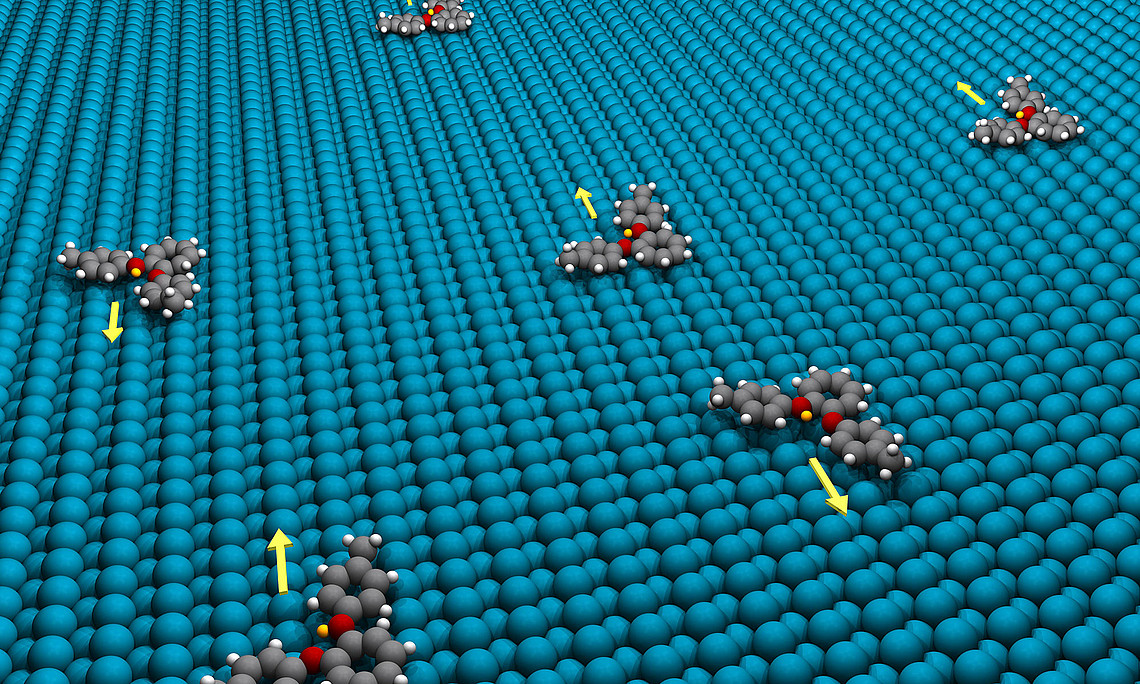
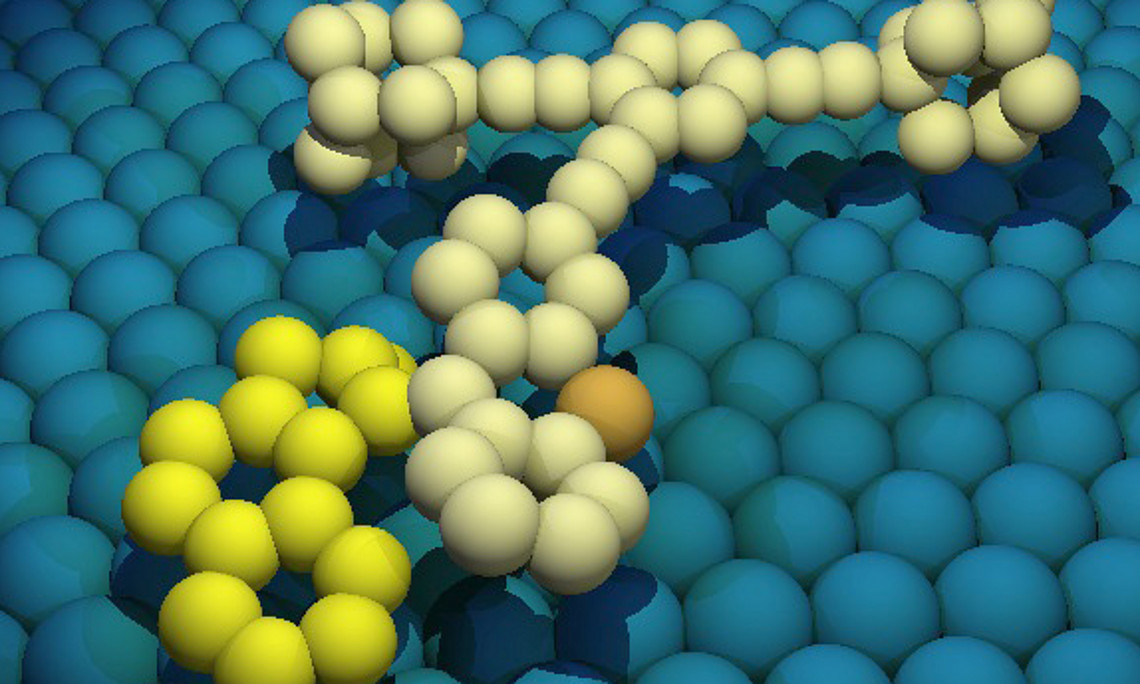
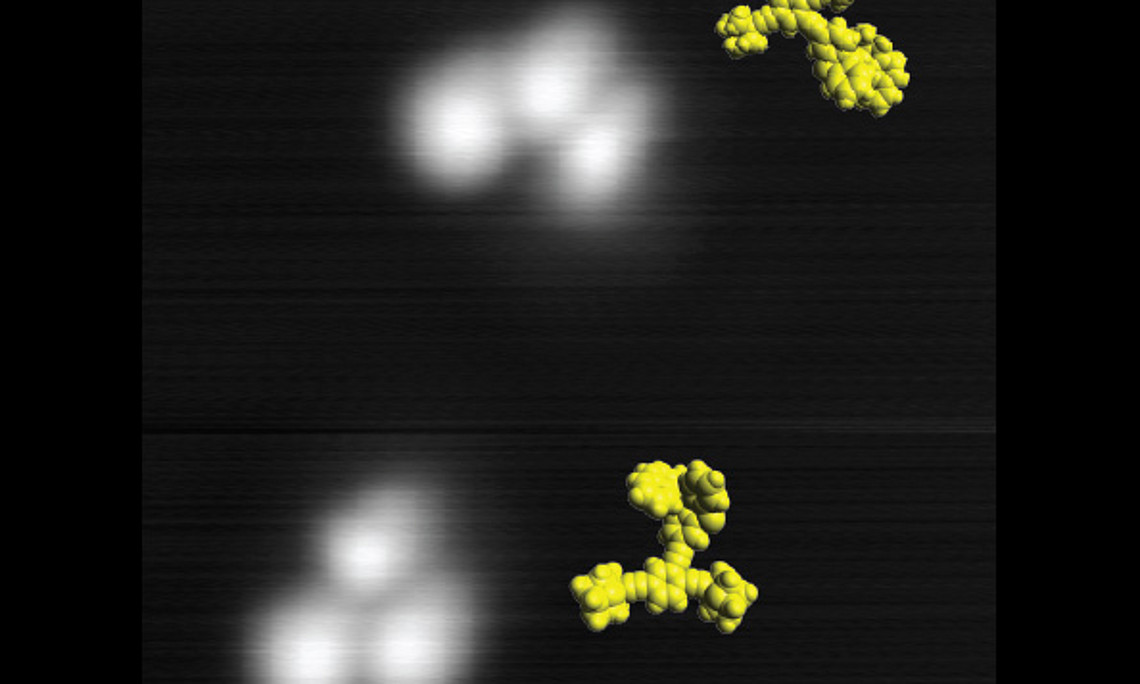
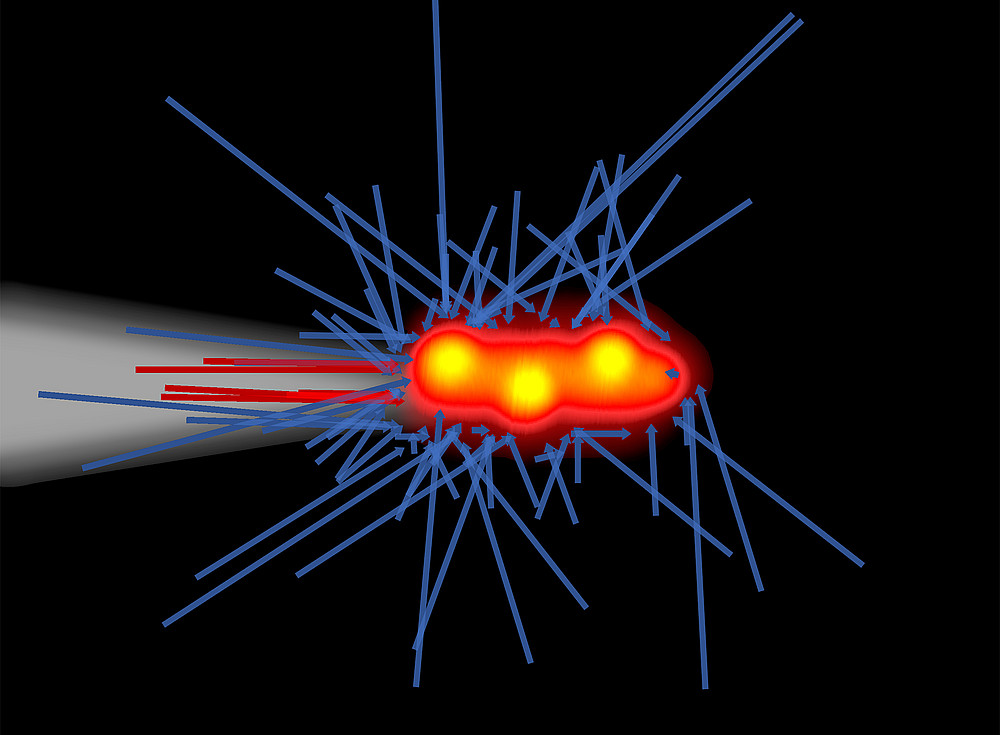
Matthew Timm has now, for the first time, steered the trajectories of individual molecules with picometre-level precision – that is one trillionth of a metre, which is less than the diameter of a single atom. This was achieved because the collisions took place on a surface on which the “projectile” molecules travel in a straight line until they collide with a stationary “target” molecule. Furthermore, both the position and the orientation of the targets could be precisely adjusted and systematically varied. Using a scanning tunnelling microscope, it was thus possible to track the outcome of every single collision.
It was found that successful reactions occur only when the particles come into contact at a specific point, namely at the most reactive atom of the “target” molecule. Furthermore, the target must be oriented at a specific angle to the trajectory of the projectile. “In our study, we were able to measure the so-called reaction cone for a chemical reaction for the very first time ever. Thanks to this previously missing piece of the jigsaw, we now understand the relevant factors in a collision and thus the outcome of reactions,” summarises Grill. This could enable the reactivity of molecules to be specifically optimised in future.
Publication:
Matthew Timm, Adam Matej, Ilias Gazizullin, Qifan Chen, Stefan Hecht, Pavel Jelinek and Leonhard Grill: Spatially resolving the cone of reaction for a single molecule, Science
DOI: 10.1126/science.aec7913