Begin of page section:
Page sections:

  • Go to contents (Accesskey 1)
  • Go to position marker (Accesskey 2)
  • Go to main navigation (Accesskey 3)
  • Go to sub navigation (Accesskey 4)
  • Go to additional information (Accesskey 5)
  • Go to page settings (user/language) (Accesskey 8)
  • Go to search (Accesskey 9)

End of this page section. Go to overview of page sections

Begin of page section:
Page settings:

English en
Deutsch de
Search
Login

End of this page section. Go to overview of page sections

Begin of page section:
Search:

Search for details about Uni Graz
Close

End of this page section. Go to overview of page sections


Search

Begin of page section:
Main navigation:

Page navigation:

  • University

    University
    • About the University
    • Organisation
    • Faculties
    • Library
    • Working at University of Graz
    • Campus
    Developing solutions for the world of tomorrow - that is our mission. Our students and our researchers take on the great challenges of society and carry the knowledge out.
  • Research Profile

    Research Profile
    • Our Expertise
    • Research Questions
    • Research Portal
    • Promoting Research
    • Research Transfer
    • Ethics in Research
    • Commission for Scientific Integrity
    Scientific excellence and the courage to break new ground. Research at the University of Graz creates the foundations for making the future worth living.
  • Studies

    Studies
    • Prospective Students
    • Students
    • Post-registration Law
  • Community

    Community
    • International
    • Location
    • Research and Business
    • Alumni
    The University of Graz is a hub for international research and brings together scientists and business experts. Moreover, it fosters the exchange and cooperation in study and teaching.
Topics
  • Sustainable University
  • Researchers answer
  • Work for us
Close menu

End of this page section. Go to overview of page sections

Begin of page section:
You are here:

University of Graz News Blocked Bacteria: Researchers discover a new target against tuberculosis

End of this page section. Go to overview of page sections

Tuesday, 21 October 2025

Blocked Bacteria: Researchers discover a new target against tuberculosis

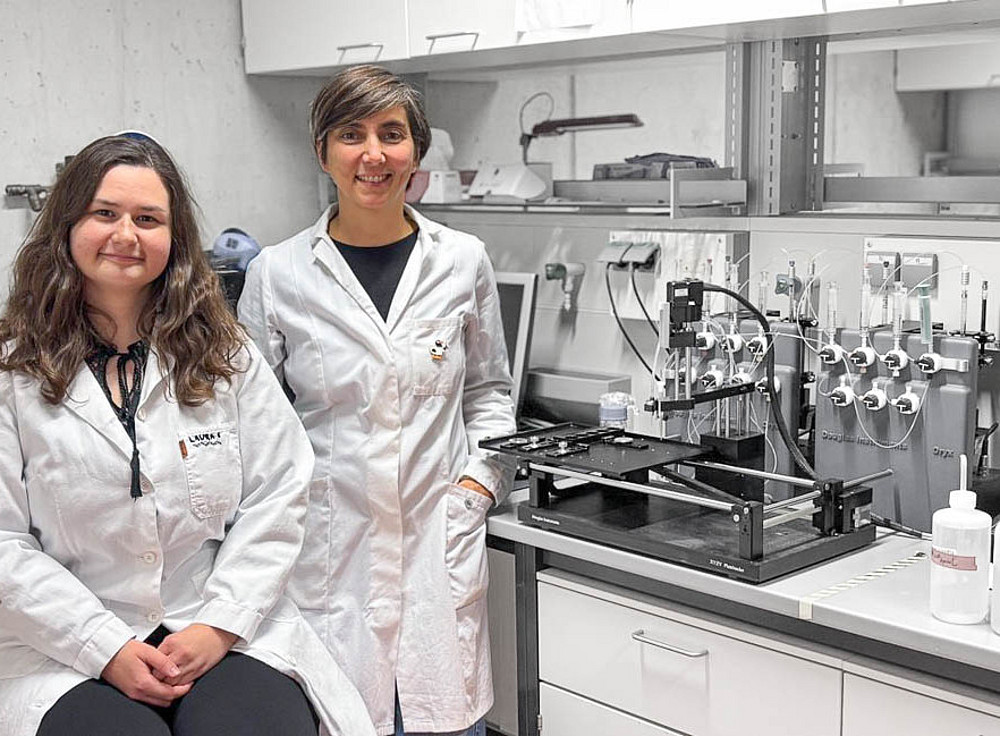
Two women are standing in a lab

Laura Gödl and Lina Riegler-Berket, together with a team led by Monika Oberer, have discovered a new target for attacking tuberculosis. Photo: University of Graz/Leljak.

Researchers at the University of Graz have deciphered the structure of an enzyme that enables “dormant” tuberculosis bacteria to survive. For the first time, they have now identified a compound that disrupts the bacteria’s fat metabolism in this state. These discoveries could pave the way for shorter and more effective therapies against the infectious disease.

Each year, more than one million people worldwide die from tuberculosis — the infectious disease that claims more lives than any other. Treatment lasts at least six months and often fails because patients discontinue the lengthy antibiotic regimen, leading to dangerous resistances. The bacteria are particularly difficult to treat when they “hide” in granulomas. “Granulomas are tiny protective capsules formed by our immune system when it cannot completely eliminate pathogens. Inside them, the bacteria retreat and enter a kind of dormant state. In this hideout, they are hard for drugs to reach,” explains molecular biologist Lina Riegler-Berket.

Blocked in their sleep

This is precisely where a current study comes in: The research team at the University of Graz, together with international partners and the biotech company Innophore, has identified an enzyme that tuberculosis bacteria need for their fat metabolism during this resting phase. “In addition, we have discovered a drug candidate that blocks this enzyme while the bacteria are in their ‘sleeping’ state. This small step subsequently disrupts the entire fat metabolism of the bacterium, thereby reducing its ability to survive,” says Riegler-Berket. The research findings could form the basis for revising existing antibiotics, with the goal of shortening treatment durations in the future.

Artificial intelligence as a key factor

A decisive role in the study was played by the collaboration with the company Innophore. The firm, a spin-off from the University of Graz, used AI-based analyses to investigate the similarities between the bacterial enzyme and its human counterpart. This made it possible to rule out early on that potential compounds would cause unwanted side effects in humans. “AI can help us filter from billions of possible molecular structures those that might fit best — a step that significantly accelerates our research,” the scientist explains.

Publication:

M. tuberculosis meets European Lead Factory – Identification and structural characterization of novel Rv0183 inhibitors using X-ray crystallography. Riegler-Berket, Lina and Gödl, Laura et al. Disease and Therapeutics. 1 (2025): 100002. DOI: 10.1016/j.dist.2025.100002

Would you also like to understand how bacteria work? You can find out by studying molecular biology!


Related news

Studying at the University of Graz: How to enrol

Ready for a new chapter in your life with the start of your studies at the University of Graz in the winter semester 2026/27? Here you will find information on deadlines, admission procedures, registration, and everything else you need to successfully start your studies in the fall.

Europe Day: Strengthening international expertise with Arqus

On 9 May, the spotlight will be on Europe. At the University of Graz, European cooperation is also a tangible part of everyday student life – not least through the Arqus university alliance. Master’s and PhD students can currently register for the Arqus micro-credential in ‘Advanced Creative Thinking and Communication’.

A substantial community: the key role of soil crusts in the earth system

They are often overshadowed by the plant world: lichens, fungi, mosses and bacteria, which form unique communities on rocks and trees or as soil crusts. Bettina Weber from the University of Graz is bringing this biological alliance into the research spotlight. Her research shows that these communities form an essential part of the Earth’s critical zone and play a key role in the interactions between land and atmosphere. Bettina Weber was honoured by the European Geosciences Union for her groundbreaking research at the beginning of May.

The digital world of tomorrow: University of Graz works with people to shape the future

Digitalisation is supposed to make everything better: artificial intelligence that even organises travel. The car that drives itself. Robots that care for us in our old age. But what kind of future do people actually want? What role should technology play in this? The University of Graz is exploring these questions through a new research facility. At the Graz Sociodigital and Participatory Futures Studio – or GraSP Futures Studio for short – young and old work together with researchers to design visions of the future that also critically examine technical innovations.

Begin of page section:
Additional information:

University of Graz
Universitaetsplatz 3
8010 Graz
Austria
  • Contact
  • Web Editors
  • Moodle
  • UNIGRAZonline
  • Imprint
  • Data Protection Declaration
  • Accessibility Declaration
Weatherstation
Uni Graz

End of this page section. Go to overview of page sections

End of this page section. Go to overview of page sections

Begin of page section:

End of this page section. Go to overview of page sections