Begin of page section:
Page sections:

  • Go to contents (Accesskey 1)
  • Go to position marker (Accesskey 2)
  • Go to main navigation (Accesskey 3)
  • Go to sub navigation (Accesskey 4)
  • Go to additional information (Accesskey 5)
  • Go to page settings (user/language) (Accesskey 8)
  • Go to search (Accesskey 9)

End of this page section. Go to overview of page sections

Begin of page section:
Page settings:

English en
Deutsch de
Search
Login

End of this page section. Go to overview of page sections

Begin of page section:
Search:

Search for details about Uni Graz
Close

End of this page section. Go to overview of page sections


Search

Begin of page section:
Main navigation:

Page navigation:

  • University

    University
    • About the University
    • Organisation
    • Faculties
    • Library
    • Working at University of Graz
    • Campus
    Developing solutions for the world of tomorrow - that is our mission. Our students and our researchers take on the great challenges of society and carry the knowledge out.
  • Research Profile

    Research Profile
    • Our Expertise
    • Research Questions
    • Research Portal
    • Promoting Research
    • Research Transfer
    • Ethics in Research
    Scientific excellence and the courage to break new ground. Research at the University of Graz creates the foundations for making the future worth living.
  • Studies

    Studies
    • Prospective Students
    • Students
  • Community

    Community
    • International
    • Location
    • Research and Business
    • Alumni
    The University of Graz is a hub for international research and brings together scientists and business experts. Moreover, it fosters the exchange and cooperation in study and teaching.
  • Spotlight
Topics
  • Sustainable University
  • Researchers answer
  • Work for us
Close menu

End of this page section. Go to overview of page sections

Begin of page section:
You are here:

University of Graz News Zellen auf den Grund gehen

End of this page section. Go to overview of page sections

Thursday, 27 November 2014

Zellen auf den Grund gehen

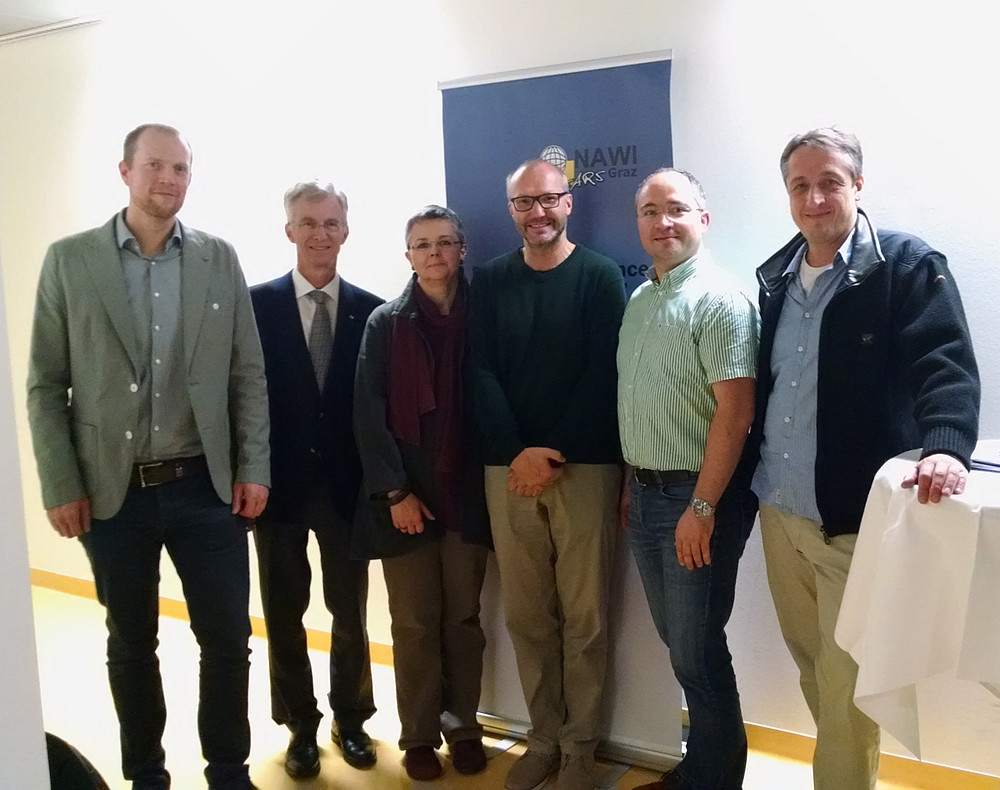
Laborleiter Tobias Eisenberg, NAWI Graz Vizerektor Bernhard Hofmann-Wellenhof, NAWI Graz Vizerektorin Renate Dworczak, Gracia-Initator Günther Koraimann, Laborleiter Harald Pichler und Frank Madeo vom Institut für Molekulare Biowissenschaften (vlnr). Fo

Laborleiter Tobias Eisenberg, NAWI Graz Vizerektor Bernhard Hofmann-Wellenhof, NAWI Graz Vizerektorin Renate Dworczak, Gracia-Initator Günther Koraimann, Laborleiter Harald Pichler und Frank Madeo vom Institut für Molekulare Biowissenschaften (vlnr). Fotos: Nawigraz

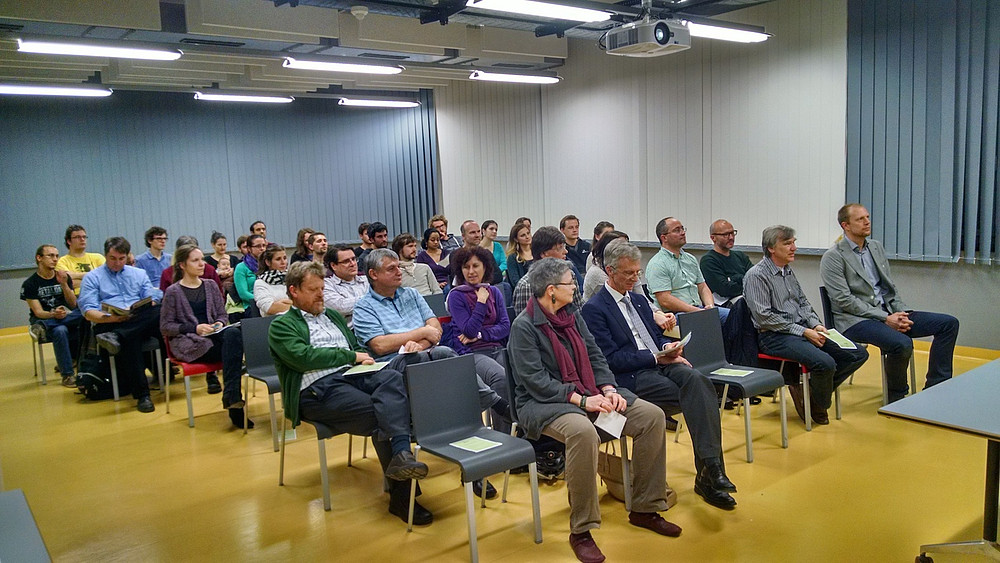
Gut besucht - Die Eröffnungsfeier des Central Labs Gracia.

Gut besucht - Die Eröffnungsfeier des Central Labs Gracia.

Eröffnung des NAWI Graz Central Labs Gracia

Auf das Sortieren und Analysieren von Zellen, sowie die Archivierung umfangreicher Analysedaten ist das NAWI Graz Central Lab ‚Graz Cell Analyses and Informatics, kurz „Gracia“  ausgerichtet, das am 19.11.2014 im ZMB feierlich aus der Taufe gehoben wurde. Geleitet wird dieses NAWI Graz Central Lab von Dr. Tobias Eisenberg (Institut für Molekulare Biowissenschaften, Uni Graz) und Dr. Harald Pichler (Institut für Molekulare Biotechnologie, TU Graz).


Ausgestattet mit modernsten Zell-Analysegerät und einem high-end Zell-Sortiergerät können unterschiedlichste Fluoreszenz-basierte Analysen wie auch Sortierungen auf technisch höchstem Niveau durchgeführt werden. Dank eines High-Throughput-Sampling Systems können Zellproben äußerst rasch im Hochdurchsatz gemessen werden. Das Central Lab bietet außerdem die Nutzungsmöglichkeit eines Probenvorbereitungslabors, sowie Geräte zur Zellkultur von Mikroorganismen. Diese sind insbesondere auf eine Kultivierung und Probenaufbereitung im 96-well Maßstab ausgelegt und ermöglichen damit Fluoreszenz-basierte Screenings. In seinem Einführungsvortrag unterstrich Tobias Eisenberg die gute etablierte Kooperation der Biowissenschaften und freut sich auf neue Kollaborationen. Die Infrastruktur kann auch für andere Fächer sehr interessant sein, da über Zellen hinaus auch andere Partikel ähnlicher Größe untersucht werden können.


Renate Dworczak und Bernhard Hofmann-Wellenhof betonten im Rahmen ihrer Einführung, wie wichtig Kooperation ist: „NAWI Graz ist nach der gut gemeisterten Einführung gemeinsamer Bachelor- und Masterstudien einen großen Schritt weitergegangen. Denn gerade in der Forschung ist Kooperation unerlässlich, da so große Geräte nur mit vereinten Kräften angeschafft werden können. Mit solchen Erfolgen im Gepäck können die beiden Universitäten gut gewappnet mit dem Ministerium verhandeln.“

created by Thomas Schweitzer & Konstantinos Tzivanopoulos

Related news

Diversity buddies at the University of Graz: Support on equal terms

The University of Graz is strengthening its commitment to equal opportunities with its new Diversity Buddies. University members can find easily accessible contact persons here for questions relating to equality and diversity. All employees can get involved and take action.

When parents find it difficult to have a say

In her dissertation, translation scholar Marie Tschurtschenthaler examines how communication between compulsory schools and parents whose first language is not German works – and what role professional language mediation plays in this. Initial insights show that it is not just about language, but also about resources, responsibilities and the institutional framework.

AI in schools: Maria Bertel drafts legal guidelines for teachers

The legal expert and her team analysed the legal situation regarding the use of artificial intelligence in education as part of an EU project and answered open questions from practice.

Cosmetics in the environment: University of Graz proves danger to ants

Titanium dioxide, which is found in cosmetics, for example, is increasingly entering the environment in the form of nanoparticles. This could also put insects at risk. If ants ingest the substance in combination with the pesticide glyphosate, it disturbs the development of their offspring. Scientists at the University of Graz are drawing attention to the negative consequences of this toxic cocktail.

Begin of page section:
Additional information:

University of Graz
Universitaetsplatz 3
8010 Graz
Austria
  • Contact
  • Web Editors
  • Moodle
  • UNIGRAZonline
  • Imprint
  • Data Protection Declaration
  • Accessibility Declaration
Weatherstation
Uni Graz

End of this page section. Go to overview of page sections

End of this page section. Go to overview of page sections

Begin of page section:

End of this page section. Go to overview of page sections