Begin of page section:
Page sections:

  • Go to contents (Accesskey 1)
  • Go to position marker (Accesskey 2)
  • Go to main navigation (Accesskey 3)
  • Go to sub navigation (Accesskey 4)
  • Go to additional information (Accesskey 5)
  • Go to page settings (user/language) (Accesskey 8)
  • Go to search (Accesskey 9)

End of this page section. Go to overview of page sections

Begin of page section:
Page settings:

English en
Deutsch de
Search
Login

End of this page section. Go to overview of page sections

Begin of page section:
Search:

Search for details about Uni Graz
Close

End of this page section. Go to overview of page sections


Search

Begin of page section:
Main navigation:

Page navigation:

  • University

    University
    • About the University
    • Organisation
    • Faculties
    • Library
    • Working at University of Graz
    • Campus
    Developing solutions for the world of tomorrow - that is our mission. Our students and our researchers take on the great challenges of society and carry the knowledge out.
  • Research Profile

    Research Profile
    • Our Expertise
    • Research Questions
    • Research Portal
    • Promoting Research
    • Research Transfer
    • Ethics in Research
    • Commission for Scientific Integrity
    Scientific excellence and the courage to break new ground. Research at the University of Graz creates the foundations for making the future worth living.
  • Studies

    Studies
    • Prospective Students
    • Students
    • Welcome Weeks for First Year Students
  • Community

    Community
    • International
    • Location
    • Research and Business
    • Alumni
    The University of Graz is a hub for international research and brings together scientists and business experts. Moreover, it fosters the exchange and cooperation in study and teaching.
Topics
  • Sustainable University
  • Researchers answer
  • Work for us
Close menu

End of this page section. Go to overview of page sections

Begin of page section:
You are here:

University of Graz News Wider die Diktatur

End of this page section. Go to overview of page sections

Tuesday, 27 November 2012

Wider die Diktatur

Engelbert Dollfuß (1933) war von 1932 bis 1934 österreichischer Bundeskanzler und Begründer des austrofaschistischen Ständestaats. Foto: Agence de presse Meurisse. Agence photographique, Bibliothèque nationale de France, Wikimedia Commons

Engelbert Dollfuß (1933) war von 1932 bis 1934 österreichischer Bundeskanzler und Begründer des austrofaschistischen Ständestaats. Foto: Agence de presse Meurisse. Agence photographique, Bibliothèque nationale de France, Wikimedia Commons

Grazer Historikerin zeigt erstmals die Struktur des steirischen Widerstands gegen den Austrofaschismus auf

Der Austrofaschismus der Jahre 1933 bis 1938 gilt rückblickend als besonders unrühmlicher Abschnitt der österreichischen Geschichte, geprägt von Unterdrückung und inneren Unruhen. Wenig erforscht ist bis dato die „Szene“ des Widerstands gegen das autoritäre Regime. Dr. Ute Sonnleitner, Historikerin an der Karl-Franzens-Universität Graz, hat den Kampf gegen die Diktatur nachgezeichnet, mit besonderem Augenmerk auf die Situation in der Steiermark. Ihr Buch, das erstmals die Struktur des Widerstands aufzeigt, ist kürzlich im Grazer Universitätsverlag erschienen.


„Das Besondere an der steirischen Widerstandslandschaft ist, dass die Bewegung hier vor allem von den KommunistInnen getragen wurde“, fasst Ute Sonnleitner zusammen. Während es zum Beispiel im Wien eine starke Beteiligung „revolutionär sozialistischer“ Gruppen gab, wandten sich in der Steiermark nach dem Österreichischen Bürgerkrieg im Februar 1934 viele junge SozialdemokratInnen, die kämpferisch aktiv werden wollten, dem Kommunismus zu. „Die sogenannten ,Februar-KommunistInnen‘ waren enttäuscht von ihrer sozialdemokratischen Parteiführung, die wenig Initiative zeigte.“

Die Zahl der AktivistInnen belief sich nur auf einige hundert. Doch diese machten sich umso deutlicher bemerkbar. Sie verfassten Propagandaliteratur und Flugschriften und brachten ihren Protest mit Parolen und Symbolen an Hauswänden zum Ausdruck. So wurde zum Beispiel in der Nacht zum 1. Mai 1935 in Deutschlandsberg der gesamte Hauptplatz durch „vermutlich kommunistische Anhänger“ rot eingefärbt. „Mittels der verdeckten Beteiligung an der Einheitsgewerkschaft wurde eine Unterwanderung des austrofaschistischen Herrschaftsgefüges angestrebt und erfolgreiche Arbeit geleistet“, berichtet Sonnleitner.

Die Widerständigen standen für ihre Überzeugung ein, kämpften für die Fortführung der Arbeiterkultur und versuchten Beziehungsstrukturen aufrecht zu erhalten. 1933 war die kommunistische, 1934 auch die sozialdemokratische Partei und mit ihr alle sozialistischen Vereine, wie die Kinderfreunde und Roten Falken, die Naturfreunde oder Arbeiter-Gesangsvereine, verboten worden. „Ein weiterer Aspekt der Widerstandstätigkeit war auch die Organisation von Spendenaktionen, um Geld für unversorgte Familien von GenossInnen zu sammeln. Diese waren sehr erfolgreich und für die Bedürftigen eine wichtige Unterstützung“, ergänzt die Historikerin.

Sonnleitner betrachtete auch die Bedeutung der Frauen im Widerstand. „Sie spielten eine entscheidende Rolle“, betont die Forscherin. „Als nach dem Februaraufstand 1934 viele Männer inhaftiert waren, trugen Frauen die Bewegung.“


Im Zuge ihrer Forschungen durchforstete Ute Sonnleitner unter anderem das Dokumentationsarchiv des Österreichischen Widerstandes und das steirische Landesarchiv. Das bestehende Aktenmaterial – in erster Linie Polizei- und Justiz-Berichte - wurde aufgearbeitet. „Wie es im Bereich der Widerstandsforschung häufig der Fall ist, muss auch hier berücksichtigt werden, dass vor allem die Sichtweise der Verfolger zum Tragen kommt“, so die Wissenschafterin. Die Seite des Widerstands wurde mittels der – teils autobiographischen – Erinnerungsliteratur einbezogen.


Ute Sonnleitner: Widerstand gegen den „Austro-Faschismus“ in der Steiermark 1933–1938. Grazer Universitätsverlag/Leykam 2012, ISBN 978-3-7011-0234-1
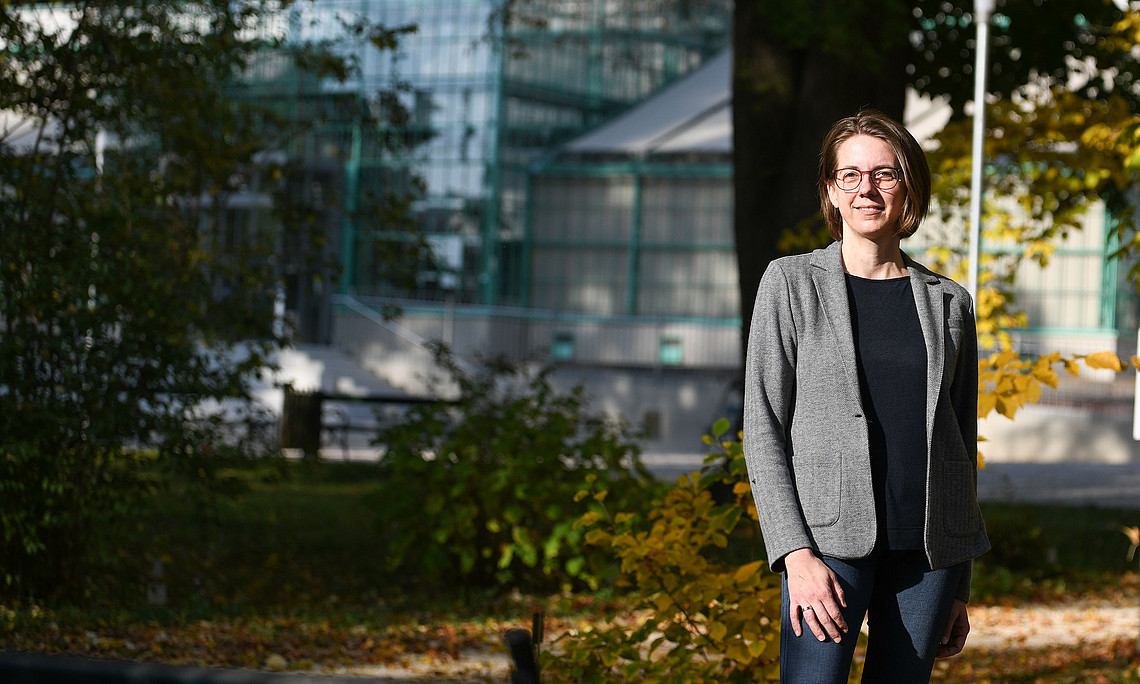
created by Gudrun Pichler

Related news

A fresh start, a calling, holidays: what draws people from other career paths to teaching

They used to develop software; now they teach maths in the classroom. Career changers are expected to help address the shortage of qualified teachers in Austria’s schools. In their doctoral theses at the Institute for Educational Research and Teacher Training at the University of Graz, Melanie Gürentz and Claudia Mair examined how these new teachers perceive their new professional roles.

Talent Talks bridge the gap in career guidance

The Styrian Chamber of Commerce (WKO Steiermark), the Styrian Chamber of Labour (AK Steiermark) and the AMS are joining forces when it comes to training young people and, through the “Talent Talks”, are creating a seamless pathway to career guidance. This takes preparation and follow-up support – just in time for the start of the term and the scheme’s tenth anniversary – to a whole new level. A new survey conducted by the Talent Centre among 2,687 former participants to mark the anniversary shows just how important this development is. Of the young people who received follow-up support from the Talent Report, 74.6 per cent stated that they had a good understanding of their own strengths and talents following the Talent Check. Without follow-up support, the figure was 66.5 per cent – a significant difference of 8.1 percentage points.

ERC Starting Grants: three million euros for two researchers at the University of Graz

Two researchers from the University of Graz have secured prestigious and generously funded grants from the EU. Starting Grants from the European Research Council (ERC), each worth 1.5 million euros, have been awarded to the human geographer Heide Bruckner and the social scientist Silvana Weiss.

Austria’s emissions rose in 2025: University of Graz researchers analyse the causes

The Environment Agency Austria has today published the figures for the country’s greenhouse gas emissions in 2025. While emissions fell sharply year on year from 2022 to 2024, they rose again by just under 0.7 per cent in 2025. Researchers at the University of Graz have analysed how much of this increase was due to structural changes in the economy and how much was attributable to external factors over which there is little control. “In 2025, the colder winter compared with 2024 increased emissions by 0.81 per cent, while the weak economy reduced them by 0.38 per cent. If we factor out these influences, we find an underlying increase of 0.26 per cent compared with the previous year,” reports economist Karl Steininger. “This clearly means that Austria is not on track to meet its climate targets, which require a substantial reduction in emissions by 2030.”

Begin of page section:
Additional information:

University of Graz
Universitaetsplatz 3
8010 Graz
Austria
  • Contact
  • Web Editors
  • Moodle
  • UNIGRAZonline
  • Imprint
  • Data Protection Declaration
  • Accessibility Declaration
Weatherstation
Uni Graz

End of this page section. Go to overview of page sections

End of this page section. Go to overview of page sections

Begin of page section:

End of this page section. Go to overview of page sections