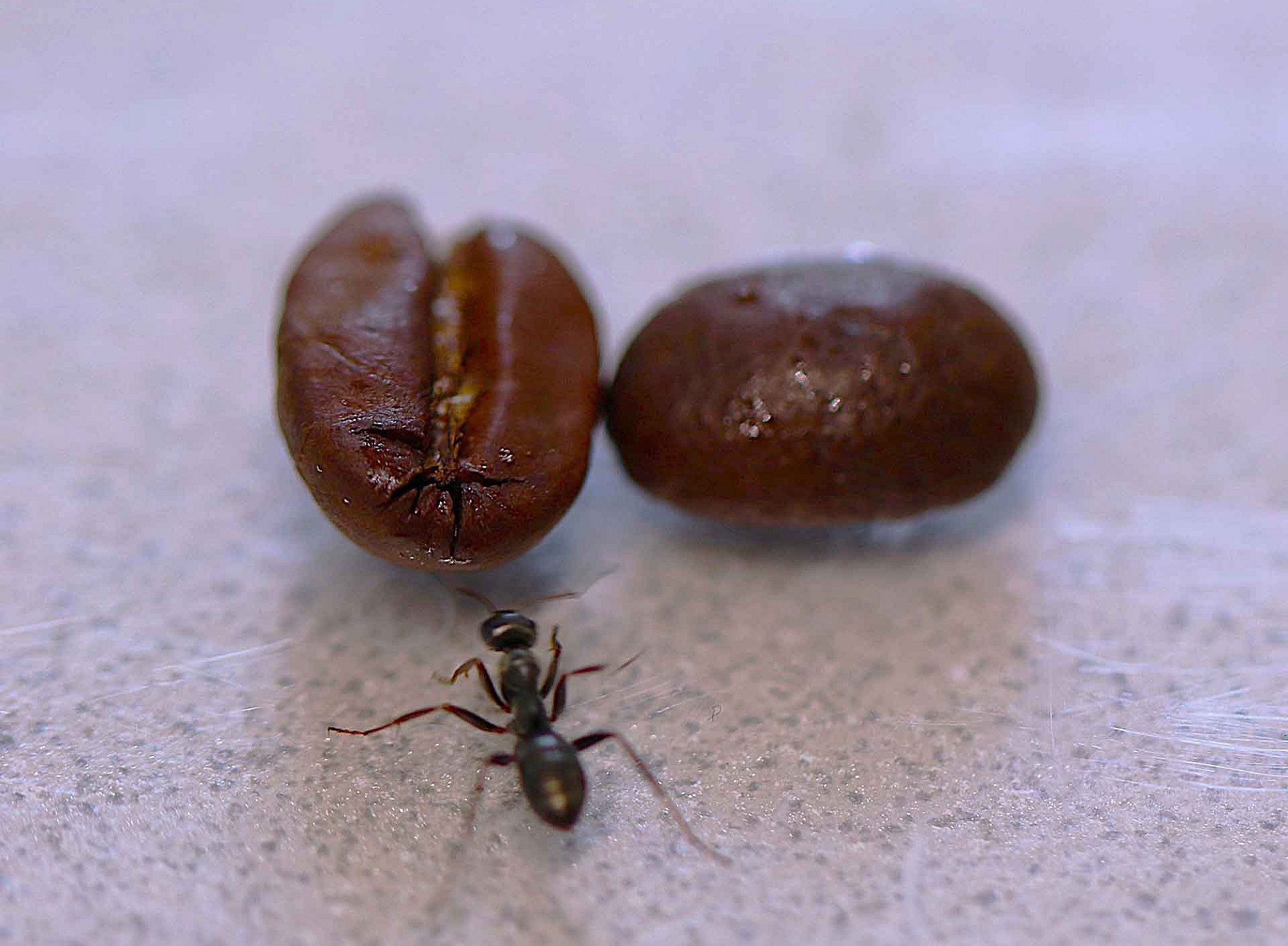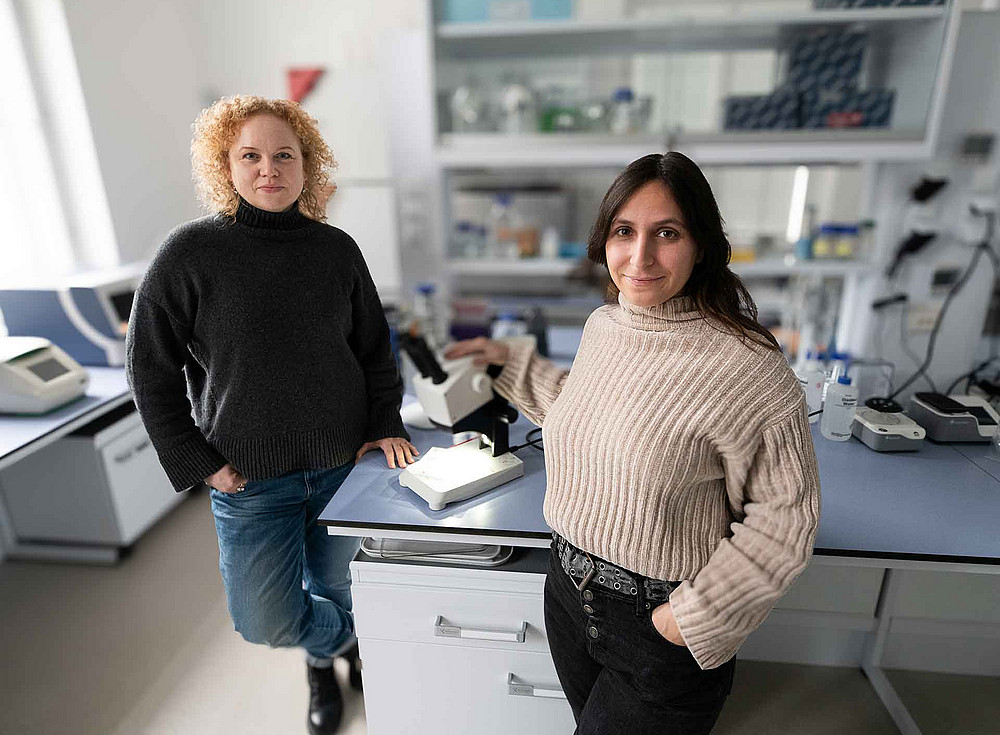
“Nature is the pharmacy of ants. They ingest certain substances to combat diseases,” says Danae Nyckees, PhD-student at the Department of Biology. Together with Dalial Freitak, head of the insect health and biology research group at the University of Graz, Christoph Hahn and Heikki Helanterä (University of Oulu, Finland) she investigated whether caffeine is among these substances and what effects it has.
The team observed the behavior of the animals using an ant species (Formica fusca) that is widespread in Austria. Assuming that the ants were exposed to a common fungal pathogen (Beauveria bassiana).
While we take in caffeine at the breakfast table, in coffee shops, or at the vending machine during office breaks, ants find it in certain plants. “For example, in citrus plants in the Mediterranean region,” explains Dalial Freitak. For the study, the insects were “served” caffeine in the lab.
Positive effect on health
In the first experiment, the scientists offered the ants food with and without caffeine. It turned out that sick ants ate more of the food containing a naturally occurring concentration of 100 milligrams per kilogram. This is about a tenth of the caffeine in a cup of coffee. “The ants remained active for longer and mortality was delayed,” reports Danae Nyckees.
In the second series of tests, the researchers tested the direct effect on the pathogen. “We found that caffeine also slowed down the development of the fungus, which could be linked to the positive effect on the health of the animals,” Nyckees explains one of the results recently published in the journal Animal Behaviour.
Conclusion: Caffeine can support ants in defending themselves against diseases. Dalial Freitak illustrates: “When we have a cold, for example, we eat more honey to fight the infection.”
The two biologists also emphasize the great importance for the ecosystem: “A balanced and varied diet also plays a major role for ants. They get this in a healthy and diverse forest—the supermarket of insects.”