



Begin of page section:
Page sections:

  • Go to contents (Accesskey 1)
  • Go to position marker (Accesskey 2)
  • Go to main navigation (Accesskey 3)
  • Go to sub navigation (Accesskey 4)
  • Go to additional information (Accesskey 5)
  • Go to page settings (user/language) (Accesskey 8)
  • Go to search (Accesskey 9)

End of this page section. Go to overview of page sections

Begin of page section:
Page settings:

English en
Deutsch de
Search
Login

End of this page section. Go to overview of page sections

Begin of page section:
Search:

Search for details about Uni Graz
Close

End of this page section. Go to overview of page sections


Search

Begin of page section:
Main navigation:

Page navigation:

  • University

    University
    • About the University
    • Organisation
    • Faculties
    • Library
    • Working at University of Graz
    • Campus
    Developing solutions for the world of tomorrow - that is our mission. Our students and our researchers take on the great challenges of society and carry the knowledge out.
  • Research Profile

    Research Profile
    • Our Expertise
    • Research Questions
    • Research Portal
    • Promoting Research
    • Research Transfer
    • Ethics in Research
    • Commission for Scientific Integrity
    Scientific excellence and the courage to break new ground. Research at the University of Graz creates the foundations for making the future worth living.
  • Studies

    Studies
    • Prospective Students
    • Students
  • Community

    Community
    • International
    • Location
    • Research and Business
    • Alumni
    The University of Graz is a hub for international research and brings together scientists and business experts. Moreover, it fosters the exchange and cooperation in study and teaching.
  • Spotlight
Topics
  • Sustainable University
  • Researchers answer
  • Work for us
Close menu

End of this page section. Go to overview of page sections

Begin of page section:
You are here:

University of Graz News Warum trennt eine Gas-Pipeline die Staaten?

End of this page section. Go to overview of page sections

Monday, 22 October 2018

Warum trennt eine Gas-Pipeline die Staaten?

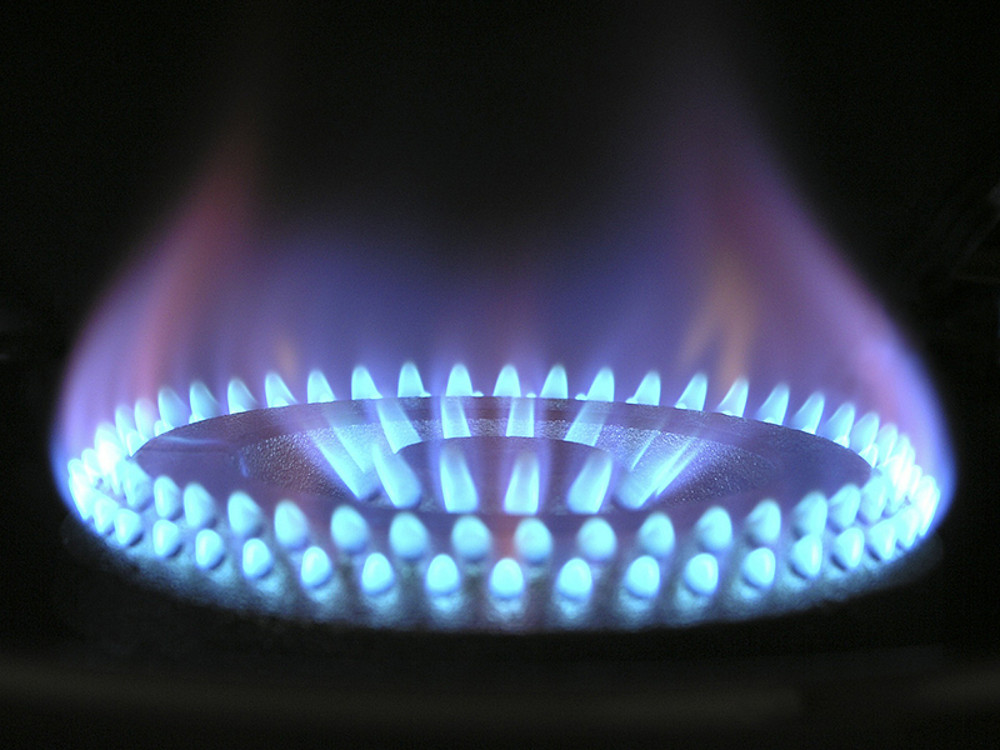
Die Pipeline Nord Stream 2 wird russisches Gas nach Deutschland liefern und sorgt für politischen Zündstoff. Foto: pixabay.com

Die Pipeline Nord Stream 2 wird russisches Gas nach Deutschland liefern und sorgt für politischen Zündstoff. Foto: pixabay.com

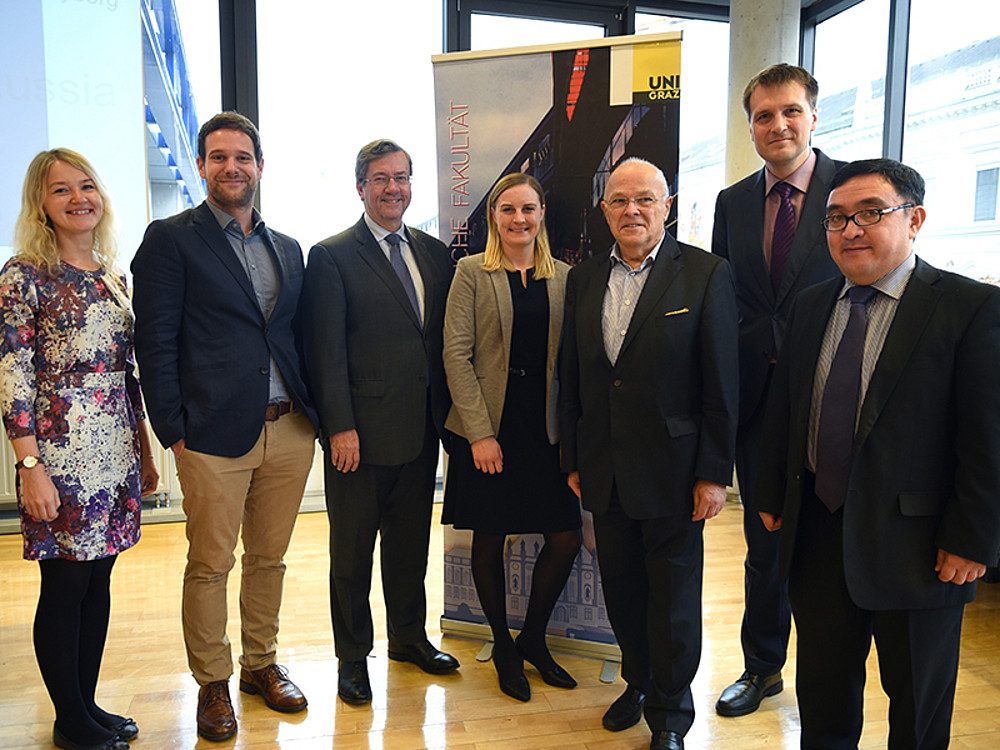
Eine ExpertInnenrunde diskutierte (v. l.): Aiste Mickonyte, Paul Gragl, Daniel S. Hamilton, Nina Zafoschnig, Joseph Marko, Benedikt Harzl und Zhenis Kembayev Foto: Uni Graz/Schweiger ©Uni Graz/Schweiger

Eine ExpertInnenrunde diskutierte (v. l.): Aiste Mickonyte, Paul Gragl, Daniel S. Hamilton, Nina Zafoschnig, Joseph Marko, Benedikt Harzl und Zhenis Kembayev Foto: Uni Graz/Schweiger

ExpertInnenrunde beleuchtete die Verzahnung von Recht und Politik

Warum heizt eine Gasleitung die politischen Konflikte an? Die einen halten die Pipeline Nord Stream 2, die russisches Gas nach Deutschland liefern wird, für einen großen Wurf. Andere befürchten, dass sich die Abhängigkeit von Russland verstärkt. Und in die brisante politische Debatte zwischen USA, EU und Russland mischen sich auch noch juristische Unklarheiten, ob die Pipeline Unions- oder Völkerrecht betrifft. Scheinbar unlösbare Fragen, denen sich ForscherInnen am Russian East European & Eurasian Studies Centre (REEES) der Universität Graz im Zuge eines wissenschaftlichen Meetings stellten. Und versuchten gemeinsam mit weiteren ExpertInnen am 17. und 18. Oktober 2018 an der Universität Graz Antworten darauf zu finden. 

Das Impulsreferat lieferte Daniel S. Hamilton, Professor Johns Hopkins University (USA), auf dem Podium diskutierten unter der Moderation von Benedikt Harzl und Aiste Mickonyte (beide REEES) Paul Gragl von der Queen Mary University London (GB), Zhenis Kembayev von der KIMEP University in Almaty (Kasachstan), Nina Zafoschnig (Schönherr Rechtsanwälte GmbH) und Joseph Marko, Verfassungsjurist und Politikwissenschafter an der Universität Graz. 

„Es geht um mehr als nur um Gas. Die Pipeline steht hier stellvertretend für ideologische Auseinandersetzungen“, brachte Rechtswissenschafter Benedikt Harzl das komplexe Thema auf den Punkt. „Recht und Politik sind rund um dieses Projekt ungemein miteinander verzahnt. Recht ist dabei politisch aufgeladen und wird zu einem Medium der Regierungen“, so Harzl. Ein Umstand, der sich aufgrund des zunehmenden politischen Populismus – vor allem auch in den USA –  massiv verschärft habe. 

Die Kontroverse entwickelte sich zu einem gordischen Knoten, den auch die ExpertInnenrunde nicht lösen konnte. Denn es müsse, fasste Harzl die Diskussion zusammen, eine ganz zentrale Frage geklärt werden: Welches Verhältnis zwischen Europa, Eurasien und USA wollen wir? Erschwert werde eine Beantwortung dadurch, dass es in Europa keine Einigkeit in dieser Frage gäbe. Daniel S. Hamilton meinte sogar: „Die EU ist mittlerweile der Importeur von Instabilität.“ Daher sei es notwendig, weniger das Trennende, sondern mehr die Gemeinsamkeiten in der Europäischen Union hervorzustreichen. 

Die Tagung wurde vom Russian East European & Eurasian Studies Centre gemeinsam mit dem Review of Central and East European Law veranstaltet. 
created by Andreas Schweiger

Related news

Higher Education Strategy 2040: Austria’s universities on course for the future

Austria has 77 higher education institutions, which is above the EU average – but does this really make sense? The new Higher Education Strategy 2040 focuses on cooperation rather than mergers. As one of the six largest universities in Austria, the University of Graz plays a central role in this.

Climate research in Greenland: Old data provides new insights

The polar explorer and University of Graz professor Alfred Wegener left behind a unique collection of climate data from Greenland. A research team from the University of Graz is now analysing this 100-year-old treasure trove of data and comparing it with current measurements.

Diversity in nature and science: How we talk about plants and each other

Ginkgo, kiwi, hemp: they exist as male and female plants. Anyone who paid attention in biology class will confirm this. But is this categorisation, established by Carl von Linné almost 300 years ago, still valid today? An interdisciplinary team at the University of Graz is questioning these attributions and using this as a starting point to provide food for thought for gender-sensitive interaction between students, scientific and teaching staff.

Around the world in eight stops: the Long Night of Research at the University of Graz

On 24 April from 5 pm, you can take a short trip around the globe at the University of Graz, discovering pecularities of foreign countries or new local features in the entrance hall of the University Library. The itinerary takes you through introduced animal species, political attitudes and the omnipotence of algorithms. There will also be a programme in the historic reading hall, as well as at the UniGraz@Museum and the University Archive.

Begin of page section:
Additional information:

University of Graz
Universitaetsplatz 3
8010 Graz
Austria
  • Contact
  • Web Editors
  • Moodle
  • UNIGRAZonline
  • Imprint
  • Data Protection Declaration
  • Accessibility Declaration
Weatherstation
Uni Graz

End of this page section. Go to overview of page sections

End of this page section. Go to overview of page sections

Begin of page section:

End of this page section. Go to overview of page sections


