Begin of page section:
Page sections:

  • Go to contents (Accesskey 1)
  • Go to position marker (Accesskey 2)
  • Go to main navigation (Accesskey 3)
  • Go to sub navigation (Accesskey 4)
  • Go to additional information (Accesskey 5)
  • Go to page settings (user/language) (Accesskey 8)
  • Go to search (Accesskey 9)

End of this page section. Go to overview of page sections

Begin of page section:
Page settings:

English en
Deutsch de
Search
Login

End of this page section. Go to overview of page sections

Begin of page section:
Search:

Search for details about Uni Graz
Close

End of this page section. Go to overview of page sections


Search

Begin of page section:
Main navigation:

Page navigation:

  • University

    University
    • About the University
    • Organisation
    • Faculties
    • Library
    • Working at University of Graz
    • Campus
    Developing solutions for the world of tomorrow - that is our mission. Our students and our researchers take on the great challenges of society and carry the knowledge out.
  • Research Profile

    Research Profile
    • Our Expertise
    • Research Questions
    • Research Portal
    • Promoting Research
    • Research Transfer
    • Ethics in Research
    • Commission for Scientific Integrity
    Scientific excellence and the courage to break new ground. Research at the University of Graz creates the foundations for making the future worth living.
  • Studies

    Studies
    • Prospective Students
    • Students
    • Post-registration Law
  • Community

    Community
    • International
    • Location
    • Research and Business
    • Alumni
    The University of Graz is a hub for international research and brings together scientists and business experts. Moreover, it fosters the exchange and cooperation in study and teaching.
Topics
  • Sustainable University
  • Researchers answer
  • Work for us
Close menu

End of this page section. Go to overview of page sections

Begin of page section:
You are here:

University of Graz News University of Graz study shows: public money for climate adaptation pays off

End of this page section. Go to overview of page sections

Thursday, 05 February 2026

University of Graz study shows: public money for climate adaptation pays off

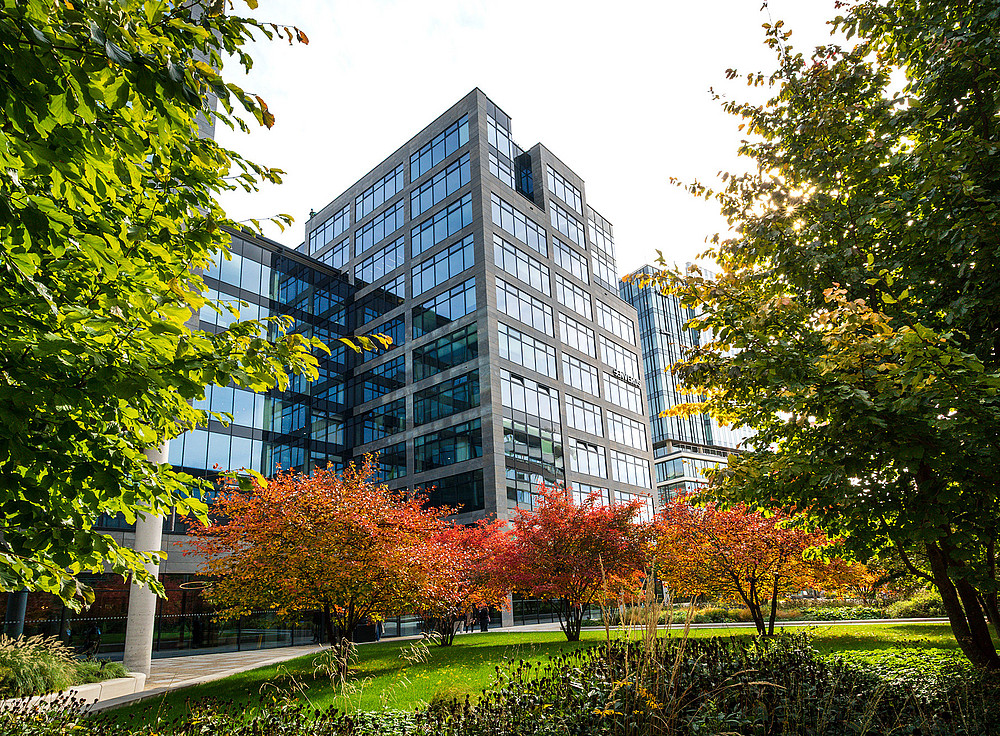
Modern office district in the city center. New glass high-rise buildings with a pedestrian walkway and a small park with trees in the business center.

More greenery in cities protects residents from heat. This saves the state from illness-related costs and tax revenue losses due to declining productivity. Photo: Jan/Adobe Stock

In order to plug the budget gap, the state is currently pinching pennies. However, when it comes to adapting to climate change, investing helps to save money. This is shown by a recently published study by the Wegener Centre at the University of Graz. "Our analyses show that protective measures more than pay off in the medium term," summarises lead author Eva Preinfalk.

Droughts, floods and forest fires place a double burden on the public purse. On the one hand, state money endows the disaster fund, which compensates those affected and finances the reconstruction of destroyed infrastructure. Secondly, the treasury loses tax revenue when harvests fail or productivity falls. Austria already invests around 600 million euros a year in climate change adaptation, for example in protective structures or renaturalisation. "We have compared these funds with the average damage to be expected from climate impacts by 2050," explains Preinfalk. "The modelling clearly shows that the expenditure is profitable for the state budget," the researcher sums up. With adaptation, tax revenues are 1.7 billion euros higher per year than in a scenario without additional investment. Savings measures in this area would therefore lead to significantly higher costs in the medium term.

Increasing risk
Austria is endeavouring to arm itself against 100-year floods throughout the country. Densely populated urban areas in particular are already able to withstand much more severe events. "However, as the intensity of storms increases, it is foreseeable that existing protection levels will be exceeded more and more often," warns Preinfalk. In 2024 the Vienna River even threatened to overflow the city during a thousand-year flood. Adaptation does not necessarily have to be expensive: "It would help a lot to take targeted measures into greater consideration when planning new buildings, renovating existing infrastructure or in agriculture and forestry," the researcher recommends. Information campaigns - for example in the health sector - would also make a relevant contribution.

Publication:
Eva Preinfalk, Nina Knittel, Birgit Bednar-Friedl, Gabriel Bachner, Elisa Sainz de Murieta, Max Tesselaar: Fiscal implications of public climate change adaptation: An analysis of three European countries, Ecological Economics

created by Dagmar Eklaude

Related news

Studying at the University of Graz: How to enrol

Ready for a new chapter in your life with the start of your studies at the University of Graz in the winter semester 2026/27? Here you will find information on deadlines, admission procedures, registration, and everything else you need to successfully start your studies in the fall.

Europe Day: Strengthening international expertise with Arqus

On 9 May, the spotlight will be on Europe. At the University of Graz, European cooperation is also a tangible part of everyday student life – not least through the Arqus university alliance. Master’s and PhD students can currently register for the Arqus micro-credential in ‘Advanced Creative Thinking and Communication’.

A substantial community: the key role of soil crusts in the earth system

They are often overshadowed by the plant world: lichens, fungi, mosses and bacteria, which form unique communities on rocks and trees or as soil crusts. Bettina Weber from the University of Graz is bringing this biological alliance into the research spotlight. Her research shows that these communities form an essential part of the Earth’s critical zone and play a key role in the interactions between land and atmosphere. Bettina Weber was honoured by the European Geosciences Union for her groundbreaking research at the beginning of May.

The digital world of tomorrow: University of Graz works with people to shape the future

Digitalisation is supposed to make everything better: artificial intelligence that even organises travel. The car that drives itself. Robots that care for us in our old age. But what kind of future do people actually want? What role should technology play in this? The University of Graz is exploring these questions through a new research facility. At the Graz Sociodigital and Participatory Futures Studio – or GraSP Futures Studio for short – young and old work together with researchers to design visions of the future that also critically examine technical innovations.

Begin of page section:
Additional information:

University of Graz
Universitaetsplatz 3
8010 Graz
Austria
  • Contact
  • Web Editors
  • Moodle
  • UNIGRAZonline
  • Imprint
  • Data Protection Declaration
  • Accessibility Declaration
Weatherstation
Uni Graz

End of this page section. Go to overview of page sections

End of this page section. Go to overview of page sections

Begin of page section:

End of this page section. Go to overview of page sections