Begin of page section:
Page sections:

  • Go to contents (Accesskey 1)
  • Go to position marker (Accesskey 2)
  • Go to main navigation (Accesskey 3)
  • Go to sub navigation (Accesskey 4)
  • Go to additional information (Accesskey 5)
  • Go to page settings (user/language) (Accesskey 8)
  • Go to search (Accesskey 9)

End of this page section. Go to overview of page sections

Begin of page section:
Page settings:

English en
Deutsch de
Search
Login

End of this page section. Go to overview of page sections

Begin of page section:
Search:

Search for details about Uni Graz
Close

End of this page section. Go to overview of page sections


Search

Begin of page section:
Main navigation:

Page navigation:

  • University

    University
    • About the University
    • Organisation
    • Faculties
    • Library
    • Working at University of Graz
    • Campus
    Developing solutions for the world of tomorrow - that is our mission. Our students and our researchers take on the great challenges of society and carry the knowledge out.
  • Research Profile

    Research Profile
    • Our Expertise
    • Research Questions
    • Research Portal
    • Promoting Research
    • Research Transfer
    • Ethics in Research
    • Commission for Scientific Integrity
    Scientific excellence and the courage to break new ground. Research at the University of Graz creates the foundations for making the future worth living.
  • Studies

    Studies
    • Prospective Students
    • Students
    • Post-registration Law
  • Community

    Community
    • International
    • Location
    • Research and Business
    • Alumni
    The University of Graz is a hub for international research and brings together scientists and business experts. Moreover, it fosters the exchange and cooperation in study and teaching.
Topics
  • Sustainable University
  • Researchers answer
  • Work for us
Close menu

End of this page section. Go to overview of page sections

Begin of page section:
You are here:

University of Graz News Whistles against division: Rivka Saltiel experienced both unrest and solidarity in the US

End of this page section. Go to overview of page sections

Tuesday, 19 May 2026

Whistles against division: Rivka Saltiel experienced both unrest and solidarity in the US

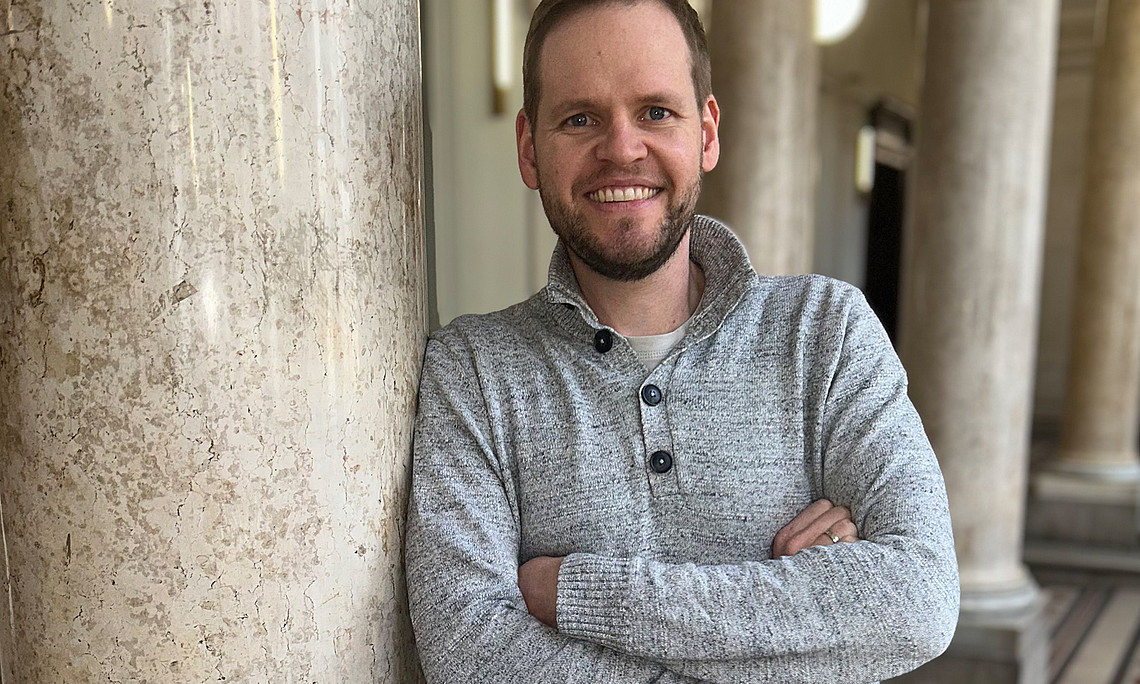
Portrait of Rivka Saltiel

Geographer Rivka Saltiel has been living in Minneapolis as a visiting professor since the start of the semester. She shares her impressions of the unrest and the solidarity. Photo: Saltiel

Rivka Saltiel, a geographer from the University of Graz, has been working as a visiting professor in Minneapolis for the past five months and has witnessed first-hand the state of emergency and the deadly raids carried out by the immigration agency ICE. She reports on the collective solidarity of the population, the resistance to the President’s attempts to divide the community, and the power of informal social networks that ensure day-to-day provision and safety. These practices of solidarity are also relevant for Europe.

My arrival in January coincided with the height of ‘Operation Metro Surge’ – just a few days after the murder of Renee Good and shortly before the death of Alex Pretti. Both were shot dead by ICE officers in the street. Minneapolis was in a state of emergency. There were 3,800 arrests by the immigration authorities. People were dragged out of their cars on the street; countless vehicles were left abandoned. ICE officers waited specifically outside schools, hospitals, community centres, supermarkets and restaurants to make arrests. Places that were supposed to guarantee care and safety became places of fear for many. Left behind were families without parents, babies without breast milk, households without an income.

For many residents, leaving the house became a risk. A certain appearance or an audible accent was enough to make someone a target – often regardless of citizenship or residency status. Schools switched to online lessons; many lost their jobs. Those particularly affected were people who work and live in precarious conditions, yet keep the city running every day as cleaners, care workers and childcare providers. 

Solidarity and moral courage
Yet it was precisely in this situation that it became clear what sustains a city when people refuse to accept these forms of violence as the new normal: social solidarity and shared care became the collective response to institutional mechanisms of exclusion and state violence. Far-reaching and multi-layered support structures to assist the migrant population emerged.
Minneapolis and the state of Minnesota have a strong democratic majority, a long history of progressive social movements and strong community organising. The experiences of the uprisings following the murder of George Floyd in 2020 – not far from the places where Good and Pretti were killed – continue to have a profound impact on everyday political life and life in the city. In response to Operation Metro Surge and the extreme actions of ICE officers, many of the networks from that time were reactivated, and some were newly formed. Neighbourhoods organised “mutual aid”, self-organised support, for people who stayed at home. Patrols warned of raids across a wide area using whistles and via Signal groups.
Whistles became a symbol of this resistance. They were mass-produced using 3D printers and distributed free of charge in libraries, supermarkets and pharmacies. People documented ICE operations, stood in their way, blocked roads and risked their lives to protect neighbours. “We love our immigrant neighbours” is written on countless posters in windows and shop premises. This sense of belonging and the expression of social closeness directly challenges the US President’s rhetoric. Neighbourhood becomes a political practice of solidarity.
The protest is also making its mark on the city’s physical landscape: alongside countless “ICE OUT” posters catching the eye on every corner, roadblocks have been erected along central transport routes to slow down the agency’s vehicles and warn residents in good time. At the same time, spontaneous memorials have sprung up for Alex Pretti and Renee Good. Flowers, candles and letters fill sections of the streets. These places take on a new political significance: they serve as reminders of the violence, make grief public, and are tended by residents together with the families of those murdered. The city and its community are thus actively defended and collectively re-established.

Infrastructure of care
Building on my research into Caring Cities – including in the context of care for refugees in Western Europe – the dynamics in Minneapolis can be analysed as the formation of alternative infrastructures of care. Where state institutions create insecurity for sections of the population, informal social networks emerge to ensure everyday care and safety. These practices – ranging from warning systems, through medical care and collective childcare, to rent funds – go beyond individual neighbourhood assistance. From a feminist and care-ethical perspective, they constitute a ‘Caring-with’: a political practice of caring together, based on social bonds, trust and solidarity. This public form of care articulates a collective right to the city by defining security not through repression, but through the mutual material and emotional interdependence of residents.
These events thus illustrate a renegotiation of urban responsibility: care is organised here not as a private burden, but as a collective resource that counteracts the fragmenting intent of state power.
created by protocolled by Dagmar Eklaude

Related news

Record of reported species: Styria wins the global City Nature Challenge

Observers in Styria recorded 5,158 different animals, plants and fungi as part of the international City Nature Challenge between 24 and 27 April 2026. This saw the region take first place in the "species" category. Ostrava in the Czech Republic made the most observations, with just under 140,000, whilst the San Francisco Bay Area had the highest number of participants, namely 3,019.

Studying at the University of Graz: How to enrol

Ready for a new chapter in your life with the start of your studies at the University of Graz in the winter semester 2026/27? Here you will find information on deadlines, admission procedures, registration, and everything else you need to successfully start your studies in the fall.

Europe Day: Strengthening international expertise with Arqus

On 9 May, the spotlight will be on Europe. At the University of Graz, European cooperation is also a tangible part of everyday student life – not least through the Arqus university alliance. Master’s and PhD students can currently register for the Arqus micro-credential in ‘Advanced Creative Thinking and Communication’.

A substantial community: the key role of soil crusts in the earth system

They are often overshadowed by the plant world: lichens, fungi, mosses and bacteria, which form unique communities on rocks and trees or as soil crusts. Bettina Weber from the University of Graz is bringing this biological alliance into the research spotlight. Her research shows that these communities form an essential part of the Earth’s critical zone and play a key role in the interactions between land and atmosphere. Bettina Weber was honoured by the European Geosciences Union for her groundbreaking research at the beginning of May.

Begin of page section:
Additional information:

University of Graz
Universitaetsplatz 3
8010 Graz
Austria
  • Contact
  • Web Editors
  • Moodle
  • UNIGRAZonline
  • Imprint
  • Data Protection Declaration
  • Accessibility Declaration
Weatherstation
Uni Graz

End of this page section. Go to overview of page sections

End of this page section. Go to overview of page sections

Begin of page section:

End of this page section. Go to overview of page sections