



Begin of page section:
Page sections:

  • Go to contents (Accesskey 1)
  • Go to position marker (Accesskey 2)
  • Go to main navigation (Accesskey 3)
  • Go to sub navigation (Accesskey 4)
  • Go to additional information (Accesskey 5)
  • Go to page settings (user/language) (Accesskey 8)
  • Go to search (Accesskey 9)

End of this page section. Go to overview of page sections

Begin of page section:
Page settings:

English en
Deutsch de
Search
Login

End of this page section. Go to overview of page sections

Begin of page section:
Search:

Search for details about Uni Graz
Close

End of this page section. Go to overview of page sections


Search

Begin of page section:
Main navigation:

Page navigation:

  • University

    University
    • About the University
    • Organisation
    • Faculties
    • Library
    • Working at University of Graz
    • Campus
    Developing solutions for the world of tomorrow - that is our mission. Our students and our researchers take on the great challenges of society and carry the knowledge out.
  • Research Profile

    Research Profile
    • Our Expertise
    • Research Questions
    • Research Portal
    • Promoting Research
    • Research Transfer
    • Ethics in Research
    • Commission for Scientific Integrity
    Scientific excellence and the courage to break new ground. Research at the University of Graz creates the foundations for making the future worth living.
  • Studies

    Studies
    • Prospective Students
    • Students
  • Community

    Community
    • International
    • Location
    • Research and Business
    • Alumni
    The University of Graz is a hub for international research and brings together scientists and business experts. Moreover, it fosters the exchange and cooperation in study and teaching.
  • Spotlight
Topics
  • Sustainable University
  • Researchers answer
  • Work for us
Close menu

End of this page section. Go to overview of page sections

Begin of page section:
You are here:

University of Graz News Caring Communities

End of this page section. Go to overview of page sections

Friday, 15 March 2019

Caring Communities

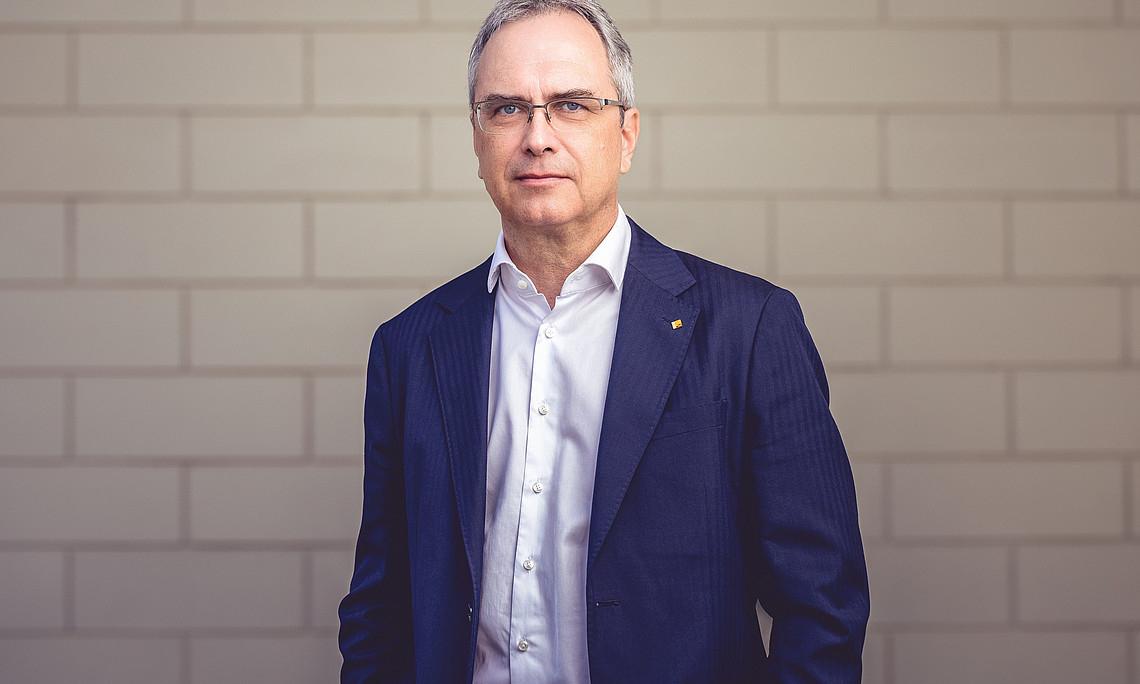
[Translate to English:] Engagement und Zusammenhalt zwischen den Generationen: Wie sorgende Gemeinschaften funktionieren können, erforscht ein Team der Universität Graz. Foto: Uni Graz/Kanizaj

[Translate to English:] Engagement und Zusammenhalt zwischen den Generationen: Wie sorgende Gemeinschaften funktionieren können, erforscht ein Team der Universität Graz. Foto: Uni Graz/Kanizaj

Andreas Heller and his team are mapping a radically new concept for the care of the elderly and the dying.

"Baby boomers have high expectations when it comes to autonomy and flexibility; they don't want to move into a typical care home." This recognition, taken from a number of studies, has led Andreas Heller, who has been Professor of Palliative Care and Organisational Ethics at the University of Graz for the past year, to question prevailing methods of caring for the elderly and dying. The current social trend – more and more people needing care and less and less family members able to care for them – means that there is an urgent need for the kind of solutions wholly foreign to the present political thinking. "Our care system, with its strong focus on bed care, has the wrong approach. Robots, digitisation and 'care slaves' from Eastern Europe are not the way forward," Andreas Heller says firmly. Together with Klaus Wegleitner and Patrick Schuchter, he is working on several projects to research intergenerational neighbourhood solutions and to develop what he calls "caring communities" as an alternative. Relatives, neighbours and voluntary supporters help to stabilise the daily routines of elderly and chronically ill people, taking on tasks such as cooking, shopping and housework or simply offering their company. "Professional care for people at the end of their lives is not enough. There needs to be a mixture of care organised on a local, neighbourhood basis," says Klaus Wegleitner.

The team's research work is based around transdisciplinary cooperation with the individuals concerned, their families, relevant organisations, politicians and even architectural practices. "We consider multi-faceted points of view in order to arrive at viable, shared approaches. It is also important to connect with other organisations and individuals involved in the care process and to consider the status of care work in our society as a whole," Patrick Schuchter emphasises. This interdisciplinary approach makes Heller's professorship and the Public Care Department at the University of Graz unique in Europe. The scientists – Wegleitner is both a sociologist and a public health researcher, Schuchter is a philosopher, ethicist, health scientist and nurse – are addressing on the one hand the needs of sick, elderly and disabled people. On the other hand they tackle the question of how civil society can be mobilised to take on part of the care. Together with gerontologist Ulla Kriebernegg, they are establishing a care and age research cluster which is becoming involved in social policy debates and seeking solutions for a good life till the end. "This work is providing impetuses across the board for the future of society. When you are dying, you see the existential questions of life through a magnifying glass. We are searching for answers that are relevant for everyone," is how Andreas Heller summarises it.

Symposium
These wide-ranging perspectives will be put across on March 15th and 16th at a symposium attended by 250 participants from six European countries, including care workers, social managers and palliative care professionals. Under the title "Horizons of Care", international speakers from a variety of fields will discuss the subject of how social cohesion can develop and what we must do to safeguard quality of life in our world. "The collective future of our society is at stake," contends Klaus Wegleitner.



created by Dagmar Eklaude

Related news

Higher Education Strategy 2040: Austria’s universities on course for the future

Austria has 77 higher education institutions, which is above the EU average – but does this really make sense? The new Higher Education Strategy 2040 focuses on cooperation rather than mergers. As one of the six largest universities in Austria, the University of Graz plays a central role in this.

Climate research in Greenland: Old data provides new insights

The polar explorer and University of Graz professor Alfred Wegener left behind a unique collection of climate data from Greenland. A research team from the University of Graz is now analysing this 100-year-old treasure trove of data and comparing it with current measurements.

Diversity in nature and science: How we talk about plants and each other

Ginkgo, kiwi, hemp: they exist as male and female plants. Anyone who paid attention in biology class will confirm this. But is this categorisation, established by Carl von Linné almost 300 years ago, still valid today? An interdisciplinary team at the University of Graz is questioning these attributions and using this as a starting point to provide food for thought for gender-sensitive interaction between students, scientific and teaching staff.

Around the world in eight stops: the Long Night of Research at the University of Graz

On 24 April from 5 pm, you can take a short trip around the globe at the University of Graz, discovering pecularities of foreign countries or new local features in the entrance hall of the University Library. The itinerary takes you through introduced animal species, political attitudes and the omnipotence of algorithms. There will also be a programme in the historic reading hall, as well as at the UniGraz@Museum and the University Archive.

Begin of page section:
Additional information:

University of Graz
Universitaetsplatz 3
8010 Graz
Austria
  • Contact
  • Web Editors
  • Moodle
  • UNIGRAZonline
  • Imprint
  • Data Protection Declaration
  • Accessibility Declaration
Weatherstation
Uni Graz

End of this page section. Go to overview of page sections

End of this page section. Go to overview of page sections

Begin of page section:

End of this page section. Go to overview of page sections

