Begin of page section:
Page sections:

  • Go to contents (Accesskey 1)
  • Go to position marker (Accesskey 2)
  • Go to main navigation (Accesskey 3)
  • Go to sub navigation (Accesskey 4)
  • Go to additional information (Accesskey 5)
  • Go to page settings (user/language) (Accesskey 8)
  • Go to search (Accesskey 9)

End of this page section. Go to overview of page sections

Begin of page section:
Page settings:

English en
Deutsch de
Search
Login

End of this page section. Go to overview of page sections

Begin of page section:
Search:

Search for details about Uni Graz
Close

End of this page section. Go to overview of page sections


Search

Begin of page section:
Main navigation:

Page navigation:

  • University

    University
    • About the University
    • Organisation
    • Faculties
    • Library
    • Working at University of Graz
    • Campus
    Developing solutions for the world of tomorrow - that is our mission. Our students and our researchers take on the great challenges of society and carry the knowledge out.
  • Research Profile

    Research Profile
    • Our Expertise
    • Research Questions
    • Research Portal
    • Promoting Research
    • Research Transfer
    • Ethics in Research
    • Commission for Scientific Integrity
    Scientific excellence and the courage to break new ground. Research at the University of Graz creates the foundations for making the future worth living.
  • Studies

    Studies
    • Prospective Students
    • Students
  • Community

    Community
    • International
    • Location
    • Research and Business
    • Alumni
    The University of Graz is a hub for international research and brings together scientists and business experts. Moreover, it fosters the exchange and cooperation in study and teaching.
  • Spotlight
Topics
  • Sustainable University
  • Researchers answer
  • Work for us
Close menu

End of this page section. Go to overview of page sections

Begin of page section:
You are here:

University of Graz News Equal rights for all?

End of this page section. Go to overview of page sections

Tuesday, 04 June 2019

Equal rights for all?

[Translate to English:] Hilfe oder Menschenschmuggel? Der Film BOATPEOPLE diskutiert das kontroverse Thema, ob die Rettung eines schiffbrüchigen Geflüchteten aus Somalia ethisch oder rechtlich in Ordnung ist. Foto: Art-Media

[Translate to English:] Hilfe oder Menschenschmuggel? Der Film BOATPEOPLE diskutiert das kontroverse Thema, ob die Rettung eines schiffbrüchigen Geflüchteten aus Somalia ethisch oder rechtlich in Ordnung ist. Foto: Art-Media

Erasmus(+) project explores hospitality in European film

Moussa is on a ship from Somalia destined for Europe, and it sinks. Hannes and Gerlinde, who are cruising through the Mediterranean in their luxurious catamaran, rescue the young man, who asks them to bring him to shore illegally. Should the couple help Moussa and be potentially accused of human smuggling?

This is the question addressed in the short film BOATPEOPLE by the young Austrian director Paul Meschuh. This is just one of the 19 films that Silvia Schultermandl und David Hucek, cultural studies researchers at the Institute of American Studies at the University of Graz, analysed within the scope of the Erasmus+ project ‘Hospitality in Film’. One of their aims is to make an online film registry ‘to enable a more sensitive, reflected debate on the so-called refugee crisis in times of increasing populism and, at the same time, to highlight Europeans’ role in migration, flight and asylum within a global context’, explain Schultermandl and Hucek.

The researchers chose 19 films from nine European countries for the analysis. Schultermandl and Hucek found it particularly interesting that all of the films were from the perspective of the ‘recipient countries’ and illustrated their approaches to hospitality. The researchers drew the following conclusion: ‘We saw that European filmmakers consciously address a variety of ‘domestic’ topics, so to speak, which are often ignored in public debate surrounding refugees’, says David Hucek. One example is the issue of gender equality. Do liberality, open-mindedness and tolerance of diversity – values which have been considered fundamentally European since the Enlightenment –  really apply for everyone? Certainly not, stress the researchers. ‘The message to refugees is something more like, ‘We’re opening our borders, and here are the rules we expect you to follow’’, explains Silvia Schultermandl. Power structures in relation to refugees are established quickly and clearly to avoid becoming a prisoner in your own home. This set of rules isn’t applied so strictly to other Europeans, at least not an interpersonal level. The European film addresses this ‘new form of xenophobia’, which is how the researchers refer to this discrepancy, as much as the topic of Europe’s international accountability in terms of the 2015 refugee crisis.

However, the concept of hospitality goes beyond the topics of migration, flight and asylum. In Christoph Kuschnig’s short film ‘Hatch’, for example, there is a same-sex couple that takes a newborn out of a baby hatch but, owing to societal pressure, ultimately puts the child back because of perceived failure as parents. ‘This shows that your own country can be inhospitable towards you if you don’t follow a certain pattern’, say Schultermandl and Hucek.

The two Austrian researchers are part of a project consortium with seven partner universities in Spain, Great Britain, Ireland and Sweden. In addition to the online film database, a Mooc (Massive Open Online Course) on ‘Hospitality in Film’ is being planned for students; it will be completed during the course of the year. A documentary on musicians with immigrant backgrounds in London and Amsterdam is set to be made by the end of next year.

More information: https://hostfilm.usal.es
>> Film: The Sounds of Hospitality

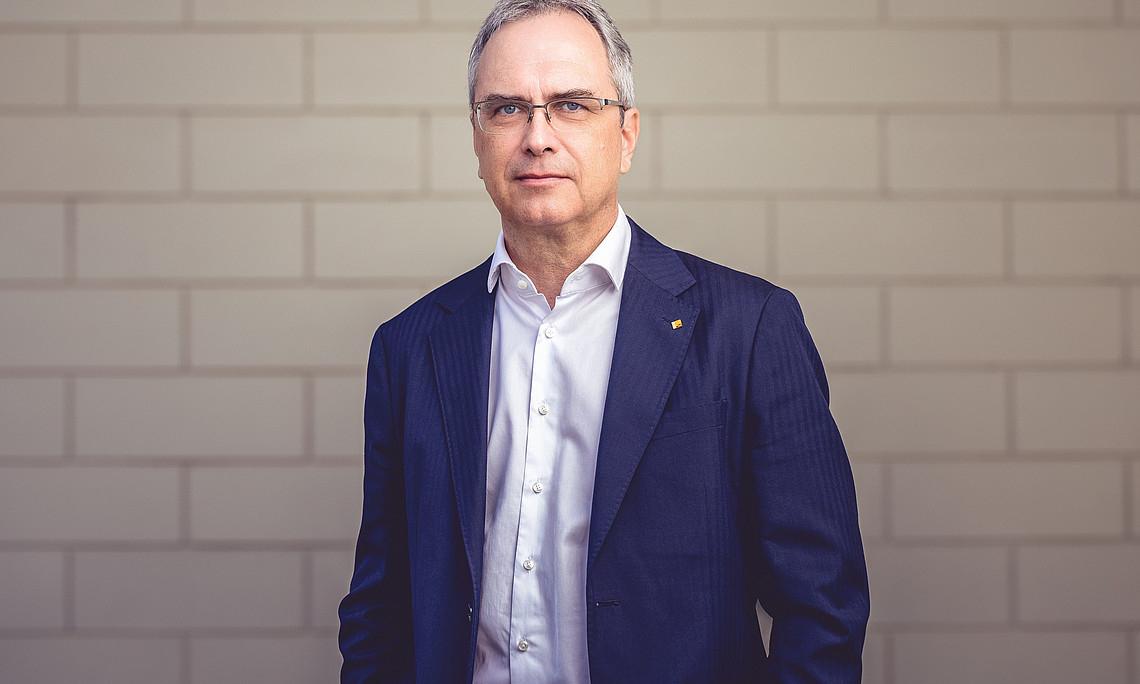
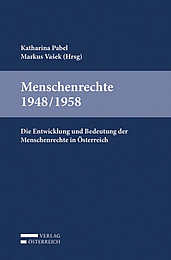
Contribution of Univ.-Prof. Gerd Oberleitner in "Menschenrechte 1948/1958"

Contribution of Univ.-Prof. Gerd Oberleitner in "Menschenrechte 1948/1958"

Katharina Pabel / Markus Vasek (eds.)

(Wien: Verlag Österreich, 2020)

"Menschenrechte 1948/1958 - Die Entwicklung und Bedeutung der Menschenrechte in Österreich", with a contribution by UNESCO Chair Prof. Gerd Oberleitner on 40 Years International Covenant on Civil and Political Rights in Austria. The publication highlights the impact of international human rights treaties on the Austrian legal order since 1948.

For more information please visit the homepage of Verlag Österreich!


created by Gerhild Leljak

Related news

Higher Education Strategy 2040: Austria’s universities on course for the future

Austria has 77 higher education institutions, which is above the EU average – but does this really make sense? The new Higher Education Strategy 2040 focuses on cooperation rather than mergers. As one of the six largest universities in Austria, the University of Graz plays a central role in this.

Climate research in Greenland: Old data provides new insights

The polar explorer and University of Graz professor Alfred Wegener left behind a unique collection of climate data from Greenland. A research team from the University of Graz is now analysing this 100-year-old treasure trove of data and comparing it with current measurements.

Diversity in nature and science: How we talk about plants and each other

Ginkgo, kiwi, hemp: they exist as male and female plants. Anyone who paid attention in biology class will confirm this. But is this categorisation, established by Carl von Linné almost 300 years ago, still valid today? An interdisciplinary team at the University of Graz is questioning these attributions and using this as a starting point to provide food for thought for gender-sensitive interaction between students, scientific and teaching staff.

Around the world in eight stops: the Long Night of Research at the University of Graz

On 24 April from 5 pm, you can take a short trip around the globe at the University of Graz, discovering pecularities of foreign countries or new local features in the entrance hall of the University Library. The itinerary takes you through introduced animal species, political attitudes and the omnipotence of algorithms. There will also be a programme in the historic reading hall, as well as at the UniGraz@Museum and the University Archive.

Begin of page section:
Additional information:

University of Graz
Universitaetsplatz 3
8010 Graz
Austria
  • Contact
  • Web Editors
  • Moodle
  • UNIGRAZonline
  • Imprint
  • Data Protection Declaration
  • Accessibility Declaration
Weatherstation
Uni Graz

End of this page section. Go to overview of page sections

End of this page section. Go to overview of page sections

Begin of page section:

End of this page section. Go to overview of page sections