



Begin of page section:
Page sections:

  • Go to contents (Accesskey 1)
  • Go to position marker (Accesskey 2)
  • Go to main navigation (Accesskey 3)
  • Go to sub navigation (Accesskey 4)
  • Go to additional information (Accesskey 5)
  • Go to page settings (user/language) (Accesskey 8)
  • Go to search (Accesskey 9)

End of this page section. Go to overview of page sections

Begin of page section:
Page settings:

English en
Deutsch de
Search
Login

End of this page section. Go to overview of page sections

Begin of page section:
Search:

Search for details about Uni Graz
Close

End of this page section. Go to overview of page sections


Search

Begin of page section:
Main navigation:

Page navigation:

  • University

    University
    • About the University
    • Organisation
    • Faculties
    • Library
    • Working at University of Graz
    • Campus
    Developing solutions for the world of tomorrow - that is our mission. Our students and our researchers take on the great challenges of society and carry the knowledge out.
  • Research Profile

    Research Profile
    • Our Expertise
    • Research Questions
    • Research Portal
    • Promoting Research
    • Research Transfer
    • Ethics in Research
    • Commission for Scientific Integrity
    Scientific excellence and the courage to break new ground. Research at the University of Graz creates the foundations for making the future worth living.
  • Studies

    Studies
    • Prospective Students
    • Students
    • Registration for Study Programme (Winter semester 2026/27)
  • Community

    Community
    • International
    • Location
    • Research and Business
    • Alumni
    The University of Graz is a hub for international research and brings together scientists and business experts. Moreover, it fosters the exchange and cooperation in study and teaching.
Topics
  • Sustainable University
  • Researchers answer
  • Work for us
Close menu

End of this page section. Go to overview of page sections

Begin of page section:
You are here:

University of Graz News Did fake news exist 400 years ago?

End of this page section. Go to overview of page sections

Wednesday, 22 May 2019

Did fake news exist 400 years ago?

Picture: Pexels.com

Picture: Pexels.com

A conference at the University of Graz will examine testimony in the early modern era. This topic will be addressed from various perspectives

People testify in Austrian courts every day; the media reports on what is happening around the world within a matter of seconds. As a society consuming all this media, we cannot help but ask: What should I believe, what can I actually believe?

In the meantime, fake news has come to be a symbol of the media industry. Information which turns out to be false is announced too quickly – in some cases this communication is intentional, in others it isn’t. As Simone De Angelis, a historian at the Centre for the History of Science at the University of Graz of Graz notes, ‘In ancient times there were also people who attempted to portray their perception of the world and current events as fact – for legal, historical or political reasons’. With the invention of the printing press, however, testimonies took on a particular significance. Suddenly it was much easier for authors to disseminate their work and their opinions.

The text as a virtual witness
Especially in the early modern era, i.e. between the 16th and 18th centuries, the question arose as to how credible texts written by authors who were long gone could be. ‘Owing to the drawn-out reception history of the texts, throughout the course of the Late Middle Ages, humanist scholars began to question the credibility of the testimonies’, the researcher says. In ancient times, the rhetoric of the courts distinguished between technical proof and non-technical proof; to produce the former entailed a certain amount of effort on the speaker’s part. The latter referred to testimonies, certificates and documents. These models used for rhetoric in the courtroom were then applied to texts: to determine how they refer to other texts and how plausible they appear to be. De Angelis concludes, ‘A testimony is what others have said about others in the past’.

These texts make us ask: Who bears the burden of proof, and is this person trustworthy? The historian then poses this question: ‘Is this person honest because they are an expert or because they are honest’? Honesty and ability were already manifested in mediaeval logic. In the early modern era, experiments became an additional testing method. For example, the explanations and documentation pertaining to the human body by ancient scholars were compared to autopsy results so as to verify their veracity. The principle works in a similar way in terms of substantiating the credibility of reporting by 21st century media.  Journalists look for experts to confirm statements in the texts they wish to produce. And readers look for the connections between the two so they can critically examine them, determining whether they can be said to be true.

What was the approach to testimonies in the early modern era? And what does it have to do with modern times? The Graz Conference, which takes place at the University of Graz on 22 and 23 May 2019, brings international experts together to examine the topic from three perspectives: legal history, scientific history and philosophy.
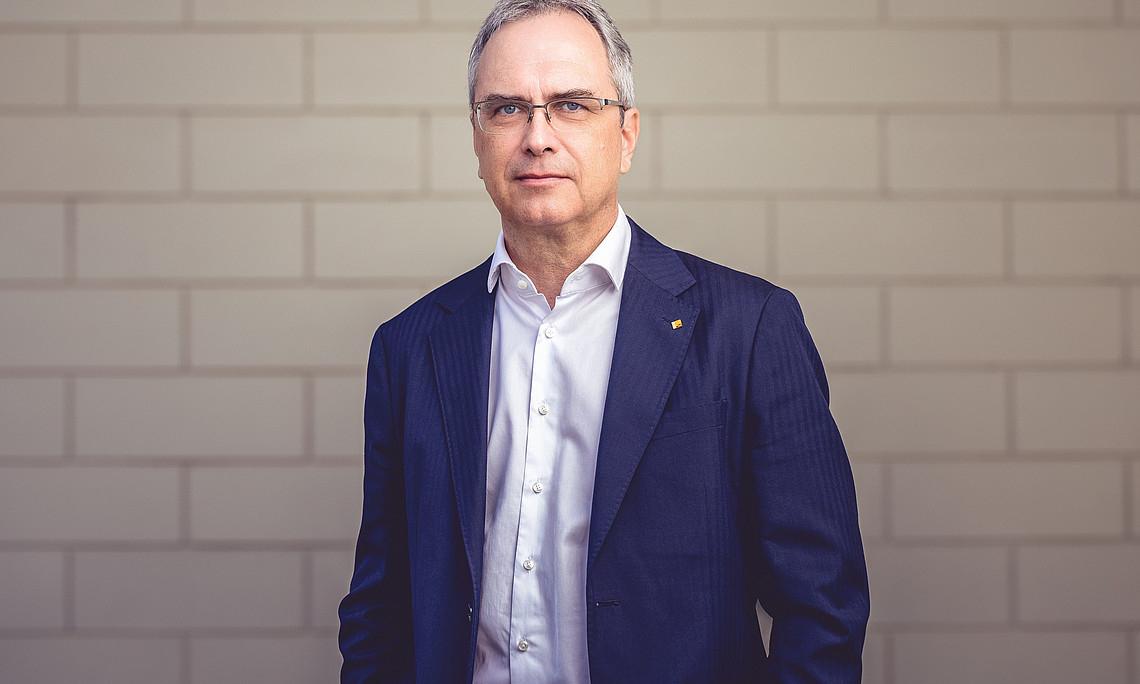

created by Konstantin Tzivanopoulos

Related news

Staying fit during the holidays: summer sports on the University of Graz campus

The Kleeblattlauf is not the end of the fitness term. Following last year’s successful launch, the University of Graz is once again offering summer sports on campus this year. From 30 June to 16 July 2026, there will be a free exercise programme in the open air. On the shady Südwiese (between the main building and Universitätsplatz 2), anyone interested can get in shape in the afternoons with body workouts, fascia training and yoga.

Getting even hotter: Researchers predict global warming of 1.7 degrees by 2027

While Europe is currently sweltering in the heat, global temperatures are also rising towards concerning record levels. In 2026, Earth’s surface air temperature is expected to reach 1.62 degrees, and in 2027 even 1.71 degrees Celsius above pre-industrial levels. The long-term temperature rise – an average over a 20-year period – is predicted to exceed the 1.5-degree threshold of the Paris Agreement as of 2026 already. For the first time, researchers at the University of Graz have been able to make such a forecast so far in advance. The intensifying El Niño climate event favors forecast skill and thereby facilitates a reliable computation.

Forest fire at Rosenhain: Volunteer fire brigade carried out an evacuation drill at the Jesuit refectory

Thick smoke in the stairwell, flames at the edge of the forest, people missing in the Jesuit refectory at the University of Graz: at Rosenhain, the Graz Volunteer Fire Brigade carried out a drill simulating a scenario that is becoming increasingly realistic given the heat and drought

Full effort in the heat: the Sports Centre was in full swing at the Kleeblattlauf

On 19 June 2026, 2,000 runners and hundreds of supporters made their way to the Rosenhain for a sporting end-of-term event.

Begin of page section:
Additional information:

University of Graz
Universitaetsplatz 3
8010 Graz
Austria
  • Contact
  • Web Editors
  • Moodle
  • UNIGRAZonline
  • Imprint
  • Data Protection Declaration
  • Accessibility Declaration
Weatherstation
Uni Graz

End of this page section. Go to overview of page sections

End of this page section. Go to overview of page sections

Begin of page section:

End of this page section. Go to overview of page sections

