




Begin of page section:
Page sections:

  • Go to contents (Accesskey 1)
  • Go to position marker (Accesskey 2)
  • Go to main navigation (Accesskey 3)
  • Go to sub navigation (Accesskey 4)
  • Go to additional information (Accesskey 5)
  • Go to page settings (user/language) (Accesskey 8)
  • Go to search (Accesskey 9)

End of this page section. Go to overview of page sections

Begin of page section:
Page settings:

English en
Deutsch de
Search
Login

End of this page section. Go to overview of page sections

Begin of page section:
Search:

Search for details about Uni Graz
Close

End of this page section. Go to overview of page sections


Search

Begin of page section:
Main navigation:

Page navigation:

  • University

    University
    • About the University
    • Organisation
    • Faculties
    • Library
    • Working at University of Graz
    • Campus
    Developing solutions for the world of tomorrow - that is our mission. Our students and our researchers take on the great challenges of society and carry the knowledge out.
  • Research Profile

    Research Profile
    • Our Expertise
    • Research Questions
    • Research Portal
    • Promoting Research
    • Research Transfer
    • Ethics in Research
    • Commission for Scientific Integrity
    Scientific excellence and the courage to break new ground. Research at the University of Graz creates the foundations for making the future worth living.
  • Studies

    Studies
    • Prospective Students
    • Students
  • Community

    Community
    • International
    • Location
    • Research and Business
    • Alumni
    The University of Graz is a hub for international research and brings together scientists and business experts. Moreover, it fosters the exchange and cooperation in study and teaching.
  • Spotlight
Topics
  • Sustainable University
  • Researchers answer
  • Work for us
Close menu

End of this page section. Go to overview of page sections

Begin of page section:
You are here:

University of Graz News Sloughing off

End of this page section. Go to overview of page sections

Wednesday, 22 January 2020

Sloughing off

Stefan Schild and his team investigate the survival strategies of bacterial pathogenes. Photo: Uni Graz/Kernasenko

Stefan Schild and his team investigate the survival strategies of bacterial pathogenes. Photo: Uni Graz/Kernasenko

researchers at the University of Graz show how bacterial pathogens adapt quickly to a host

Most bacterial pathogens produce so-called OMVs – outer membrane vesicles, which are liberated from the bacterial surface. Researchers at the University of Graz have managed to identify for the first time how the pathogens benefit from this energy-intensive process: it enables the microorganisms to adapt faster to the adverse conditions in the host and evade the defence mechanisms of the immune system. The findings of this study will be published in the February edition of the prestigious journal Cell Host & Microbe, and have just become available online.

Franz Zingl from the Institute of Molecular Biosciences at the University of Graz, a doctoral student working with Stefan Schild, focused on OMVs derived from Vibrio cholerae, the causative agent of cholera. Between epidemics this bacterium survives in the aquatic ecosystem and has to cope with very different conditions to those in a host organism. To ensure adequate nutrition, it has numerous uptake systems on its surface, including outer membrane porins such as OmpT.
Yet once inside the human body, the bacterium would absorb bile salts and antimicrobial peptides through this porin, which would kill it. “So the bacterium shuts down OmpT synthesis upon oral ingestion by the human host. But previous studies could not clarify how the bacterium gets rid of OmpT already present in the surface,” explains Stefan Schild. In this study the researchers were able to show that when the pathogens enter the host, they activate outer membrane vesiculation. In this way they are able to rapidly rid themselves of unfavourable surface components like OmpT, which are no longer required. Similarly, they “dispose” of so-called lipopolysaccharides – LPS for short –, which are integral parts of the outer membrane and replace it efficiently by newly synthesised modified LPS variants. Bacterial surfaces built by such modified LPS constitutes an effective barrier against the body’s immune system responses.

“This vesiculation, i.e. the shedding of the OMVs, gives the pathogens a competitive advantage in colonising the host,” explains Schild in summary. The process is set in motion when the bacteria face iron limitation, because they – like humans – need this trace element for all their biological processes. One defensive strategy our body uses is to bind in the iron so that it is not available to harmful invaders, which causes stress in the bacteria.
Similarly, there is also some evidence that contact with small doses of antibiotics or disinfectants can also stimulate the shedding of outer membrane vesicles. “Residues of germicidal medications in water or foodstuffs are therefore a problem, because they can give pathogens a fitness advantage along adaptation processes,” as the molecular biologist maintains.
The mechanisms that the Graz team has been studying in Vibrio cholerae are generally valid for almost all bacterial pathogens – including Salmonella, Pseudomonas and Neisseria, for example. Their findings may also be relevant for new treatments to combat infectious diseases: the researchers are now looking for a substance that will inhibit vesiculation. This could enable the body's own immune system to deal with the invaders more easily. At the same time – in contrast to the use of antibiotics – the natural microbiome in the human digestive system would remain unaffected.

This research programme is part of the university’s “BioHealth” Field of Excellence and was funded by the Austrian Science Fund (FWF) and the BioTechMed Graz project “Secretome”.

Publication:
Franz G. Zingl, Paul Kohl, Fatih Cakar, Deborah R. Leitner, Fabian Mitterer, Katherine E. Bonnington, Gerald N. Rechberger, Meta J. Kuehn, Ziqiang Guan, Joachim Reidl, Stefan Schild, „Outer Membrane Vesiculation Facilitates Surface Exchange and In Vivo Adaptation of Vibrio cholerae“, Cell Host & Microbe, DOI: 10.1016/j.chom.2019.12.002


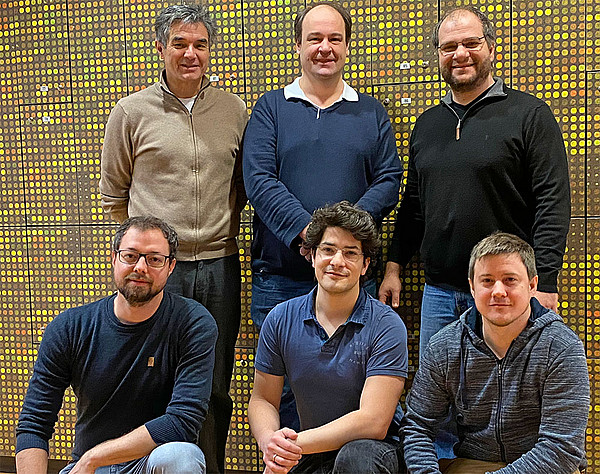
Teamwork: Joachim Reidl, Gerald Rechberger, Stefan Schild (back f.l.t.r.), Franz G. Zingl, Fabian Mitterer und Paul Kohl (front f.l.t.r.) are authors of the latest publication. Photo: Uni Graz/IMB
created by Dagmar Eklaude

Related news

Higher Education Strategy 2040: Austria’s universities on course for the future

Austria has 77 higher education institutions, which is above the EU average – but does this really make sense? The new Higher Education Strategy 2040 focuses on cooperation rather than mergers. As one of the six largest universities in Austria, the University of Graz plays a central role in this.

Climate research in Greenland: Old data provides new insights

The polar explorer and University of Graz professor Alfred Wegener left behind a unique collection of climate data from Greenland. A research team from the University of Graz is now analysing this 100-year-old treasure trove of data and comparing it with current measurements.

Diversity in nature and science: How we talk about plants and each other

Ginkgo, kiwi, hemp: they exist as male and female plants. Anyone who paid attention in biology class will confirm this. But is this categorisation, established by Carl von Linné almost 300 years ago, still valid today? An interdisciplinary team at the University of Graz is questioning these attributions and using this as a starting point to provide food for thought for gender-sensitive interaction between students, scientific and teaching staff.

Around the world in eight stops: the Long Night of Research at the University of Graz

On 24 April from 5 pm, you can take a short trip around the globe at the University of Graz, discovering pecularities of foreign countries or new local features in the entrance hall of the University Library. The itinerary takes you through introduced animal species, political attitudes and the omnipotence of algorithms. There will also be a programme in the historic reading hall, as well as at the UniGraz@Museum and the University Archive.

Begin of page section:
Additional information:

University of Graz
Universitaetsplatz 3
8010 Graz
Austria
  • Contact
  • Web Editors
  • Moodle
  • UNIGRAZonline
  • Imprint
  • Data Protection Declaration
  • Accessibility Declaration
Weatherstation
Uni Graz

End of this page section. Go to overview of page sections

End of this page section. Go to overview of page sections

Begin of page section:

End of this page section. Go to overview of page sections


