



Begin of page section:
Page sections:

  • Go to contents (Accesskey 1)
  • Go to position marker (Accesskey 2)
  • Go to main navigation (Accesskey 3)
  • Go to sub navigation (Accesskey 4)
  • Go to additional information (Accesskey 5)
  • Go to page settings (user/language) (Accesskey 8)
  • Go to search (Accesskey 9)

End of this page section. Go to overview of page sections

Begin of page section:
Page settings:

English en
Deutsch de
Search
Login

End of this page section. Go to overview of page sections

Begin of page section:
Search:

Search for details about Uni Graz
Close

End of this page section. Go to overview of page sections


Search

Begin of page section:
Main navigation:

Page navigation:

  • University

    University
    • About the University
    • Organisation
    • Faculties
    • Library
    • Working at University of Graz
    • Campus
    Developing solutions for the world of tomorrow - that is our mission. Our students and our researchers take on the great challenges of society and carry the knowledge out.
  • Research Profile

    Research Profile
    • Our Expertise
    • Research Questions
    • Research Portal
    • Promoting Research
    • Research Transfer
    • Ethics in Research
    • Commission for Scientific Integrity
    Scientific excellence and the courage to break new ground. Research at the University of Graz creates the foundations for making the future worth living.
  • Studies

    Studies
    • Prospective Students
    • Students
  • Community

    Community
    • International
    • Location
    • Research and Business
    • Alumni
    The University of Graz is a hub for international research and brings together scientists and business experts. Moreover, it fosters the exchange and cooperation in study and teaching.
  • Spotlight
Topics
  • Sustainable University
  • Researchers answer
  • Work for us
Close menu

End of this page section. Go to overview of page sections

Begin of page section:
You are here:

University of Graz News Out of time

End of this page section. Go to overview of page sections

Thursday, 16 May 2019

Out of time

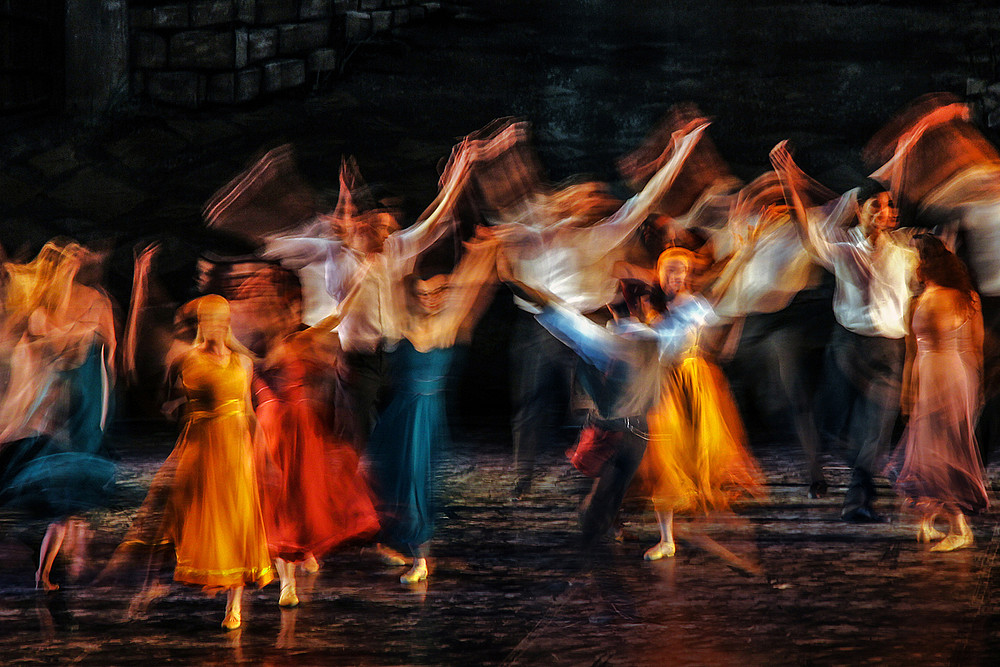
Burnout patients suffer from disturbed physical feelings and rhythm. Reinhold Esterbauer and Andrea Paletta have found a method to regain both. Photo: Shutterstock/Yasa ©Shutterstock/Zeren Yasa

Burnout patients suffer from disturbed physical feelings and rhythm. Reinhold Esterbauer and Andrea Paletta have found a method to regain both. Photo: Shutterstock/Yasa

Reinhold Esterbauer and Andrea Paletta’s research tells us how burnout sufferers can rediscover their rhythm

Around ten percent of Austria’s labour force is affected by burnout. Yet this condition is difficult to diagnose and hard to treat with scientific criteria alone. Philosopher Reinhold Esterbauer and sport researcher Andrea Paletta have combined an empirical approach with a subjective aspect hitherto ignored – namely individual feelings, which are difficult to quantify – in order to develop new preventative treatments and therapies.

The body – which in philosophy comprises not only the subjectively experienced organism one has, but also that which one is – is the subject of Esterbauer’s research, which pertains to the body’s temporal structures. They are particularly noticeable for all of us, for example, when falling asleep and waking up, or as we get older.
The act of becoming tired itself is a consequence of our individual inner clocks. “We have all experienced the situation in which we would like to continue reading before going to bed, but we can’t keep our eyes open. The body wins and temporarily takes our conscience away from us”, as the researcher specifies. This could imply that, to a certain extent, burnout is a time-related condition, one that disrupts regular cycles. “If this weren’t the case, sufferers would be able to fight it consciously.”

In cooperation with the St. Radegund rehabilitation centre, close to Graz, Esterbauer und Paletta conducted empirical studies and observed that burnout sufferers’ individual rhythms had indeed got out of sync. “When telling a group of burnout sufferers to move about freely in the gym, they would listlessly shuffle along in a straight line. Healthy people, on the other hand, used up more space, were dynamic and their movements displayed more variety”, reports the sport researcher.
Paletta also concluded that in addition to the disturbance of one’s biological functions – heartbeat, breathing and sleep – regular daily activities, such as meals and therapy appointments, were also felt to be a burden. Both factors improved towards the end of treatment with certain sport activities. In turn, those suffering from burnout aligned with the healthy participants in terms of their perception of time.

The researchers then put together comprehensive exercises which, on the one hand, burnout sufferers can use to stabilise their individual rhythms sustainably and, on the other hand, can be used as a preventative measure for those experiencing stress. The exercise book can be downloaded.

The research was conducted as part of the “Bodytime” project, financed by the Austrian Science Fund. Reinhold Esterbauer, Andrea Paletta and Julia Meer have summarised the most important results in their newly published book, Der Leib und seine Zeit, available in German only.

 

created by Dagmar Eklaude

Related news

Higher Education Strategy 2040: Austria’s universities on course for the future

Austria has 77 higher education institutions, which is above the EU average – but does this really make sense? The new Higher Education Strategy 2040 focuses on cooperation rather than mergers. As one of the six largest universities in Austria, the University of Graz plays a central role in this.

Climate research in Greenland: Old data provides new insights

The polar explorer and University of Graz professor Alfred Wegener left behind a unique collection of climate data from Greenland. A research team from the University of Graz is now analysing this 100-year-old treasure trove of data and comparing it with current measurements.

Diversity in nature and science: How we talk about plants and each other

Ginkgo, kiwi, hemp: they exist as male and female plants. Anyone who paid attention in biology class will confirm this. But is this categorisation, established by Carl von Linné almost 300 years ago, still valid today? An interdisciplinary team at the University of Graz is questioning these attributions and using this as a starting point to provide food for thought for gender-sensitive interaction between students, scientific and teaching staff.

Around the world in eight stops: the Long Night of Research at the University of Graz

On 24 April from 5 pm, you can take a short trip around the globe at the University of Graz, discovering pecularities of foreign countries or new local features in the entrance hall of the University Library. The itinerary takes you through introduced animal species, political attitudes and the omnipotence of algorithms. There will also be a programme in the historic reading hall, as well as at the UniGraz@Museum and the University Archive.

Begin of page section:
Additional information:

University of Graz
Universitaetsplatz 3
8010 Graz
Austria
  • Contact
  • Web Editors
  • Moodle
  • UNIGRAZonline
  • Imprint
  • Data Protection Declaration
  • Accessibility Declaration
Weatherstation
Uni Graz

End of this page section. Go to overview of page sections

End of this page section. Go to overview of page sections

Begin of page section:

End of this page section. Go to overview of page sections

