Begin of page section:
Page sections:

  • Go to contents (Accesskey 1)
  • Go to position marker (Accesskey 2)
  • Go to main navigation (Accesskey 3)
  • Go to sub navigation (Accesskey 4)
  • Go to additional information (Accesskey 5)
  • Go to page settings (user/language) (Accesskey 8)
  • Go to search (Accesskey 9)

End of this page section. Go to overview of page sections

Begin of page section:
Page settings:

English en
Deutsch de
Search
Login

End of this page section. Go to overview of page sections

Begin of page section:
Search:

Search for details about Uni Graz
Close

End of this page section. Go to overview of page sections


Search

Begin of page section:
Main navigation:

Page navigation:

  • University

    University
    • About the University
    • Organisation
    • Faculties
    • Library
    • Working at University of Graz
    • Campus
    Developing solutions for the world of tomorrow - that is our mission. Our students and our researchers take on the great challenges of society and carry the knowledge out.
  • Research Profile

    Research Profile
    • Our Expertise
    • Research Questions
    • Research Portal
    • Promoting Research
    • Research Transfer
    • Ethics in Research
    • Commission for Scientific Integrity
    Scientific excellence and the courage to break new ground. Research at the University of Graz creates the foundations for making the future worth living.
  • Studies

    Studies
    • Prospective Students
    • Students
    • Registration for Study Programme (Winter semester 2026/27)
  • Community

    Community
    • International
    • Location
    • Research and Business
    • Alumni
    The University of Graz is a hub for international research and brings together scientists and business experts. Moreover, it fosters the exchange and cooperation in study and teaching.
Topics
  • Sustainable University
  • Researchers answer
  • Work for us
Close menu

End of this page section. Go to overview of page sections

Begin of page section:
You are here:

University of Graz News Theologian at the University of Graz: What the excommunication of the Society of St Pius X

End of this page section. Go to overview of page sections

Thursday, 02 July 2026

Theologian at the University of Graz: What the excommunication of the Society of St Pius X

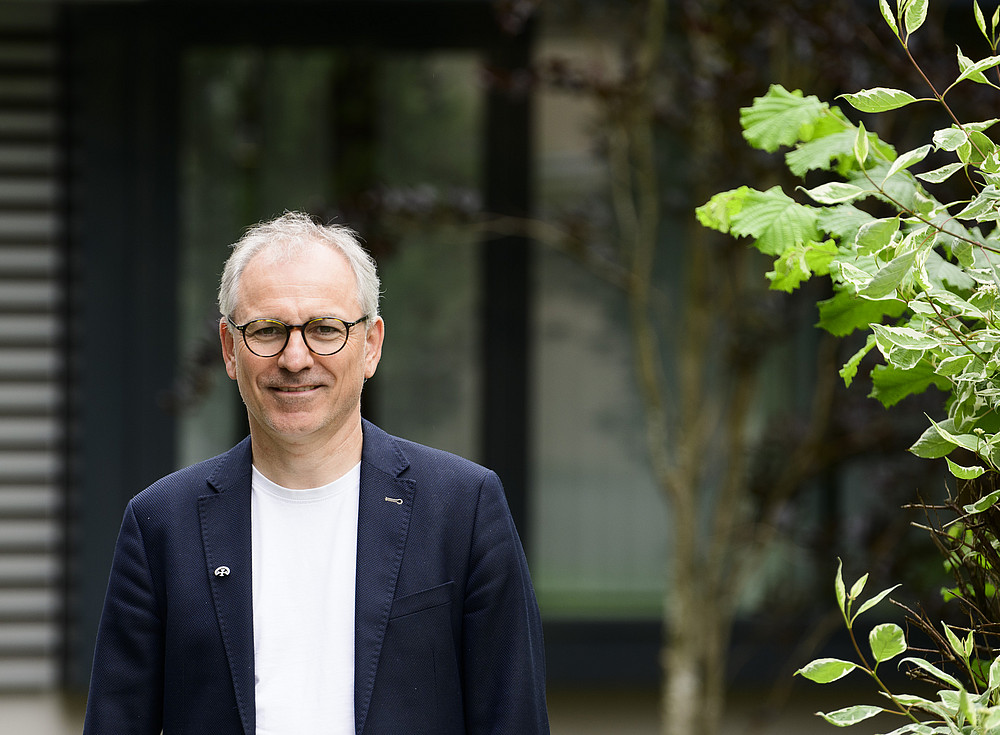
An elderly man wearing glasses, a dark blue blazer and a white T-shirt is standing outside a building; there are green bushes on the right-hand side of the picture. ©Uni Graz/Tzivanopoulos
©Uni Graz/Tzivanopoulos

Theologian Bernd Hillebrand explains the consequences of the excommunication of the Society of St Pius X. Photo: University of Graz/Tzivanopoulos

Following the schism involving the Society of St Pius X, there is a need for discussion. Bernd Hillebrand from the University of Graz explains why the Vatican took this step, what role anti-democratic tendencies play, and why the Society’s sacraments are no longer recognised as valid under canon law for Catholics with immediate effect.

In early July, the Vatican announced that members of the Society of St Pius X and their supporters had been excommunicated from the Catholic Church. The actions of the Society of St Pius X have now led to a schism. Bernd Hillebrand from the Faculty of Catholic Theology at the University of Graz explains what this means for the future of the members and their supporters, and what the consequences are for members of the Society of St Pius X who receive the sacraments.

Why have the members of the Society of St Pius X and their supporters been excommunicated at this particular time?

They have now been excommunicated because the Society consecrated four bishops. These are unauthorised episcopal consecrations and, under canon law, the Society is thereby automatically subject to excommunication. This is, as it were, the final straw. The schism between the Society of St Pius X and the Catholic Church, however, essentially stems from the fact that the Society does not accept the teachings of the last Council, the Second Vatican Council. Essentially, they reject three points of the Council: religious freedom, ecumenism and the current development of the Church, in which laypeople and clergy shape the Church together. However, even more serious differences are at play here, for example, the fact that the Society espouses anti-Semitic and anti-democratic positions. Through its radical anti-modernist stance, it undermines human dignity itself.

The Vatican speaks of a schism. What does that mean? Is there now a new church?

A schism means that there is a split between the Catholic Church and the Society of St Pius X. As a result, they are excluded from the Catholic Church and from receiving the sacraments. They have excommunicated themselves – excluded from the community – through the unauthorised episcopal consecrations in Switzerland.

This does not yet make them a church in their own right. They are a Christian movement, but one which currently has no constitution or statutes of its own. Prior to the lifting of the excommunication by Pope Benedict, they were part of a movement within the Catholic Church, which they are no longer.

What does this mean for people who have received the sacraments from members of the Society of St Pius X, perhaps even without realising it?

As the Society was part of the Catholic Church up until the time of the unauthorised episcopal consecrations, the sacraments administered up to that point were valid and lawful. Following the excommunication – that is, at present and in future – sacraments administered by members of the Society of St Pius X are not permitted and are not formally valid. Anyone who receives them therefore excludes themselves from the Catholic Church, as they thereby place themselves within a different community and outside the community of the Catholic Church.

created by Interview: Roman Vilgut

Related news

“HeinrichBiCool”: University of Graz demonstrates the effects of green facades and roofs

The University of Graz has launched a pioneering project at the University Centre for Theology. Its name, “HeinrichBiCool”, says it all: a comprehensive system of green facades and roof will cool the building at Heinrichstraße 80 during the summer. At the same time, this will create a new habitat for plants and animals, helping to increase biodiversity. The accompanying monitoring programme will provide detailed data on the impact of the measures on indoor climate, energy consumption and biodiversity. The findings will lay a scientifically sound foundation for further projects aimed at making cities sustainable, climate-resilient and liveable. The partners in this project, funded by the Austrian Research Promotion Agency (FFG), are AEE INTEC – Institute for Sustainable Technologies, Technisches Büro Siegfried Stark, the landscape architecture and urban planning firm “studio boden”, and Ökoteam Graz.

When stress melts away in your mouth: nicotine pouches are widespread among Styrian students

Sociologists at the University of Graz, in collaboration with VIVID – the Centre for Addiction Prevention, have carried out a survey involving more than 600 participants. Around a quarter of them use these products. The ability to use them discreetly and flexibly is a key motivation.

Desert sand, microplastics, cancer cells: David Clases awarded ERC grant for analytical method

Nanoparticles trapped in polar ice can reveal a great deal about the climate 100,000 years ago. Chemist David Clases is developing unique methods to analyse them in detail. He will now adapt these methods for use with larger particles in order to glean even more information about Earth’s history. The method can be used for a wide range of other purposes – for example, in medical diagnostics or the investigation of environmental pollution. Clases has been awarded a Proof-of-Concept Grant by the European Research Council (ERC) for this work.

Staying fit during the holidays: summer sports on the University of Graz campus

The Kleeblattlauf is not the end of the fitness term. Following last year’s successful launch, the University of Graz is once again offering summer sports on campus this year. From 30 June to 16 July 2026, there will be a free exercise programme in the open air. On the shady Südwiese (between the main building and Universitätsplatz 2), anyone interested can get in shape in the afternoons with body workouts, fascia training and yoga.

Begin of page section:
Additional information:

University of Graz
Universitaetsplatz 3
8010 Graz
Austria
  • Contact
  • Web Editors
  • Moodle
  • UNIGRAZonline
  • Imprint
  • Data Protection Declaration
  • Accessibility Declaration
Weatherstation
Uni Graz

End of this page section. Go to overview of page sections

End of this page section. Go to overview of page sections

Begin of page section:

End of this page section. Go to overview of page sections