Begin of page section:
Page sections:

  • Go to contents (Accesskey 1)
  • Go to position marker (Accesskey 2)
  • Go to main navigation (Accesskey 3)
  • Go to sub navigation (Accesskey 4)
  • Go to additional information (Accesskey 5)
  • Go to page settings (user/language) (Accesskey 8)
  • Go to search (Accesskey 9)

End of this page section. Go to overview of page sections

Begin of page section:
Page settings:

English en
Deutsch de
Search
Login

End of this page section. Go to overview of page sections

Begin of page section:
Search:

Search for details about Uni Graz
Close

End of this page section. Go to overview of page sections


Search

Begin of page section:
Main navigation:

Page navigation:

  • University

    University
    • About the University
    • Organisation
    • Faculties
    • Library
    • Working at University of Graz
    • Campus
    Developing solutions for the world of tomorrow - that is our mission. Our students and our researchers take on the great challenges of society and carry the knowledge out.
  • Research Profile

    Research Profile
    • Our Expertise
    • Research Questions
    • Research Portal
    • Promoting Research
    • Research Transfer
    • Ethics in Research
    • Commission for Scientific Integrity
    Scientific excellence and the courage to break new ground. Research at the University of Graz creates the foundations for making the future worth living.
  • Studies

    Studies
    • Prospective Students
    • Students
    • Registration for Study Programme (Winter semester 2026/27)
  • Community

    Community
    • International
    • Location
    • Research and Business
    • Alumni
    The University of Graz is a hub for international research and brings together scientists and business experts. Moreover, it fosters the exchange and cooperation in study and teaching.
Topics
  • Sustainable University
  • Researchers answer
  • Work for us
Close menu

End of this page section. Go to overview of page sections

Begin of page section:
You are here:

University of Graz News “HeinrichBiCool”: University of Graz demonstrates the effects of green facades and roofs

End of this page section. Go to overview of page sections

Thursday, 02 July 2026

“HeinrichBiCool”: University of Graz demonstrates the effects of green facades and roofs

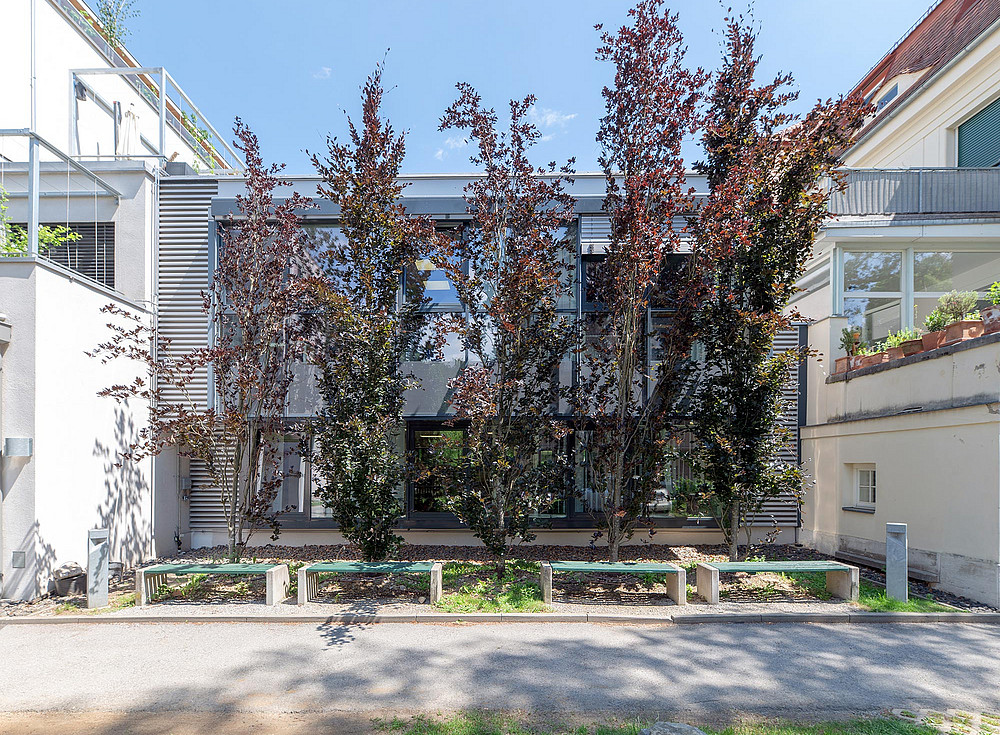
five columnar beech trees in front of a facade with windows on the ground floor and first floor ©Uni Graz/Angele
©Uni Graz/Angele

Columnar beech trees in front of the building’s window facade at Heinrichstraße 80 provide protection from excessive sunlight, helping to prevent the building from overheating.

The University of Graz has launched a pioneering project at the University Centre for Theology. Its name, “HeinrichBiCool”, says it all: a comprehensive system of green facades and roof will cool the building at Heinrichstraße 80 during the summer. At the same time, this will create a new habitat for plants and animals, helping to increase biodiversity. The accompanying monitoring programme will provide detailed data on the impact of the measures on indoor climate, energy consumption and biodiversity. The findings will lay a scientifically sound foundation for further projects aimed at making cities sustainable, climate-resilient and liveable. The partners in this project, funded by the Austrian Research Promotion Agency (FFG), are AEE INTEC – Institute for Sustainable Technologies, Technisches Büro Siegfried Stark, the landscape architecture and urban planning firm “studio boden”, and Ökoteam Graz.


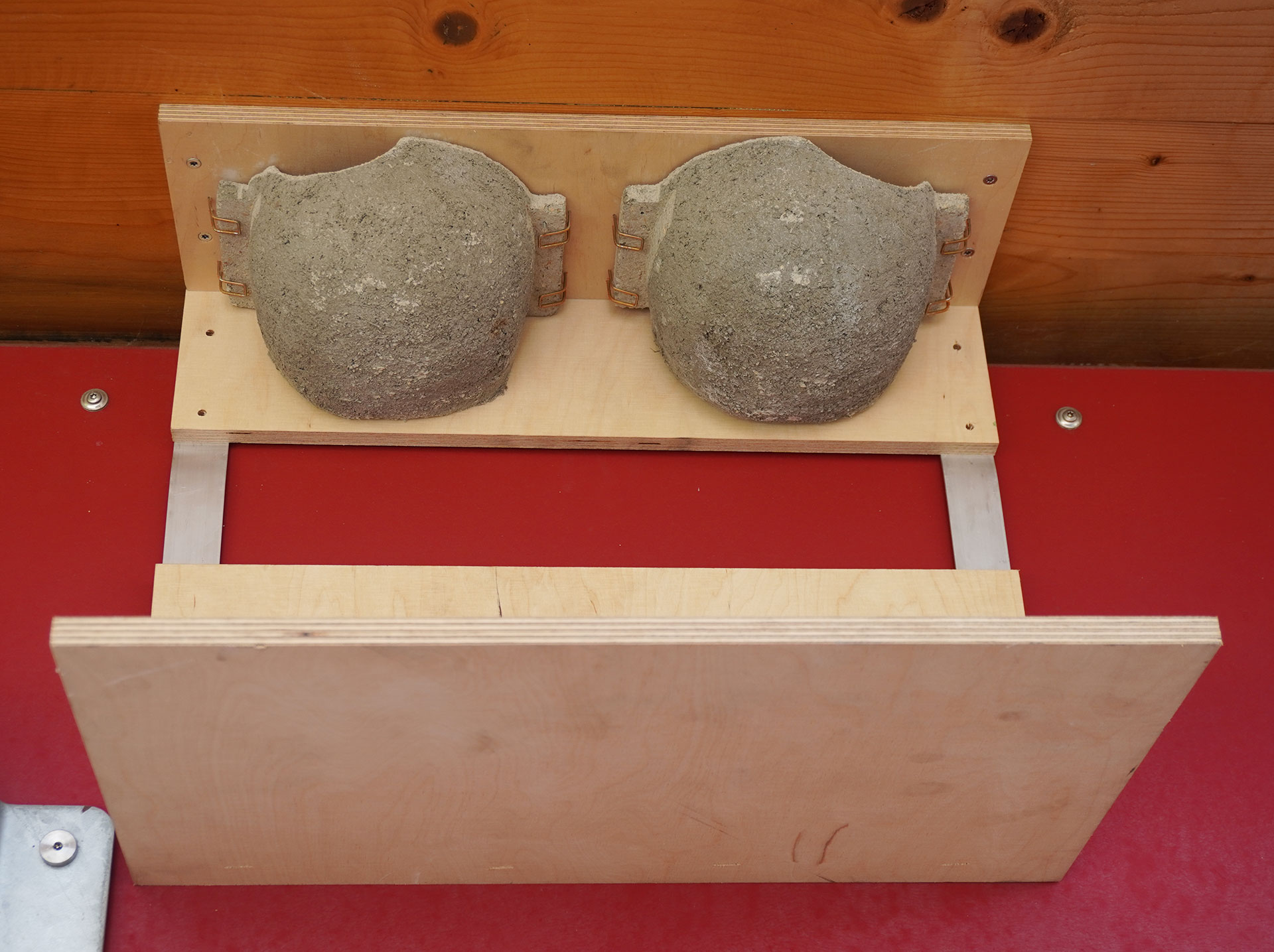
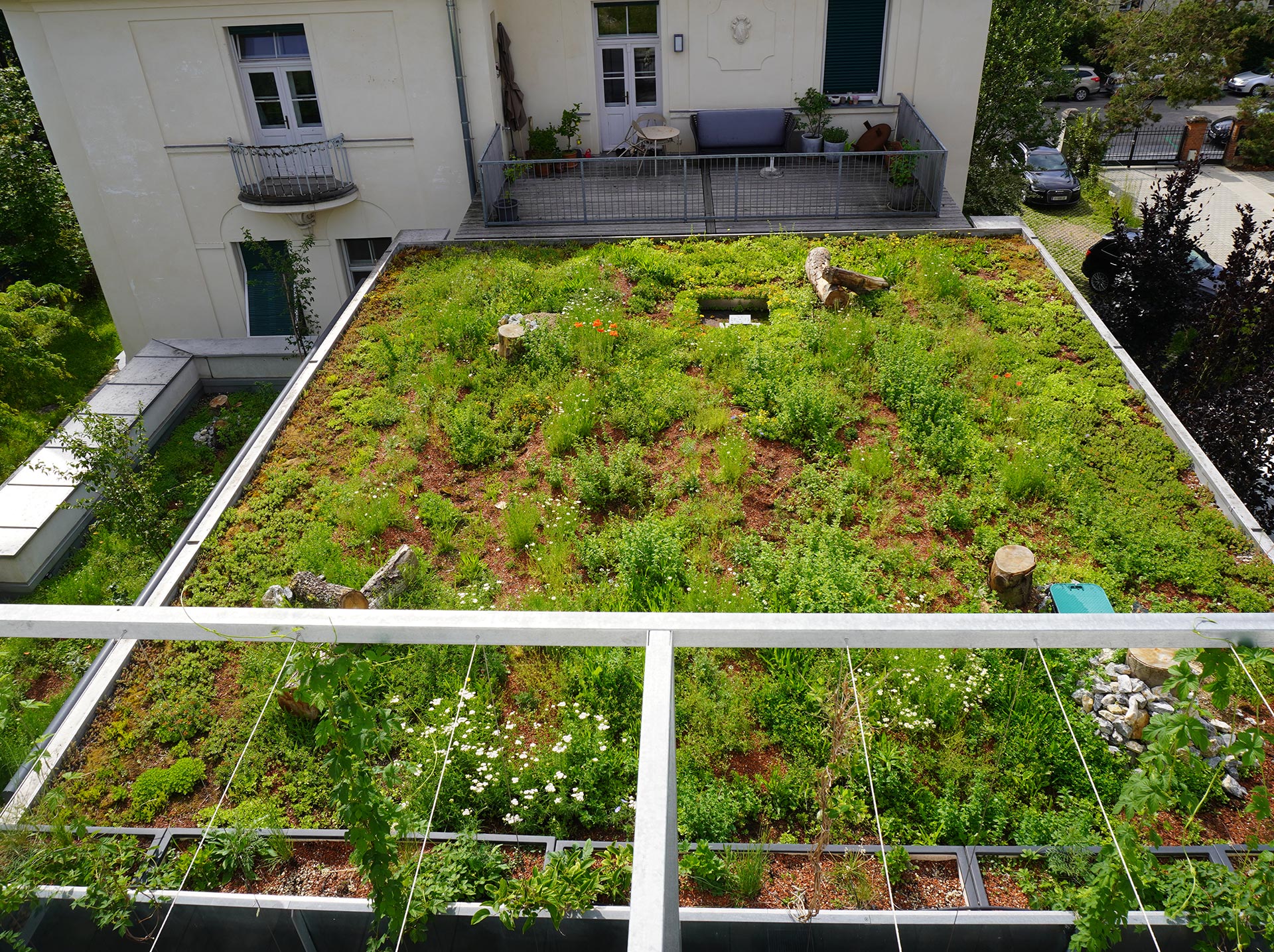
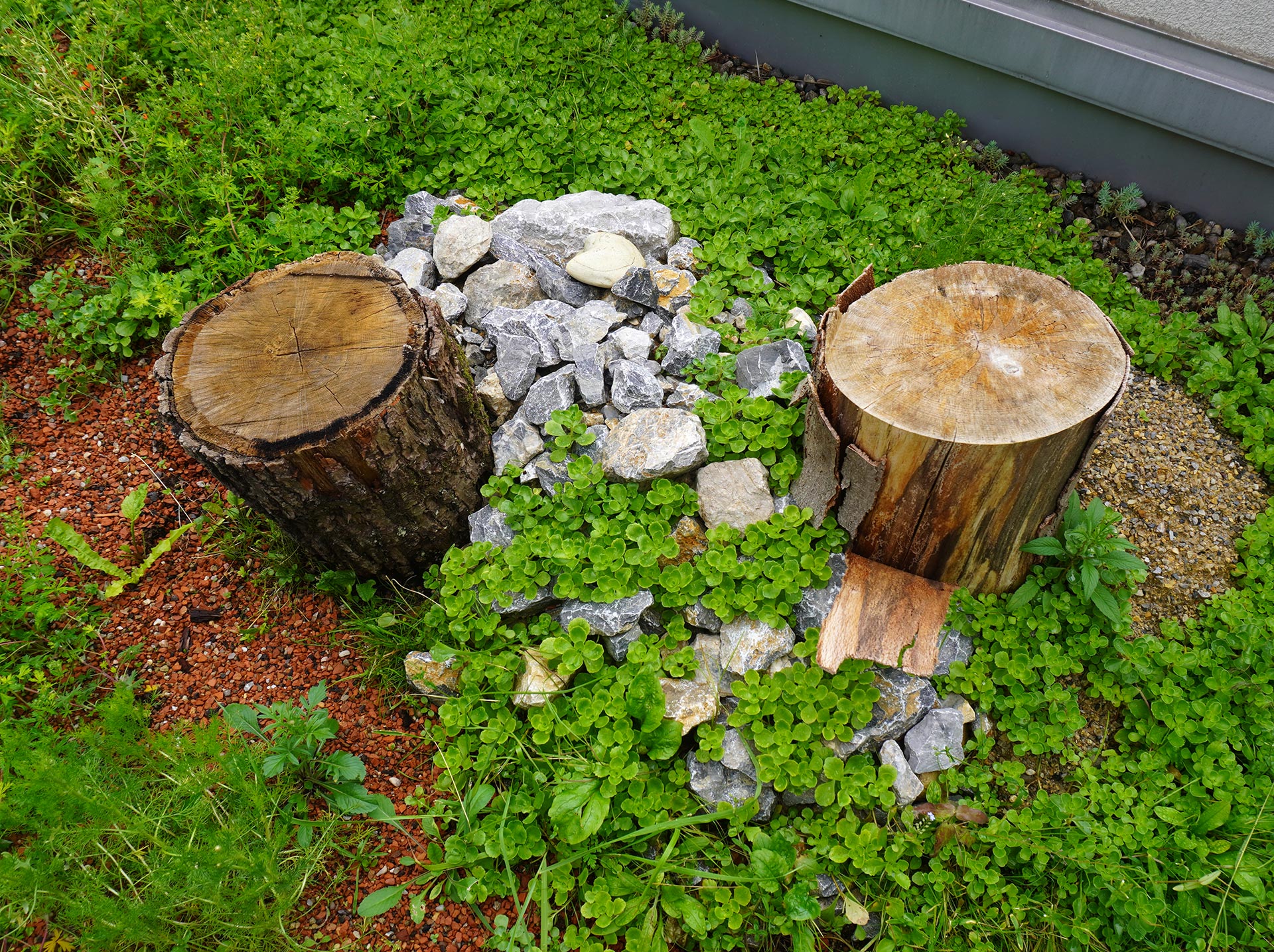
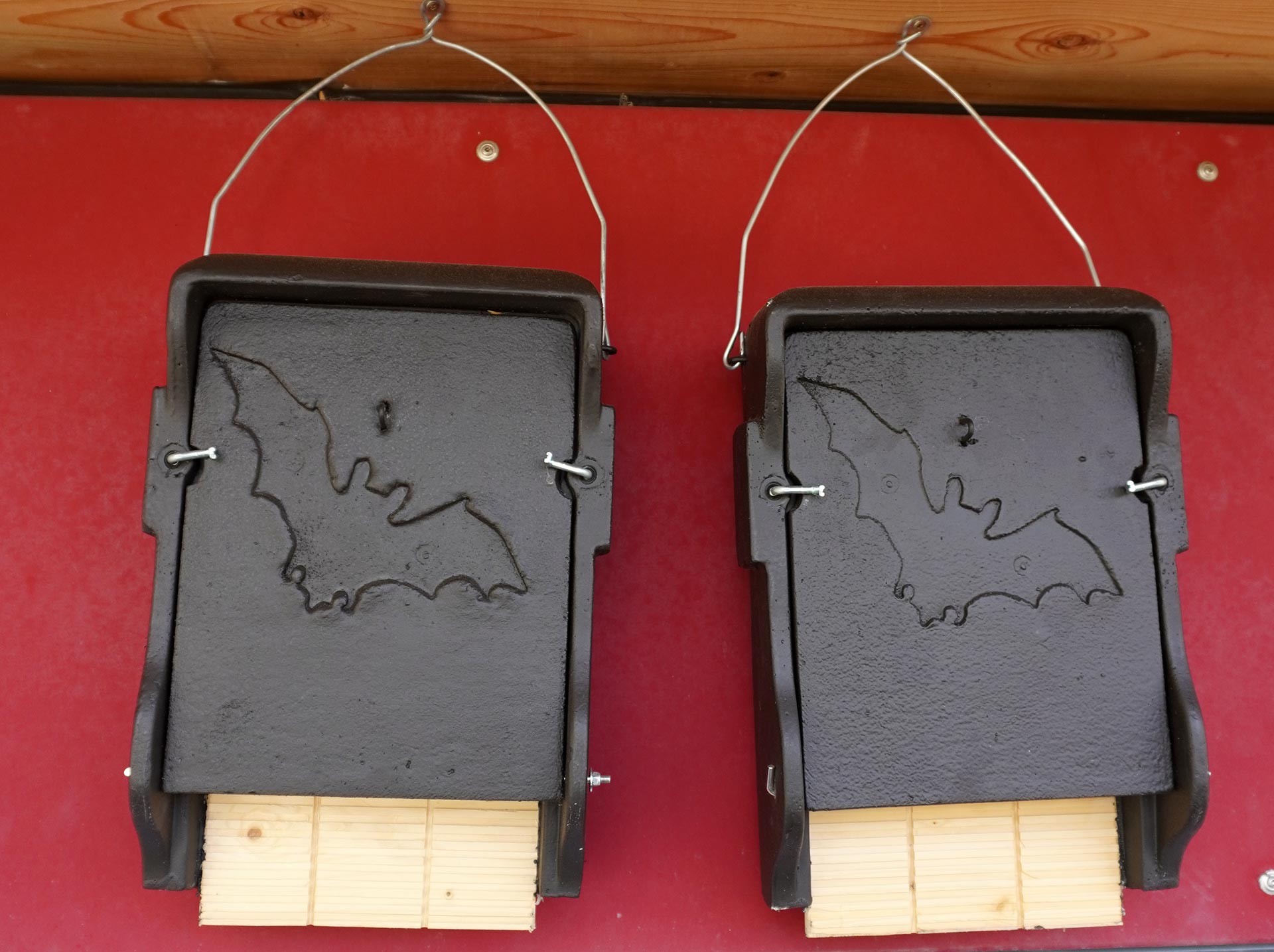
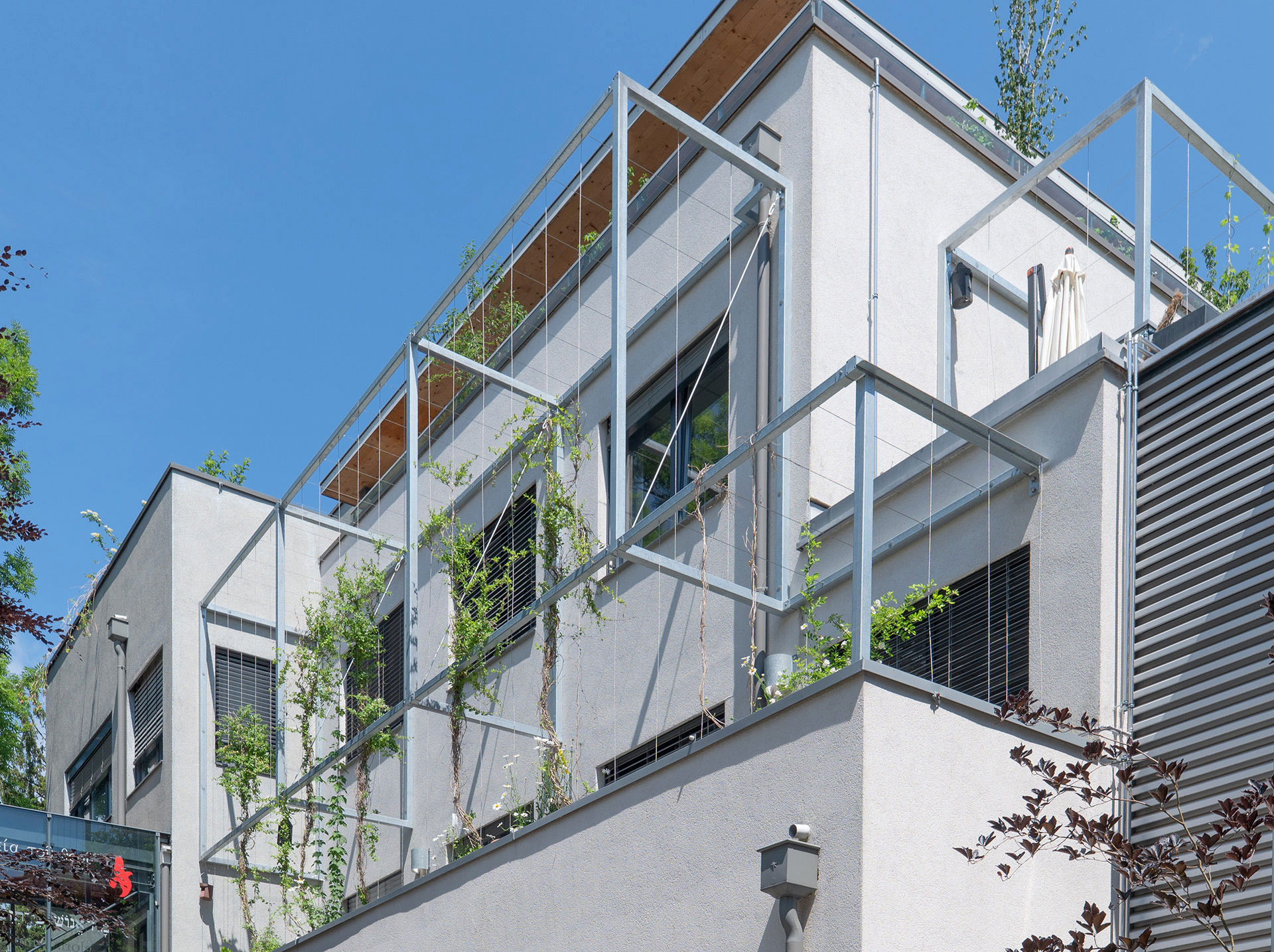
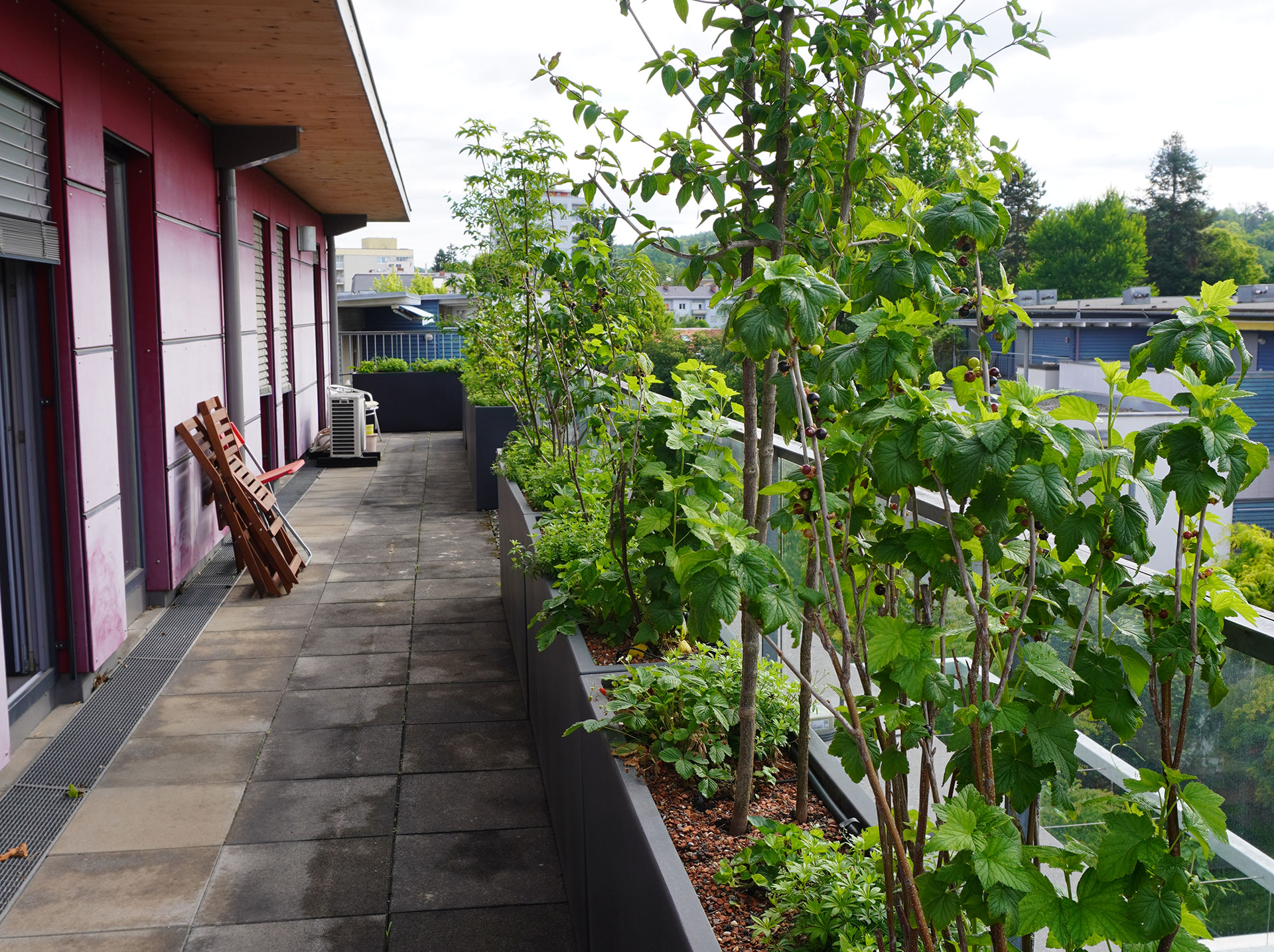
Columnar beech trees have recently been planted in front of the facades of the building at Heinrichstraße 80. These are joined by medlars, elder, snowy mespilus and other shrubs. Clematis, grapevine, honeysuckle and hops climb upwards on trellises. On the balconies, potted plants provide shade – with a wide variety of berries to snack on. Here and there, nesting aids for house martins and bats can be found. Grasses, flowering plants and herbs such as meadow sage and thyme thrive on the roof. In between are small piles of stones, sandy patches and light deadwood – providing shelter for wild bees and many other insects: The ‘HeinrichBiCool’ project clearly demonstrates the full potential of greening. 

“Through the natural cooling of the Faculty of Theology’s building and the accompanying measures to promote biodiversity, the University of Graz is demonstrating how climate protection, quality of life and biodiversity can be effectively combined. ‘HeinrichBiCool’ is a prime example of how universities, together with strong partners from the worlds of science and industry, can develop innovative solutions to societal challenges and test them directly on site,” says Peter Riedler, Rector of the University of Graz, adding: “Such flagship projects underline the important role of universities as catalysts for a future worth living. To ensure that this innovative strength is maintained in the long term, we need reliable framework conditions and planning security.” 

“With ‘HeinrichBiCool’, we are showing what sustainable adaptation to climate change can look like in buildings and cities. It is crucial to quantify the impact of greening and make it measurable. In doing so, we are laying vital groundwork for future replication by many other property owners,” says Christian Fink, Managing Director of AEE – Institute for Sustainable Technologies.

In recent years, the building at Heinrichstraße 80 has regularly heated up significantly from early summer onwards. The increasing number of hot days necessitated a measure to lower indoor temperatures in order to ensure the well-being of the institute’s staff. The University of Graz has opted for a climate- and biodiversity-friendly solution. The system’s computer-controlled irrigation is also optimised for water efficiency, drawing water from a cistern.

Scientific Monitoring

Green facades and roofs are now regarded as a key element of climate-friendly construction. However, there is a widespread lack of before-and-after measurements to assess their actual effects on real buildings. With ‘HeinrichBiCool’, the University of Graz is now making a significant contribution to filling this gap. A central component of the project is comprehensive monitoring before and after planting. Studies and automated measurements provide sound scientific data on the effectiveness of the measures, both in terms of indoor climate and energy requirements, as well as the promotion of biodiversity. These enable a technical, economic and ecological assessment of building climate control through greening compared to active cooling solutions. In consultation with the building’s users, a survey will also be conducted in autumn 2026 to gauge their personal satisfaction with the implementation of the measure.
Further informationen on “HeinrichBiCool”

A house with a trellis covered in climbing plants ©Uni Graz/Angele
©Uni Graz/Angele
Potted plants on the balcony ©Uni Graz/Benal
©Uni Graz/Benal
Nesting aid for house martins ©Uni Graz/Benal
©Uni Graz/Benal
Green roof ©Uni Graz/Benal
©Uni Graz/Benal
Two short, standing deadwood trunks, with a pile of stones between them, surrounded by low green plants ©Uni Graz/Benal
©Uni Graz/Benal
Nesting aids for bats ©Uni Graz/Benal
©Uni Graz/Benal
created by Gudrun Pichler

Related news

When stress melts away in your mouth: nicotine pouches are widespread among Styrian students

Sociologists at the University of Graz, in collaboration with VIVID – the Centre for Addiction Prevention, have carried out a survey involving more than 600 participants. Around a quarter of them use these products. The ability to use them discreetly and flexibly is a key motivation.

Desert sand, microplastics, cancer cells: David Clases awarded ERC grant for analytical method

Nanoparticles trapped in polar ice can reveal a great deal about the climate 100,000 years ago. Chemist David Clases is developing unique methods to analyse them in detail. He will now adapt these methods for use with larger particles in order to glean even more information about Earth’s history. The method can be used for a wide range of other purposes – for example, in medical diagnostics or the investigation of environmental pollution. Clases has been awarded a Proof-of-Concept Grant by the European Research Council (ERC) for this work.

Staying fit during the holidays: summer sports on the University of Graz campus

The Kleeblattlauf is not the end of the fitness term. Following last year’s successful launch, the University of Graz is once again offering summer sports on campus this year. From 30 June to 16 July 2026, there will be a free exercise programme in the open air. On the shady Südwiese (between the main building and Universitätsplatz 2), anyone interested can get in shape in the afternoons with body workouts, fascia training and yoga.

Getting even hotter: Researchers predict global warming of 1.7 degrees by 2027

While Europe is currently sweltering in the heat, global temperatures are also rising towards concerning record levels. In 2026, Earth’s surface air temperature is expected to reach 1.62 degrees, and in 2027 even 1.71 degrees Celsius above pre-industrial levels. The long-term temperature rise – an average over a 20-year period – is predicted to exceed the 1.5-degree threshold of the Paris Agreement as of 2026 already. For the first time, researchers at the University of Graz have been able to make such a forecast so far in advance. The intensifying El Niño climate event favors forecast skill and thereby facilitates a reliable computation.

Begin of page section:
Additional information:

University of Graz
Universitaetsplatz 3
8010 Graz
Austria
  • Contact
  • Web Editors
  • Moodle
  • UNIGRAZonline
  • Imprint
  • Data Protection Declaration
  • Accessibility Declaration
Weatherstation
Uni Graz

End of this page section. Go to overview of page sections

End of this page section. Go to overview of page sections

Begin of page section:

End of this page section. Go to overview of page sections