Begin of page section:
Page sections:

  • Go to contents (Accesskey 1)
  • Go to position marker (Accesskey 2)
  • Go to main navigation (Accesskey 3)
  • Go to sub navigation (Accesskey 4)
  • Go to additional information (Accesskey 5)
  • Go to page settings (user/language) (Accesskey 8)
  • Go to search (Accesskey 9)

End of this page section. Go to overview of page sections

Begin of page section:
Page settings:

English en
Deutsch de
Search
Login

End of this page section. Go to overview of page sections

Begin of page section:
Search:

Search for details about Uni Graz
Close

End of this page section. Go to overview of page sections


Search

Begin of page section:
Main navigation:

Page navigation:

  • University

    University
    • About the University
    • Organisation
    • Faculties
    • Library
    • Working at University of Graz
    • Campus
    Developing solutions for the world of tomorrow - that is our mission. Our students and our researchers take on the great challenges of society and carry the knowledge out.
  • Research Profile

    Research Profile
    • Our Expertise
    • Research Questions
    • Research Portal
    • Promoting Research
    • Research Transfer
    • Ethics in Research
    • Commission for Scientific Integrity
    Scientific excellence and the courage to break new ground. Research at the University of Graz creates the foundations for making the future worth living.
  • Studies

    Studies
    • Prospective Students
    • Students
    • Post-registration Law
  • Community

    Community
    • International
    • Location
    • Research and Business
    • Alumni
    The University of Graz is a hub for international research and brings together scientists and business experts. Moreover, it fosters the exchange and cooperation in study and teaching.
Topics
  • Sustainable University
  • Researchers answer
  • Work for us
Close menu

End of this page section. Go to overview of page sections

Begin of page section:
You are here:

University of Graz News Stolz im Schnee

End of this page section. Go to overview of page sections

Monday, 20 January 2014

Stolz im Schnee
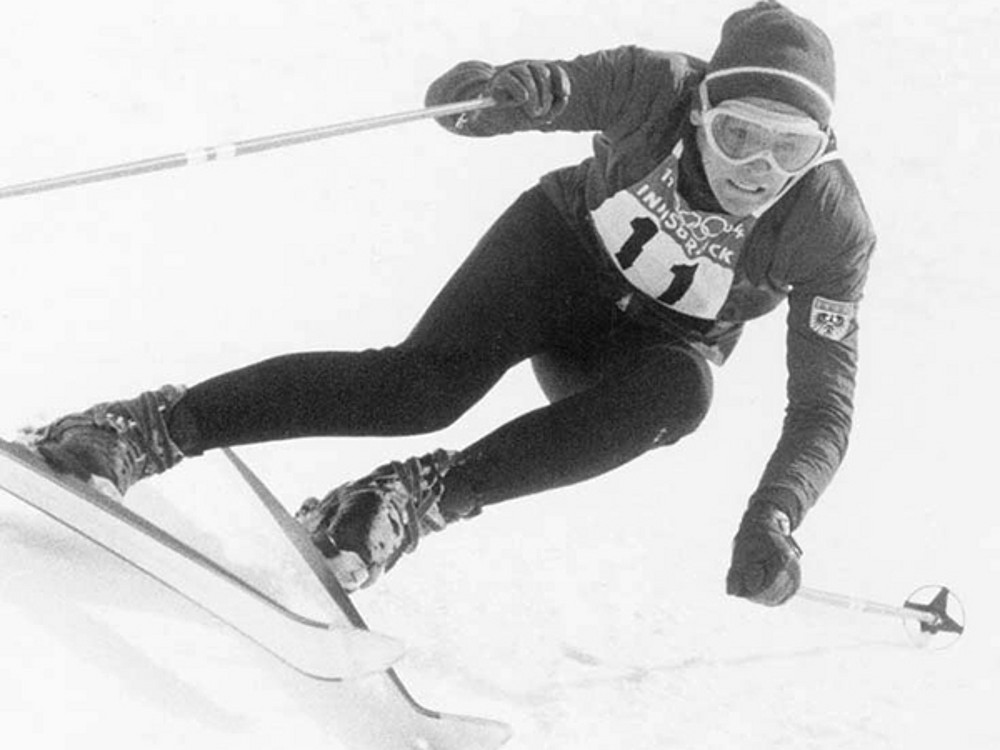
Egon Zimmermann holte 1964 in Innsbruck Olympia-Gold in der Abfahrt. Foto: www.olympic.org

Egon Zimmermann holte 1964 in Innsbruck Olympia-Gold in der Abfahrt. Foto: www.olympic.org

Christoph Eric Hack hat in seiner Dissertation untersucht, wie sehr der alpine Schisport nach 1945 österreichs Nationalbewusstsein prägte.
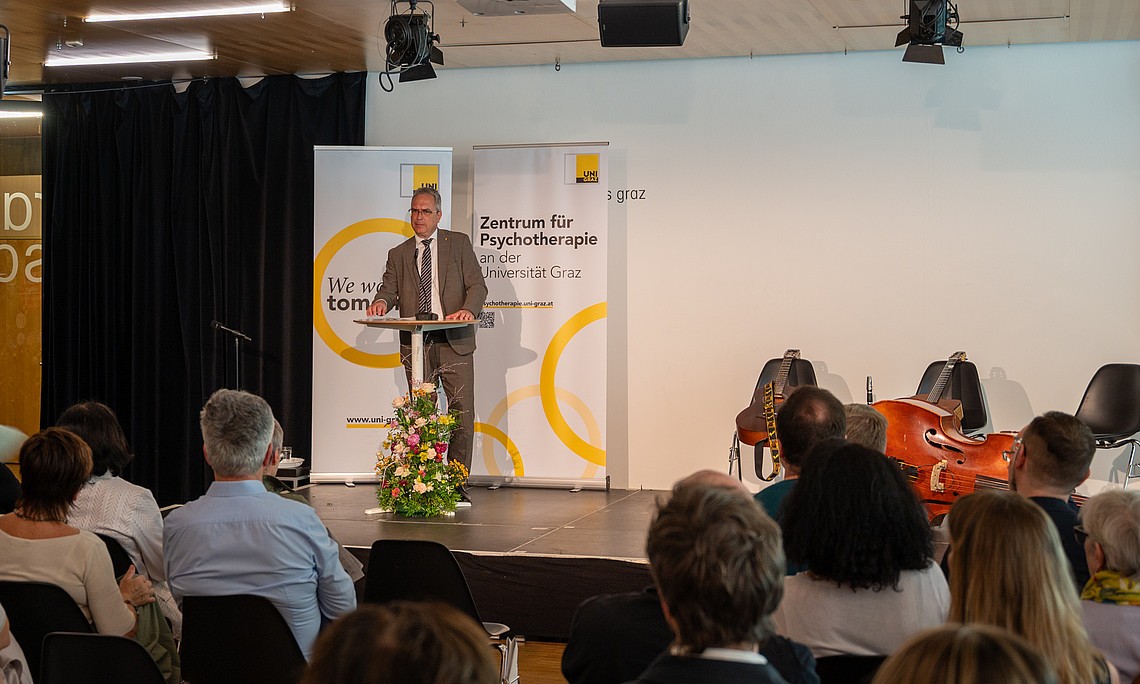
Christoph Eric Hack hat in seiner Dissertation untersucht, wie sehr der alpine Schisport nach 1945 österreichs Nationalbewusstsein prägte.

Absolvent der Uni Graz untersucht Schisport als Identitätsstifter

Diese Woche schaut die Sportwelt nach Kitzbühel, auch die Olympischen Spiele stehen vor der Tür. Millionen Fans in Österreich hoffen auf viele Medaillen für das Land. Dass die Nation im Kollektiv ihren AthletInnen die Daumen drückt, ist wesentlich dem alpinen Schilauf zu verdanken. Wie diese Sportart nach dem Zweiten Weltkrieg geholfen hat, unser Nationalbewusstsein erst zu formen, hat Dr. Christoph Eric Hack in seiner Dissertation am Institut für Geschichte der Karl-Franzens-Universität Graz erforscht.
„Dieser Sport wurde zur nationalen Kultur und schuf damit Identität. Er bot den ÖsterreicherInnen ein Stück Heimat, das historisch unbelastet war und dem Staat globale Bedeutung zukommen ließ“, fasst der Absolvent zusammen. Die Siege der österreichischen RennläuferInnen in den späten 1940ern und 1950ern waren dabei ein Glücksfall für die Nationswerdung. Allen voran wurde Toni Sailer zur Ikone des Wiederaufbaus und verhalf dem Land zu einem neuen Maß an Selbstbewusstsein. Medial inszenierte Sportereignisse und das Bewusstsein um den touristischen Nutzen des Schifahrens trieben Stolz und Begeisterung zusätzlich in die Höhe. Außerdem hatte Österreich schon zuvor erheblichen Anteil an der Entwicklung der alpinen Fahrtechnik. „Darüber hinaus bietet unser Land geografisch die perfekte Kulisse für rasante Abfahrten“, ergänzt Hack. Gerade die Gebirgslandschaft wurde nach 1945 als unschuldige Idylle betrachtet – im Gegensatz zu den mit dem Nationalsozialismus verwobenen Städten.
Spätestens mit der Veranstaltung der Olympischen Spiele in Innsbruck 1964 funktioniert der Schisport als Symbol für die österreichische Nation. Die Impressionen aus den Bergen versichern, dass nichts mehr an etwaige dunkle Kapitel in der Vergangenheit erinnert und die Alpenrepublik alle Klischees bestätigt. „Kitzbühel wird zu einem Disneyland der Sportart, für die unser Land weltberühmt ist“, ergänzt der Historiker. Die Stars sind sowohl aktive AthletInnen als auch Legenden sowie ein Heer von SchilehrerInnen, die den Nachwuchs sichern und dafür sorgen, dass sich Inszenierungen auch in Zukunft fortsetzen lassen. „Hahnenkammrennen, Seriensiege und Horrorstürze, aber auch die Neigung zur Mythenbildung haben die Sportart dermaßen emotional aufgeladen, dass sie in Österreich Identität stiftet“, fasst Hack zusammen. Unbestritten ist dabei auch die Bedeutung herausragender Helden, nämlich Toni Sailer und später Karl Schranz. Dass wir heute mit Marlies Schild oder Marcel Hirscher mitfiebern, ist unter anderem „der Indoktrination der Kinder“ zu verdanken, wie Hack die beinahe dogmatischen Schikurse bezeichnet. „KritikerInnen des Schilehrplans werden öffentlich angefeindet, die österreichische Überlegenheit bei Kongressen der internationalen Schilehrerschaft wird gefeiert wie einst ein Sieg auf dem Schlachtfeld“, berichtet der Uni-Graz-Absolvent. Seine Dissertation wurde von Univ.-Prof. Dr. Helmut Konrad betreut.

created by Dagmar Eklaude

Related news

The future of Styria as a knowledge region is at risk

It is reported that 500 million euros are to be cut from Styrian universities. University vice-chancellors fear that this will sacrifice the development and competitiveness of the region as a centre for science, culture and business in favour of short-term cost-cutting targets.

A good winter for honeybees: mortality rate in Austria below ten per cent

20 May is World Bee Day. Local beekeepers can celebrate it with confidence this year, as their colonies have come through the winter relatively well.

Whistles against division: Rivka Saltiel experienced both unrest and solidarity in the US

Rivka Saltiel, a geographer from the University of Graz, has been working as a visiting professor in Minneapolis for the past five months and has witnessed first-hand the state of emergency and the deadly raids carried out by the immigration agency ICE. She reports on the collective solidarity of the population, the resistance to the President’s attempts to divide the community, and the power of informal social networks that ensure day-to-day provision and safety. These practices of solidarity are also relevant for Europe.

Record of reported species: Styria wins the global City Nature Challenge

Observers in Styria recorded 5,158 different animals, plants and fungi as part of the international City Nature Challenge between 24 and 27 April 2026. This saw the region take first place in the "species" category. Ostrava in the Czech Republic made the most observations, with just under 140,000, whilst the San Francisco Bay Area had the highest number of participants, namely 3,019.

Begin of page section:
Additional information:

University of Graz
Universitaetsplatz 3
8010 Graz
Austria
  • Contact
  • Web Editors
  • Moodle
  • UNIGRAZonline
  • Imprint
  • Data Protection Declaration
  • Accessibility Declaration
Weatherstation
Uni Graz

End of this page section. Go to overview of page sections

End of this page section. Go to overview of page sections

Begin of page section:

End of this page section. Go to overview of page sections