



Begin of page section:
Page sections:

  • Go to contents (Accesskey 1)
  • Go to position marker (Accesskey 2)
  • Go to main navigation (Accesskey 3)
  • Go to sub navigation (Accesskey 4)
  • Go to additional information (Accesskey 5)
  • Go to page settings (user/language) (Accesskey 8)
  • Go to search (Accesskey 9)

End of this page section. Go to overview of page sections

Begin of page section:
Page settings:

English en
Deutsch de
Search
Login

End of this page section. Go to overview of page sections

Begin of page section:
Search:

Search for details about Uni Graz
Close

End of this page section. Go to overview of page sections


Search

Begin of page section:
Main navigation:

Page navigation:

  • University

    University
    • About the University
    • Organisation
    • Faculties
    • Library
    • Working at University of Graz
    • Campus
    Developing solutions for the world of tomorrow - that is our mission. Our students and our researchers take on the great challenges of society and carry the knowledge out.
  • Research Profile

    Research Profile
    • Our Expertise
    • Research Questions
    • Research Portal
    • Promoting Research
    • Research Transfer
    • Ethics in Research
    • Commission for Scientific Integrity
    Scientific excellence and the courage to break new ground. Research at the University of Graz creates the foundations for making the future worth living.
  • Studies

    Studies
    • Prospective Students
    • Students
  • Community

    Community
    • International
    • Location
    • Research and Business
    • Alumni
    The University of Graz is a hub for international research and brings together scientists and business experts. Moreover, it fosters the exchange and cooperation in study and teaching.
  • Spotlight
Topics
  • Sustainable University
  • Researchers answer
  • Work for us
Close menu

End of this page section. Go to overview of page sections

Begin of page section:
You are here:

University of Graz News Short trial

End of this page section. Go to overview of page sections

Friday, 03 April 2020

Short trial

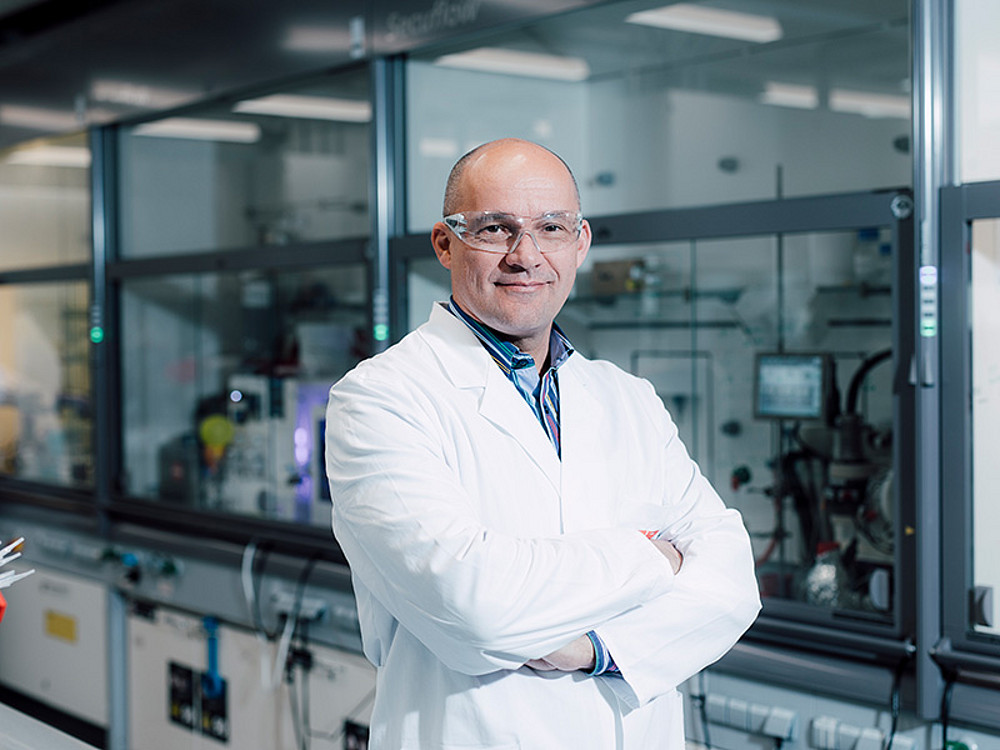
Chemist C. Oliver Kappe is the scientific director of the CC FLOW division at RCPE: "With our new, planned production facility we would be well prepared for possible future epidemics." Photo credit: Uni Graz/Kanizaj.

Chemist C. Oliver Kappe is the scientific director of the CC FLOW division at RCPE: "With our new, planned production facility we would be well prepared for possible future epidemics." Photo credit: Uni Graz/Kanizaj.

RCPE develops high-speed technology to accelerate the production of active ingredients against COVID-19

At present, hopes for a sustainable solution to the corona crisis rest on quickly finding suitable active ingredients for the treatment of patients and for preventative vaccination. However, it must also be possible to produce these active ingredients in the shortest possible time. Using traditional methods, this process once again takes many months. The Research Center for Pharmaceutical Engineering (RCPE) has developed high-speed manufacturing capabilities, through which the production of new active ingredients can be massively accelerated.

"RCPE has the technology that enables the production of an active ingredient quickly and in large quantities. In addition to the research and development pilot plant already in operation at RCPE’s site in Graz, we are now also planning the construction of a GMP-compliant production facility," reports Johannes Khinast, professor at the Graz University of Technology as well as CEO and scientific director of the K1 research centre, RCPE.

"Many studies are currently being conducted worldwide on the basis of existing compounds or known active ingredients that are believed to help against the coronavirus, such as Remdesivir, Faviparivir, Chloroquine, Hydroxychloroquine, Camostat Mesylate and others. As soon as a suitable active ingredient is found, there will be an enormous need to manufacture the therapies and distribute them to all people. This means that many millions of doses, for millions of affected people in Europe and worldwide, will have to be produced in a very short time. With the advanced high-speed technology we have developed, which is based on continuous manufacturing processes, production can be streamlined and massively accelerated," reports Johannes Khinast.

Production of "emergency medication" within the shortest time

The internationally leading pharmaceutical production experts Johannes Khinast and C. Oliver Kappe, professor at the Institute of Chemistry at the University of Graz and scientific director of the CC FLOW division at RCPE, refer to the more than six-year development period which has now made it possible to establish a GMP-compliant production facility before the end of this year. Prof. Kappe stated, "We are extremely flexible. Even the combination of active ingredient synthesis and the subsequent production steps would be united at one location. Using this new production facility, we would not only be able to make a significant contribution to overcoming the corona crisis, but also be well prepared for possible future epidemics." RCPE is therefore proposing the establishment of "an Austrian pharmaceutical production company that can be used exclusively for the rapid production of large quantities of emergency medication. This is something that is not available anywhere else in the public domain."

Investment volume: 30 to 35 million Euros

A production centre of this kind can be implemented with a budget of 30 to 35 million Euros in a period of seven to nine months, providing up to two million patients with appropriate medication. "That's why it is important to start development immediately, so that we can be ready as soon as possible," says Johannes Khinast, reporting on the first implementation steps. Discussions with RCPE partners - the Federal Government, State and the EU - are proceeding promisingly. Khinast and Kappe concluded: "We have the capacity and manpower to implement all of this." The new infrastructure will have a completely neutral structure, supporting the evaluation of all available active ingredients, independently of the pharmaceutical companies who create them.


Prof. C. Oliver Kappe is a leading international researcher and works, among others, for and with the Bill & Melinda Gates Foundation. Prof. Johannes Khinast is a consultant to international pharmaceutical companies and one of the most established researchers worldwide in his field.


The Research Center for Pharmaceutical Engineering (RCPE)

RCPE is a global leader in pharmaceutical engineering sciences. It helps their partners to create and manufacture advanced medicines for patients around the world, through optimising products and processes. As a non-profit, private company owned by Graz University of Technology (65%), University of Graz (20%) and JOANNEUM RESEARCH Forschungsgesellschaft mbH (15%), RCPE links outstanding science, application and industry in a business-oriented approach.

RCPE is a K1 COMET Centre within the Competence Centres for Excellent Technologies (COMET) programme. The COMET programme is operated by the Austrian Research Promotion Agency (FFG) on behalf of the Federal Ministry for Climate Protection, Environment, Energy, Mobility, Innovation and Technology (BMK) and the Federal Ministry for Digital and Economic Affairs (BMDW).  Projects are also funded by Land Steiermark and the Styrian Business Development Agency (SFG).
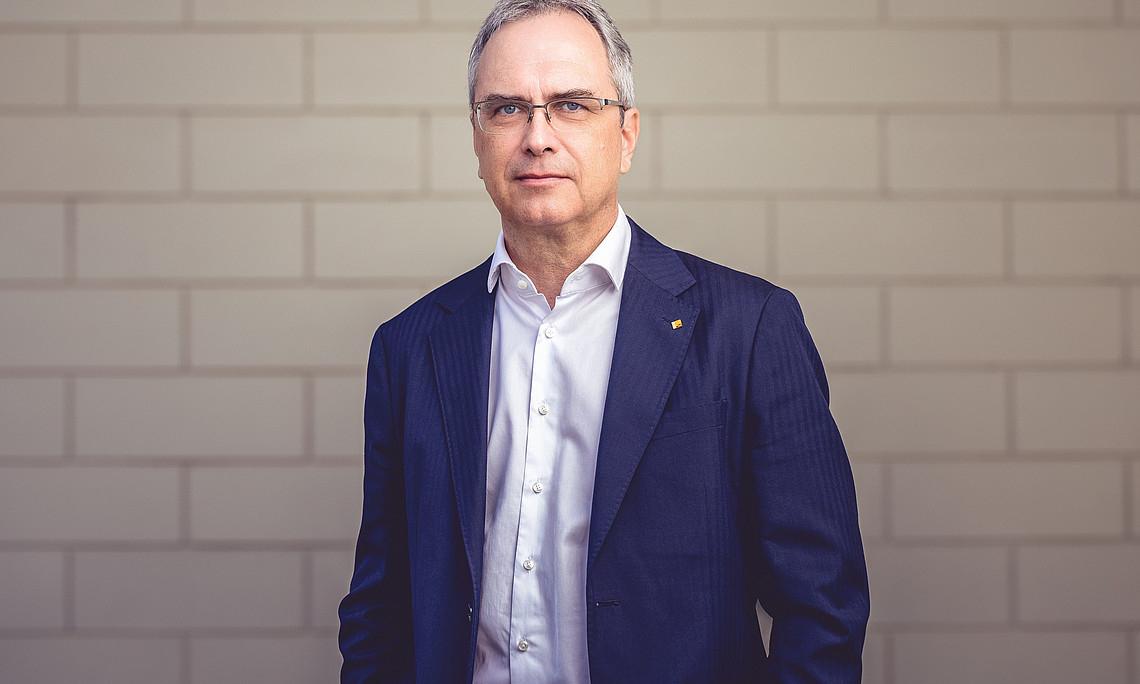
created by Lisa Lepori/RCPE & Gerhild Leljak

Related news

Higher Education Strategy 2040: Austria’s universities on course for the future

Austria has 77 higher education institutions, which is above the EU average – but does this really make sense? The new Higher Education Strategy 2040 focuses on cooperation rather than mergers. As one of the six largest universities in Austria, the University of Graz plays a central role in this.

Climate research in Greenland: Old data provides new insights

The polar explorer and University of Graz professor Alfred Wegener left behind a unique collection of climate data from Greenland. A research team from the University of Graz is now analysing this 100-year-old treasure trove of data and comparing it with current measurements.

Diversity in nature and science: How we talk about plants and each other

Ginkgo, kiwi, hemp: they exist as male and female plants. Anyone who paid attention in biology class will confirm this. But is this categorisation, established by Carl von Linné almost 300 years ago, still valid today? An interdisciplinary team at the University of Graz is questioning these attributions and using this as a starting point to provide food for thought for gender-sensitive interaction between students, scientific and teaching staff.

Around the world in eight stops: the Long Night of Research at the University of Graz

On 24 April from 5 pm, you can take a short trip around the globe at the University of Graz, discovering pecularities of foreign countries or new local features in the entrance hall of the University Library. The itinerary takes you through introduced animal species, political attitudes and the omnipotence of algorithms. There will also be a programme in the historic reading hall, as well as at the UniGraz@Museum and the University Archive.

Begin of page section:
Additional information:

University of Graz
Universitaetsplatz 3
8010 Graz
Austria
  • Contact
  • Web Editors
  • Moodle
  • UNIGRAZonline
  • Imprint
  • Data Protection Declaration
  • Accessibility Declaration
Weatherstation
Uni Graz

End of this page section. Go to overview of page sections

End of this page section. Go to overview of page sections

Begin of page section:

End of this page section. Go to overview of page sections


