


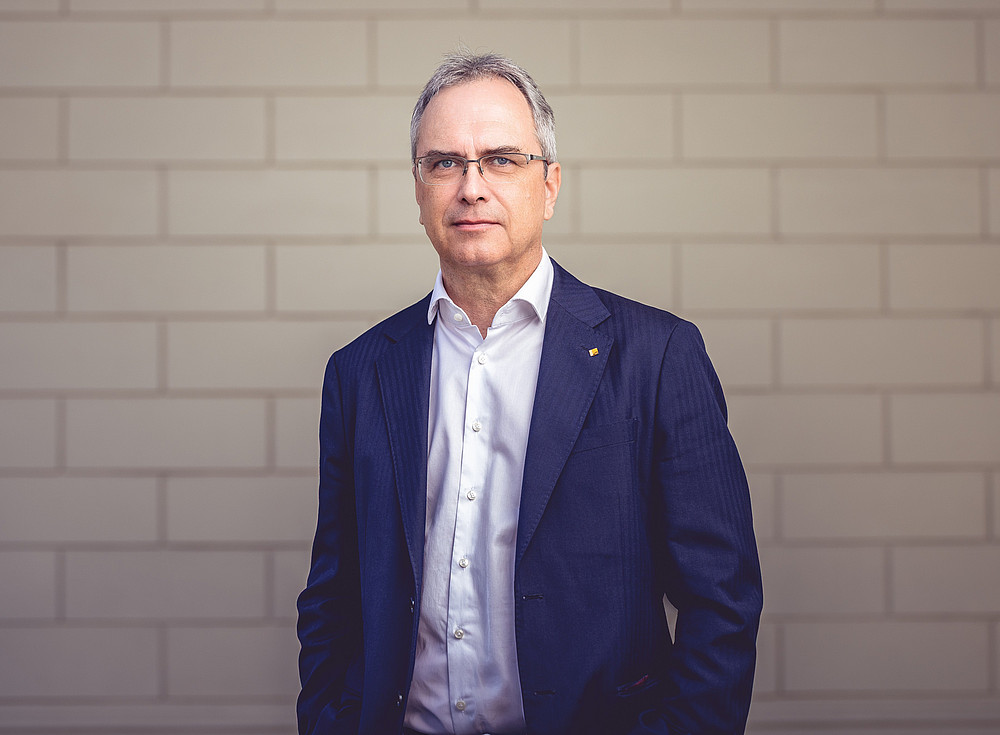
The federal government has to approve the university budget for the years 2028 to 2030 by the end of October. A sum of 15.5 billion euros for all universities is currently on the table; the Universities’ Conference (uniko) has calculated and stated that 18 billion euros is required. Not only would there be no compensation for the increased costs, but this would effectively amount to a cut of one billion euros. Peter Riedler, Rector of the University of Graz, appeals to the government: “We are all aware that we are living in challenging times financially. The crucial question is not whether universities can make savings. They can, and they will. What is crucial is that the austerity measures do not damage the structures that have been built up with great effort and that we as a society need for the future.”
Styria currently accounts for more than a fifth of Austria’s total research and development output; around a quarter of this is attributable to public universities. It is therefore particularly crucial for Styrian universities to gain clarity on the actual scale and structure of the university budget. This is because, in Styria in particular, the universities began focusing intensively on collaboration and pooling their resources more than twenty years ago (e.g. NAWI Graz, BioTechMed-Graz, Kunst-TU, iHub Graz, Gründungsgarage, teacher training).
For Styria as a centre of science, business and culture, cuts to research, teaching and early-career researchers would therefore be immediately felt. “The fact that Styria has Austria’s highest research quota at 5.3 per cent is no coincidence, but the result of this integration. Styrian universities generate 1.25 billion euros in added value every year and secure around 20,000 jobs,” explained Monika Köppl-Turyna, Director of Eco Austria, back in September. “Three to ten per cent of real economic growth is attributable to university research and teaching. That is precisely why cuts in this area are so dangerous.”
Speaking to the Austria Press Agency (APA), the Rector of the University of Vienna, Sebastian Schütze, also warned against budget cuts. “We understand that universities must make a contribution – but this should be done sensibly and with a sense of proportion,” says Schütze. However: “I would say: Any figure below 17 billion would lead to an absolute disaster and force a rollback.” Riedler, Rector of the University of Graz, underlines this and emphasises: “The breadth of university education in Austria is not a luxury, but a prerequisite for the future viability of our society.”
More information on the budget negotiations: Saving the universities
Translated with DeepL