Begin of page section:
Page sections:

  • Go to contents (Accesskey 1)
  • Go to position marker (Accesskey 2)
  • Go to main navigation (Accesskey 3)
  • Go to sub navigation (Accesskey 4)
  • Go to additional information (Accesskey 5)
  • Go to page settings (user/language) (Accesskey 8)
  • Go to search (Accesskey 9)

End of this page section. Go to overview of page sections

Begin of page section:
Page settings:

English en
Deutsch de
Search
Login

End of this page section. Go to overview of page sections

Begin of page section:
Search:

Search for details about Uni Graz
Close

End of this page section. Go to overview of page sections


Search

Begin of page section:
Main navigation:

Page navigation:

  • University

    University
    • About the University
    • Organisation
    • Faculties
    • Library
    • Working at University of Graz
    • Campus
    Developing solutions for the world of tomorrow - that is our mission. Our students and our researchers take on the great challenges of society and carry the knowledge out.
  • Research Profile

    Research Profile
    • Our Expertise
    • Research Questions
    • Research Portal
    • Promoting Research
    • Research Transfer
    • Ethics in Research
    • Commission for Scientific Integrity
    Scientific excellence and the courage to break new ground. Research at the University of Graz creates the foundations for making the future worth living.
  • Studies

    Studies
    • Prospective Students
    • Students
  • Community

    Community
    • International
    • Location
    • Research and Business
    • Alumni
    The University of Graz is a hub for international research and brings together scientists and business experts. Moreover, it fosters the exchange and cooperation in study and teaching.
  • Spotlight
Topics
  • Sustainable University
  • Researchers answer
  • Work for us
Close menu

End of this page section. Go to overview of page sections

Begin of page section:
You are here:

University of Graz News Good at maths

End of this page section. Go to overview of page sections

Tuesday, 08 December 2020

Good at maths

Austria's primary school pupils have become better at maths, but not at sciences. The latest educational study TIMSS gives prove of that. Photo: Pixabay

Austria's primary school pupils have become better at maths, but not at sciences. The latest educational study TIMSS gives prove of that. Photo: Pixabay

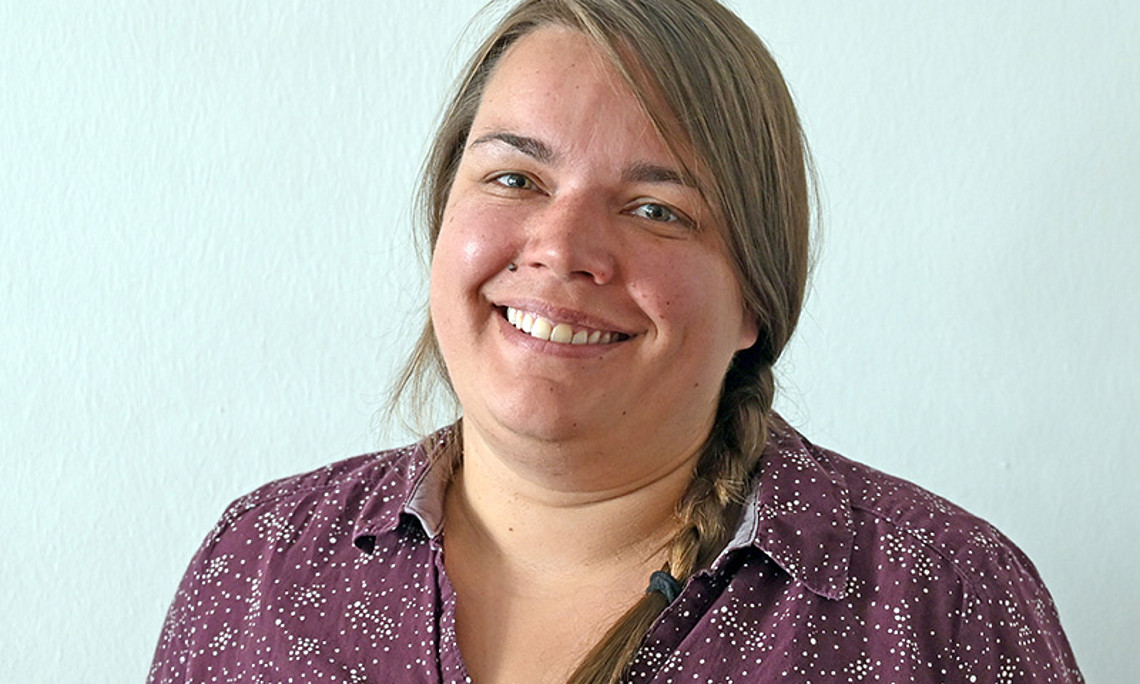
Heike Wendt analyses Austria's results in the international school study TIMSS

Can the kids master the basic arithmetical operations? Do they understand contexts in science? Does everybody get sufficient support? The latest educational study TIMSS („Trends in International Mathematics and Science Study“) can answer these questions. Heike Wendt, Professor for empirical educational research at the University of Graz was involved in this study and can interpret the results: „Austrian children did a lot better in maths than in the year 2011, their scientific competences did not improve, though. Educational justice has not changed either.“

Deep gaps
The study was realised before the Corona pandemic. Therefore one has to assume that knowledge gaps in science and the drawbacks for deprived children have increased during home schooling. „Of course it is gratifying that the introduction of educational standards and the focus on mathematical competences have shown positive effects. We should not lose sight of important topics in general studies, though", Wendt emphasises. In times of a pandemic it is more important than ever that children understand basic contexts in nature, society and health. 
Educational justice is till out of reach. "Over the past 15 years it has not improved at all, although we know exactly what to do to bridge social differences", the researcher says. Individual learning, extra offers for deprived children, more specially educated personnel and last but not least a system that promotes the underpriviledged - above all children from immigrants. 
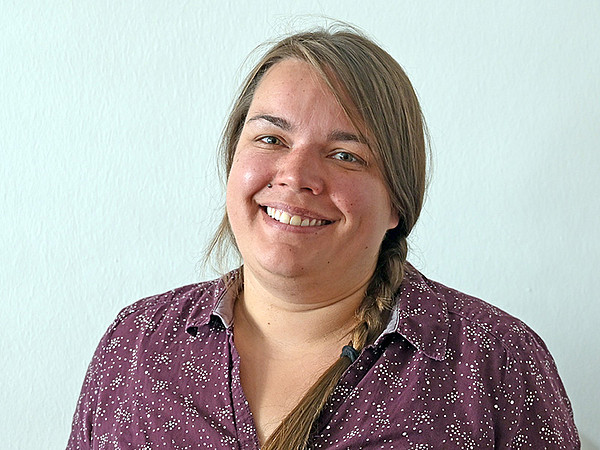
 

Heike Wendt is Professor for empirical educational science. Photo: Uni Graz/Eklaude
created by Dagmar Eklaude

Related news

Higher Education Strategy 2040: Austria’s universities on course for the future

Austria has 77 higher education institutions, which is above the EU average – but does this really make sense? The new Higher Education Strategy 2040 focuses on cooperation rather than mergers. As one of the six largest universities in Austria, the University of Graz plays a central role in this.

Climate research in Greenland: Old data provides new insights

The polar explorer and University of Graz professor Alfred Wegener left behind a unique collection of climate data from Greenland. A research team from the University of Graz is now analysing this 100-year-old treasure trove of data and comparing it with current measurements.

Diversity in nature and science: How we talk about plants and each other

Ginkgo, kiwi, hemp: they exist as male and female plants. Anyone who paid attention in biology class will confirm this. But is this categorisation, established by Carl von Linné almost 300 years ago, still valid today? An interdisciplinary team at the University of Graz is questioning these attributions and using this as a starting point to provide food for thought for gender-sensitive interaction between students, scientific and teaching staff.

Faire Schule

Heike Wendt engagiert sich nicht nur wissenschaftlich für Bildungsgerechtigkeit

Begin of page section:
Additional information:

University of Graz
Universitaetsplatz 3
8010 Graz
Austria
  • Contact
  • Web Editors
  • Moodle
  • UNIGRAZonline
  • Imprint
  • Data Protection Declaration
  • Accessibility Declaration
Weatherstation
Uni Graz

End of this page section. Go to overview of page sections

End of this page section. Go to overview of page sections

Begin of page section:

End of this page section. Go to overview of page sections