



Begin of page section:
Page sections:

  • Go to contents (Accesskey 1)
  • Go to position marker (Accesskey 2)
  • Go to main navigation (Accesskey 3)
  • Go to sub navigation (Accesskey 4)
  • Go to additional information (Accesskey 5)
  • Go to page settings (user/language) (Accesskey 8)
  • Go to search (Accesskey 9)

End of this page section. Go to overview of page sections

Begin of page section:
Page settings:

English en
Deutsch de
Search
Login

End of this page section. Go to overview of page sections

Begin of page section:
Search:

Search for details about Uni Graz
Close

End of this page section. Go to overview of page sections


Search

Begin of page section:
Main navigation:

Page navigation:

  • University

    University
    • About the University
    • Organisation
    • Faculties
    • Library
    • Working at University of Graz
    • Campus
    Developing solutions for the world of tomorrow - that is our mission. Our students and our researchers take on the great challenges of society and carry the knowledge out.
  • Research Profile

    Research Profile
    • Our Expertise
    • Research Questions
    • Research Portal
    • Promoting Research
    • Research Transfer
    • Ethics in Research
    • Commission for Scientific Integrity
    Scientific excellence and the courage to break new ground. Research at the University of Graz creates the foundations for making the future worth living.
  • Studies

    Studies
    • Prospective Students
    • Students
  • Community

    Community
    • International
    • Location
    • Research and Business
    • Alumni
    The University of Graz is a hub for international research and brings together scientists and business experts. Moreover, it fosters the exchange and cooperation in study and teaching.
  • Spotlight
Topics
  • Sustainable University
  • Researchers answer
  • Work for us
Close menu

End of this page section. Go to overview of page sections

Begin of page section:
You are here:

University of Graz News Re-Launch

End of this page section. Go to overview of page sections

Friday, 24 January 2014

Re-Launch

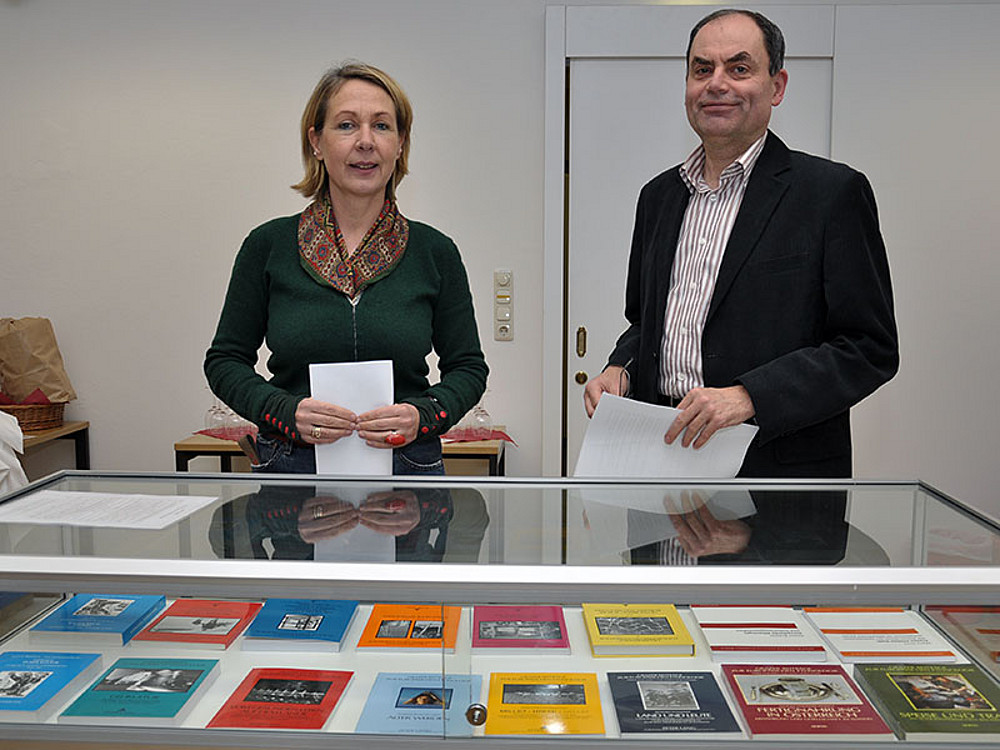
Institutsleiterin Johanna Rolshoven und Burkhard Pöttler vor den Bänden der Reihe „Grazer Beiträge zur Europäischen Ethnologie“

Institutsleiterin Johanna Rolshoven und Burkhard Pöttler vor den Bänden der Reihe „Grazer Beiträge zur Europäischen Ethnologie“

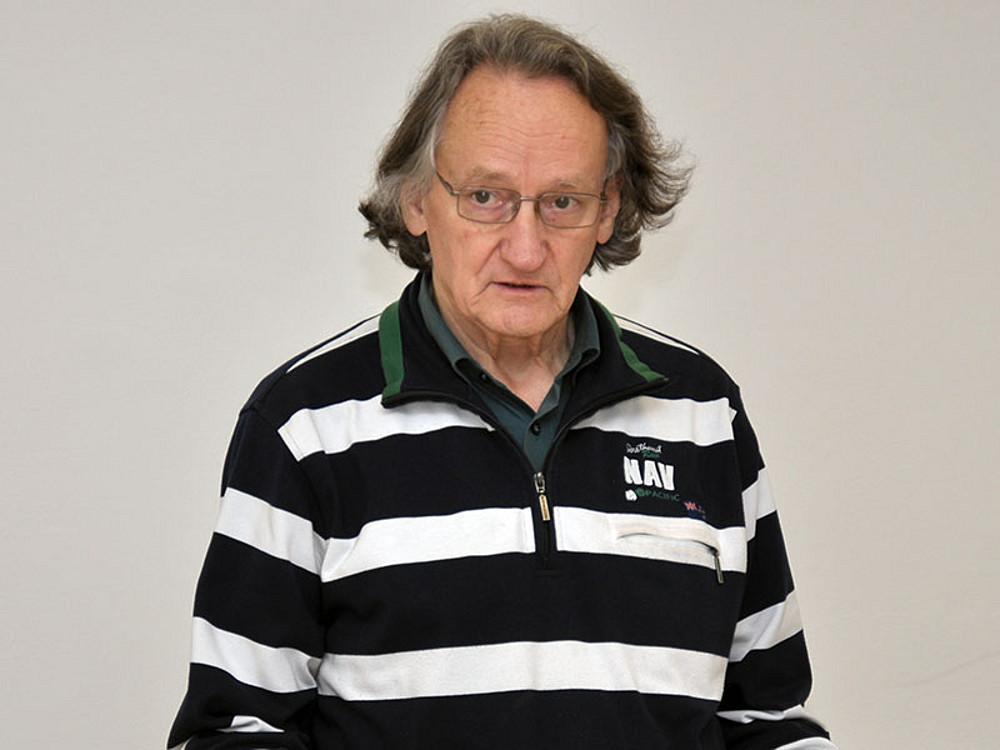
Dieter Kramer, Kulturwissenschafter und Europäischer Ethnologe, ist Autor eines der ersten beiden Bände der Publikationsreihe nach ihrem Re-Launch.

Dieter Kramer, Kulturwissenschafter und Europäischer Ethnologe, ist Autor eines der ersten beiden Bände der Publikationsreihe nach ihrem Re-Launch.

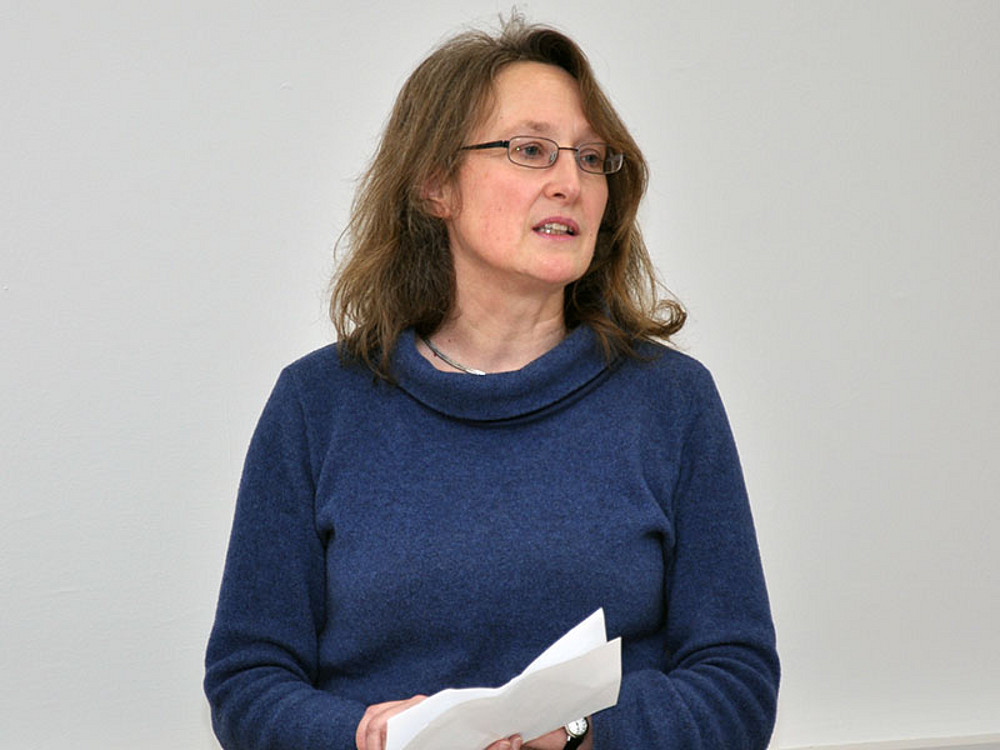
Katharina Eisch-Angus, stellvertretende Leiterin des Instituts für Volkskunde und Kulturanthropologie, begrüßte Dieter Kramer an der Uni Graz.

Katharina Eisch-Angus, stellvertretende Leiterin des Instituts für Volkskunde und Kulturanthropologie, begrüßte Dieter Kramer an der Uni Graz.

Das Institut für Volkskunde und Kulturanthropologie präsentierte seine neu konzipierte Publikationsreihe „Grazer Beiträge zur Europäischen Ethnologie“

Grund zum Feiern hatte am 23. Jänner 2014 die Volkskunde und Kulturanthropologie an der Uni Graz. Das Institut lud zur Präsentation der ersten zwei Bände seiner Publikationsreihe „Grazer Beiträge zur Europäischen Ethnologie“ nach deren Re-Launch. Gegründet 1988 auf Initiative von der damaligen Institutsleiterin Univ.-Prof. Dr. Editha Hörandner, erfuhr sie unter Federführung von Univ.-Prof. Dr. Johanna Rolshoven eine Neukonzeption. Mit dem Jonas-Verlag im deutschen Marburg wurde nun auch ein kompetenter Partner gefunden, der dazu beitragen soll, die „Grazer Beiträge zur Europäischen Ethnologie“ auch über die Grenzen Österreichs hinaus bekannt zu machen.


Ao.Univ.-Prof. Dr. Burkhard Pöttler hielt Rückschau auf die Anfänge und die bisherige Entwicklung der „Grazer Beiträge zur Europäischen Ethnologie“, die vor allem Studierenden der Uni Graz eine Gelegenheit bot, ihre Abschlussarbeiten zu publizieren, aber auch der Veröffentlichung von Sammelbänden zu Fachtagungen diente. Das wird auch weiterhin so bleiben. „Darüber hinaus sollen nun auch andere Publikationen zu spannenden Themen aufgenommen werden. Geplant ist, zwei Bände pro Jahr herauszugeben“, blickte Johanna Rolshoven in die Zukunft.


Den Anfang machen zwei Bücher, die für kritische, gegenwartsorientierte Kulturanalysen spätmoderner Lebenswelten stehen und anlässlich der Feier des Re-Launch vorgestellt wurden: „Europäische Ethnologie und Kulturwissenschaften“ von Dieter Kramer und „Frauen erleben Stadt. Die Konstruktion der Geschlechterverhältnisse im öffentlichen Raum“ von Maria Koch.


Tit. Univ.-Prof. Dr. Dieter Kramer, der zu den bekanntesten deutschen Forschern im Bereich Kulturwissenschaften und Europäische Ethnologie zählt, zeigte in seinem Vortrag auf, welche Beiträge die Europäische Ethnologie für die Kulturwissenschaften wie auch für die aktuellen Herausforderungen des politischen und kulturellen Lebens leisten kann.


Mag. Maria Koch ist Absolventin des Instituts für Volkskunde und Kulturanthropologie an der Karl-Franzens-Universität Graz und studiert derzeit Stadt- und Regionalplanung an der Technischen Universität in Berlin. Ihre Forschungsschwerpunkte sind Stadtforschung, Gender Studies und Feministische Studien.

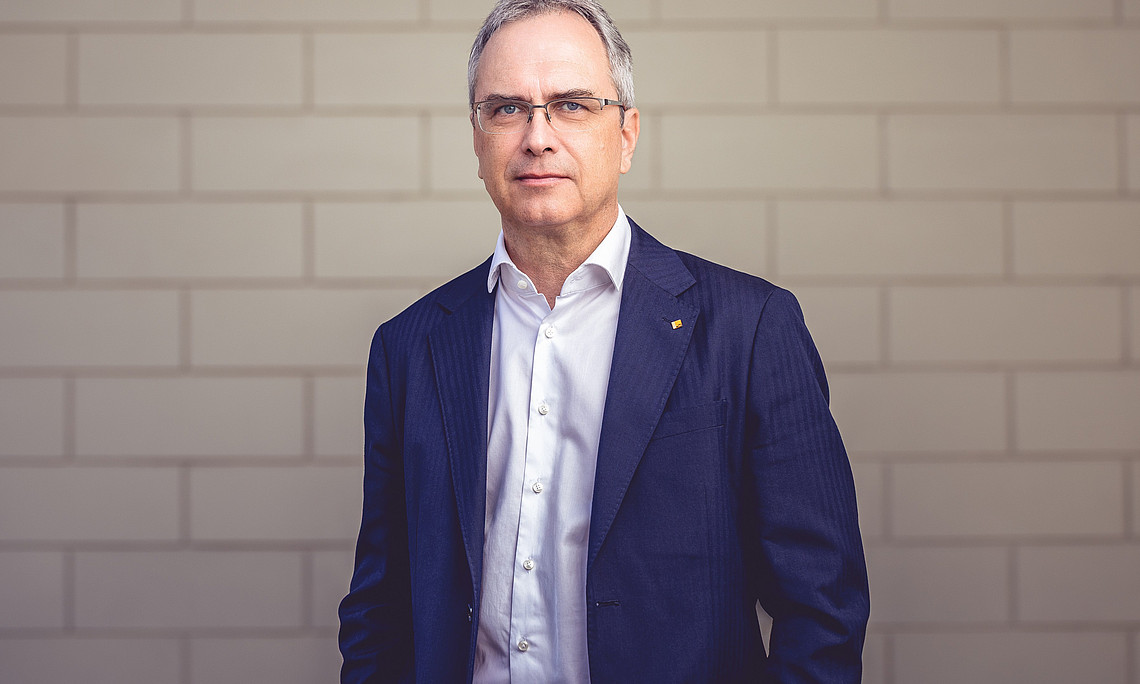
created by Gudrun Pichler

Related news

Higher Education Strategy 2040: Austria’s universities on course for the future

Austria has 77 higher education institutions, which is above the EU average – but does this really make sense? The new Higher Education Strategy 2040 focuses on cooperation rather than mergers. As one of the six largest universities in Austria, the University of Graz plays a central role in this.

Climate research in Greenland: Old data provides new insights

The polar explorer and University of Graz professor Alfred Wegener left behind a unique collection of climate data from Greenland. A research team from the University of Graz is now analysing this 100-year-old treasure trove of data and comparing it with current measurements.

Diversity in nature and science: How we talk about plants and each other

Ginkgo, kiwi, hemp: they exist as male and female plants. Anyone who paid attention in biology class will confirm this. But is this categorisation, established by Carl von Linné almost 300 years ago, still valid today? An interdisciplinary team at the University of Graz is questioning these attributions and using this as a starting point to provide food for thought for gender-sensitive interaction between students, scientific and teaching staff.

Around the world in eight stops: the Long Night of Research at the University of Graz

On 24 April from 5 pm, you can take a short trip around the globe at the University of Graz, discovering pecularities of foreign countries or new local features in the entrance hall of the University Library. The itinerary takes you through introduced animal species, political attitudes and the omnipotence of algorithms. There will also be a programme in the historic reading hall, as well as at the UniGraz@Museum and the University Archive.

Begin of page section:
Additional information:

University of Graz
Universitaetsplatz 3
8010 Graz
Austria
  • Contact
  • Web Editors
  • Moodle
  • UNIGRAZonline
  • Imprint
  • Data Protection Declaration
  • Accessibility Declaration
Weatherstation
Uni Graz

End of this page section. Go to overview of page sections

End of this page section. Go to overview of page sections

Begin of page section:

End of this page section. Go to overview of page sections

