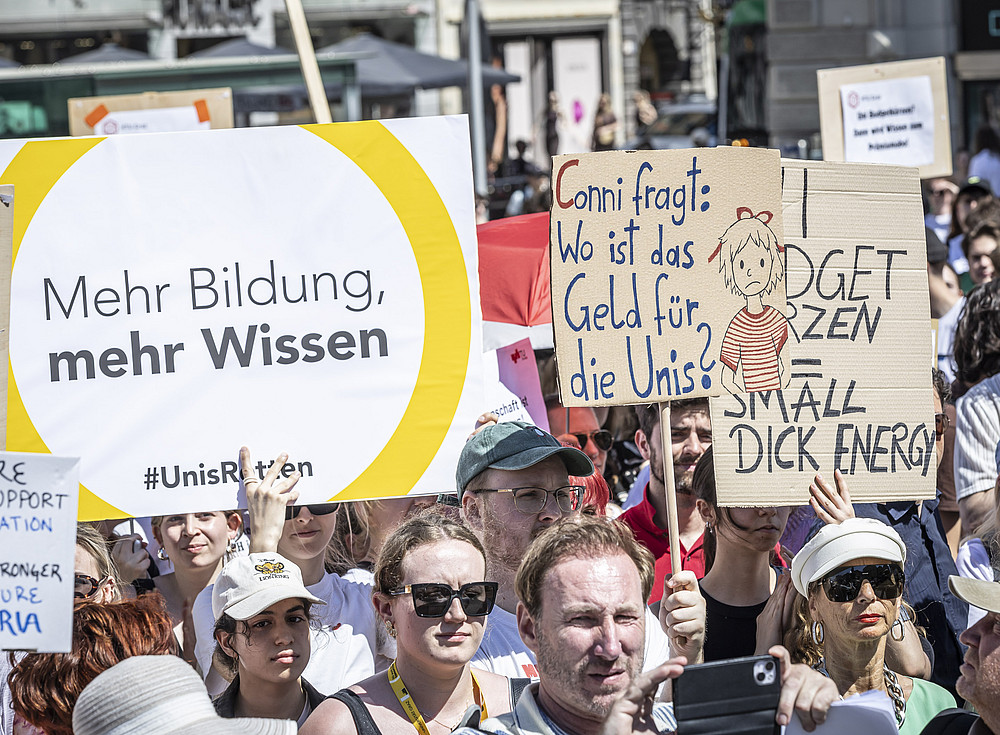
Under the slogan “#SaveOurUniversities”, universities, student unions and supporters of education, science and research in Graz protested on 28 May against the federal government’s planned budget cuts. According to the students council, around 6500 people took to the streets.
The march led from Wilhelm-Fischer-Allee through Graz city centre to the main square. The backdrop to the protest is the announcement of massive cuts in the higher education sector, against which universities and interest groups have been issuing urgent warnings for days. They highlighted in particular the devastating impact on study conditions, jobs and Austria’s international competitiveness as a science hub.
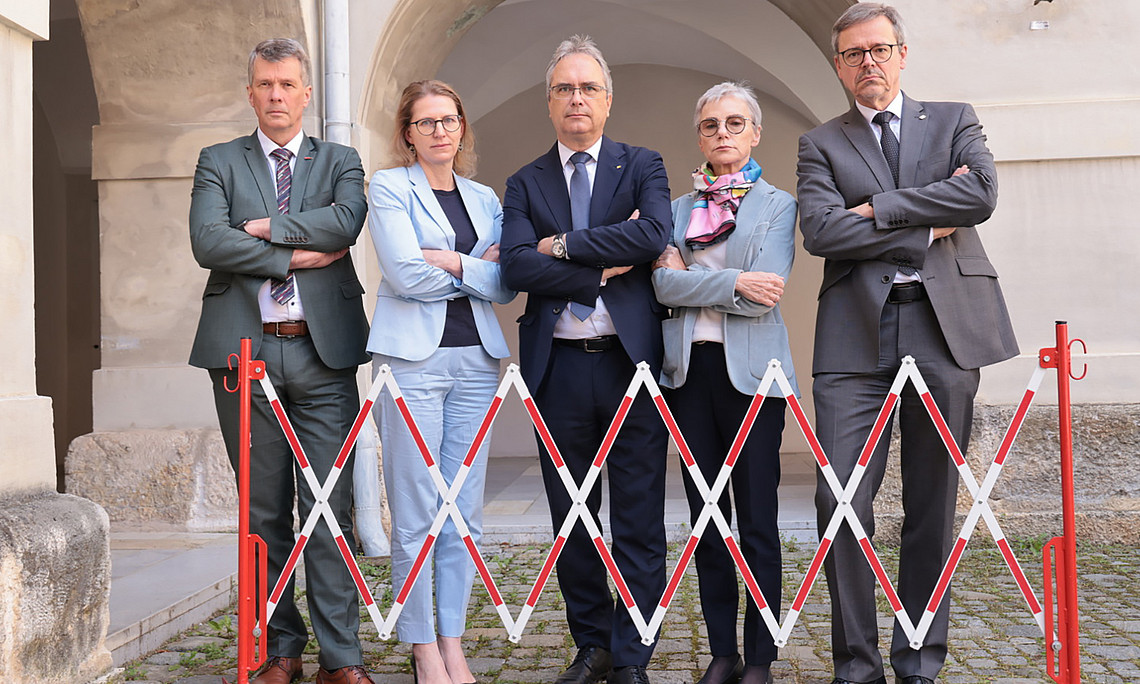
“We now need clarity on the funding path for universities. A real reduction of 2.5 billion euros represents a massive and unmanageable cut if Austria is to continue to compete as a nation of knowledge, research and innovation on the world stage,” demands Rector Peter Riedler.
“Cutting funding for universities today jeopardises tomorrow’s economy. This affects both the shortage of skilled workers and the decline in innovation. If funding for universities is cut, it will mean a lasting weakening of our position as a centre of business and science,” warned Horst Bischof, Rector of Graz University of Technology.
“The example of the Medical University of Graz makes it clear that cuts affect not only teaching and research, but directly jeopardise healthcare provision and the training of future doctors. This development is unacceptable. It leads to a decline in quality in training, care and research,” emphasised Rector Andrea Kurz.
Georg Schulz, Rector of the University of Music and Performing Arts Graz, stressed: “The planned cuts are hitting us disproportionately hard and are eating into our very substance. This must be prevented, because universities are a vital lifeline for Austria.”
Peter Moser, Rector of the Technical University of Leoben, warned against the planned budget cuts: “They mean less innovation, slow down future technologies and weaken Austria’s position as a centre for research and higher education in the long term.”