Begin of page section:
Page sections:

  • Go to contents (Accesskey 1)
  • Go to position marker (Accesskey 2)
  • Go to main navigation (Accesskey 3)
  • Go to sub navigation (Accesskey 4)
  • Go to additional information (Accesskey 5)
  • Go to page settings (user/language) (Accesskey 8)
  • Go to search (Accesskey 9)

End of this page section. Go to overview of page sections

Begin of page section:
Page settings:

English en
Deutsch de
Search
Login

End of this page section. Go to overview of page sections

Begin of page section:
Search:

Search for details about Uni Graz
Close

End of this page section. Go to overview of page sections


Search

Begin of page section:
Main navigation:

Page navigation:

  • University

    University
    • About the University
    • Organisation
    • Faculties
    • Library
    • Working at University of Graz
    • Campus
    Developing solutions for the world of tomorrow - that is our mission. Our students and our researchers take on the great challenges of society and carry the knowledge out.
  • Research Profile

    Research Profile
    • Our Expertise
    • Research Questions
    • Research Portal
    • Promoting Research
    • Research Transfer
    • Ethics in Research
    • Commission for Scientific Integrity
    Scientific excellence and the courage to break new ground. Research at the University of Graz creates the foundations for making the future worth living.
  • Studies

    Studies
    • Prospective Students
    • Students
    • Registration for Study Programme (Winter semester 2026/27)
  • Community

    Community
    • International
    • Location
    • Research and Business
    • Alumni
    The University of Graz is a hub for international research and brings together scientists and business experts. Moreover, it fosters the exchange and cooperation in study and teaching.
Topics
  • Sustainable University
  • Researchers answer
  • Work for us
Close menu

End of this page section. Go to overview of page sections

Begin of page section:
You are here:

University of Graz News Programmieren in Kunst und Kultur: Über 800 internationale Forscher:innen in Graz

End of this page section. Go to overview of page sections

Monday, 10 July 2023

Programmieren in Kunst und Kultur: Über 800 internationale Forscher:innen in Graz

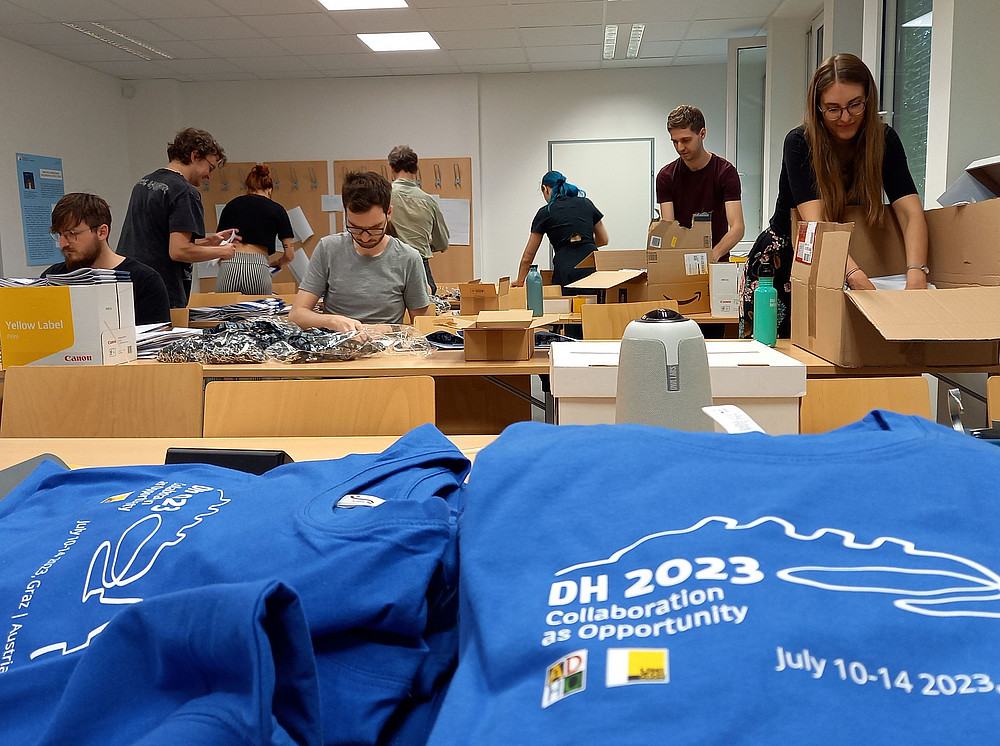
Das Team bei der Vorbereitung des Digital Humanities Congress 2023

Das Team bei der Vorbereitung des Digital Humanities Congress 2023 Foto: Uni Graz

Die Digitalisierung verändert die Welt in vielerlei Hinsicht. Wie sie die Geisteswissenschaften, das Kulturerbe und die Gesellschaft an sich beeinflusst, wird auf der Digital Humanities Conference 2023 (ADHO-Konferenz) diskutiert. Vom 10. bis 14. Juli 2023 erwarten die über 800 Teilnehmer:innen spannende Vorträge, Workshops und Poster zu Themen wie Computational Museology, digitale Geschichtsforschung und Textanalyse mithilfe künstlicher Intelligenz.

Wie verändert Digitalisierung das Erlebnis eines Museumsbesuchs? Wie verändern digitalisierte historische Texte die Geschichtsforschung? Welche zusätzlichen Inhalte können mittels strukturierter Daten mit digitalen Objekten verknüpft werden? Was bedeutet die Digitalisierung der Gesellschaft für die Menschenrechte?

Diesen und vielen weiteren Fragen widmet sich die ADHO (Alliance of Digital Humanities Organisations) Digital Humanities Conference, die zwischen 10. Juli und 14. Juli 2023 unter dem Leitthema „Collaboration as Opportunity" an der Universität Graz und in der Messehalle Graz stattfindet. Organisiert wird sie vom Zentrum für Informationsmodellierung der Universität Graz. Zwischen 9.00 und 17.30 Uhr können die mehr als 800 Teilnehmer:innen aus mehr als 50 Ländern aus Dutzenden Vorträgen und Workshops wählen.

Eingeleitet wird die Konferenz von Sarah Kenderdine, der Direktorin der EPFL Pavilions in Lausanne. Sie spricht über die Vorteile sowie die kritischen Aspekte der Digitalisierung des musealen Erlebnisses und tritt für die Etablierung einer neuen Disziplin in den Geisteswissenschaften ein: Der „Computational Museology“.

Als Gastgeber wird Georg Vogeler, Professor für Digital Humanities an der Universität Graz, über die Bedeutung der Digitalisierung von historischen Schriftstücken sprechen und welchen wichtigen Beitrag die Aufarbeitung und computergestützte Analyse der digitalen Abbildungen zur weiteren Erforschung der Objekte leistet.

Ein Beispiel aus der Praxis liefern die Forscherinnen der Universität Graz Ingeborg Zechner, Selina Galka und Mirijam Beier: Sie haben die Theater-Chroniken der Jahre 1758 und 1763 von Philipp Gumpenhuber digitalisiert. Dabei wurde der Text mittels XML mit strukturierten Daten angereichert. So konnten die Beschreibungen des Theaters, des sozialen Lebens und der Politik am Hof miteinander in Beziehung gebracht werden. Das erlaubt einen neuen Blick auf Ereignisse am Wiener Hof in dieser Epoche.

Den Endpunkt der Konferenz bildet die Keynote von Claire Fernandez, Executive Director der NGO European Digital Rights (EDRi). Sie spricht darüber, wie die Menschenrechte im digitalen Zeitalter gestärkt werden können.

Die Konferenz legt ein eindrucksvolles Zeugnis für die Vorreiterrolle des Zentrums für Informationsmodellierung der Universität Graz in den internationalen Digital Humanities ab. Sie zeigt, dass die Universität Graz für die Herausforderungen durch Digitalisierung, Künstliche Intelligenz und die digitale Transformation der Gesellschaft bestens gerüstet ist.

Mehr Informationen: Digital Humanities 2023: Collaboration as Opportunity - Universität Graz (uni-graz.at)
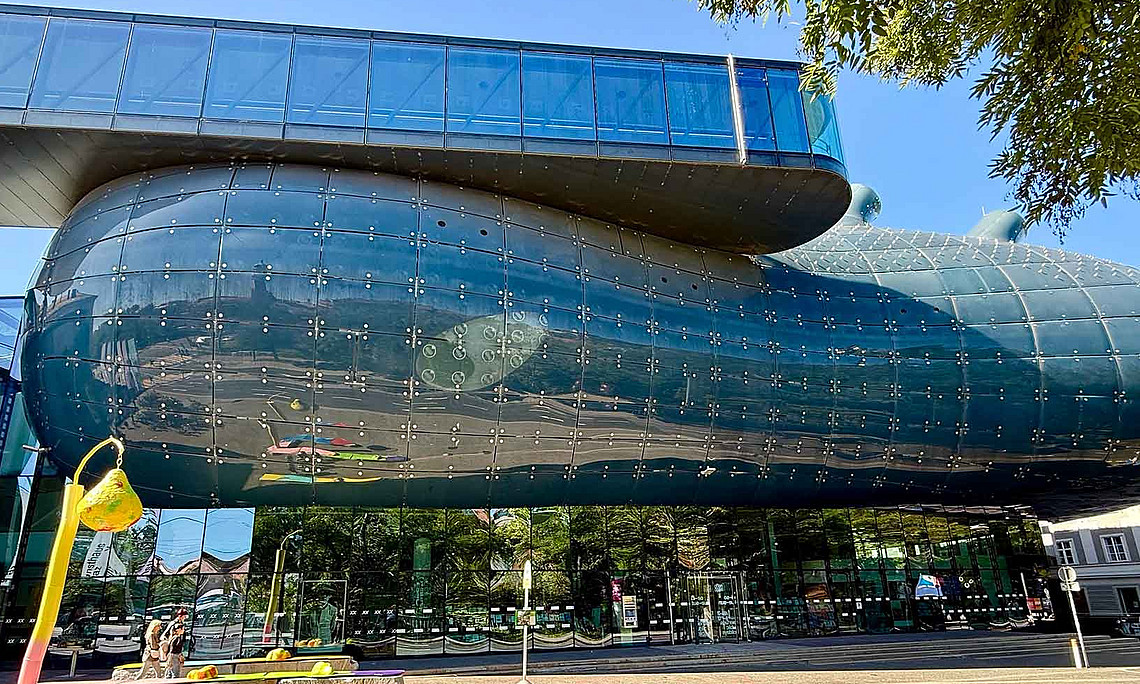
created by Roman Vilgut

Related news

Complying with the norm: Why Do Standards Shape Our Lives, Elisabeth Staudegger?

Standards determine whether a sheet of paper fits in a printer or whether a charging plug can power multiple devices. These standards shape our everyday lives. But who actually sets these standards? Where are the weaknesses, and how could science help to improve them? Elisabeth Staudegger, Head of the ‘Law and IT’ Department at the Institute for Legal Foundations at the University of Graz, host the Academic Standards Day on 16 June. Here she relays how sciences can contribute to the topic of standardisation and reveals her personal favourite standard.

More body awareness than a culture war

In Italy, sex education lessons will in future only be permitted with parental consent, and will be banned entirely in nurseries and primary schools. At the same time, Pride Month highlights why knowledge about the body, relationships, boundaries and diversity is important for young people. A study by the University of Graz shows how important knowledge about the body, contraception, relationship skills and protection against violence is

Will Austria win the World Cup? Mathematician reveals calculation method

Michael Fischer uses the football tournament as a practical example for highschool lessons.

Survival strategies: How plants respond to drought

According to Geosphere Austria, this spring was the driest in Austria since records began around 170 years ago. The low rainfall put particular pressure on the agricultural sector. And climate change is set to make the situation even worse in the coming decades. We asked Johannes Liesche, a professor at the Department of Biology at the University of Graz, how plants react to water shortages and how they survive periods of drought.

Begin of page section:
Additional information:

University of Graz
Universitaetsplatz 3
8010 Graz
Austria
  • Contact
  • Web Editors
  • Moodle
  • UNIGRAZonline
  • Imprint
  • Data Protection Declaration
  • Accessibility Declaration
Weatherstation
Uni Graz

End of this page section. Go to overview of page sections

End of this page section. Go to overview of page sections

Begin of page section:

End of this page section. Go to overview of page sections