Begin of page section:
Page sections:

  • Go to contents (Accesskey 1)
  • Go to position marker (Accesskey 2)
  • Go to main navigation (Accesskey 3)
  • Go to sub navigation (Accesskey 4)
  • Go to additional information (Accesskey 5)
  • Go to page settings (user/language) (Accesskey 8)
  • Go to search (Accesskey 9)

End of this page section. Go to overview of page sections

Begin of page section:
Page settings:

English en
Deutsch de
Search
Login

End of this page section. Go to overview of page sections

Begin of page section:
Search:

Search for details about Uni Graz
Close

End of this page section. Go to overview of page sections


Search

Begin of page section:
Main navigation:

Page navigation:

  • University

    University
    • About the University
    • Organisation
    • Faculties
    • Library
    • Working at University of Graz
    • Campus
    Developing solutions for the world of tomorrow - that is our mission. Our students and our researchers take on the great challenges of society and carry the knowledge out.
  • Research Profile

    Research Profile
    • Our Expertise
    • Research Questions
    • Research Portal
    • Promoting Research
    • Research Transfer
    • Ethics in Research
    • Commission for Scientific Integrity
    Scientific excellence and the courage to break new ground. Research at the University of Graz creates the foundations for making the future worth living.
  • Studies

    Studies
    • Prospective Students
    • Students
  • Community

    Community
    • International
    • Location
    • Research and Business
    • Alumni
    The University of Graz is a hub for international research and brings together scientists and business experts. Moreover, it fosters the exchange and cooperation in study and teaching.
  • Spotlight
Topics
  • Sustainable University
  • Researchers answer
  • Work for us
Close menu

End of this page section. Go to overview of page sections

Begin of page section:
You are here:

University of Graz News New climate records

End of this page section. Go to overview of page sections

Monday, 07 October 2024

New climate records

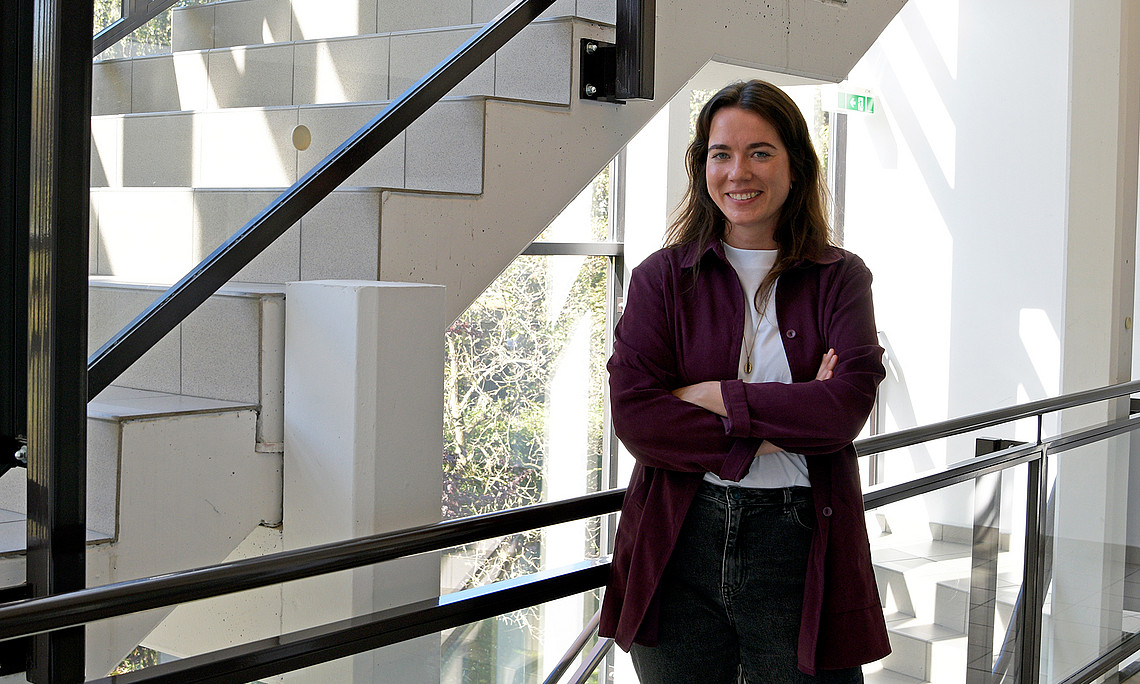
Map of the earth with cloud cover ©elroce - stock.adobe.com

The year 2023 again brought record levels of global warming and its effects on water and land, and up to the stratosphere. Photo: elroce - stock.adobe.com

Whether in terms of greenhouse gas concentrations, temperatures across the globe, ocean heat and global sea level, total land area in extreme drought or the melting of Antarctica sea ice– the highest values since records began were measured in 2023. The latest international annual report on the state of the climate, published by the National Center for Environmental Information of the US National Oceanic and Atmospheric Administration, documents the rapid warming of the Earth and its consequences. In 2023, El Niño acted as an additional booster. Researchers from the University of Graz also contributed to the report.

Andrea Steiner, climate physicist at the Wegener Center for Climate and Global Change of the University of Graz, is researching the changes in the atmosphere. "In 2023, record temperatures were again observed in the troposphere. The combination of the short-term effects of El Niño with the long-term effects of high greenhouse gas concentrations contributed to the further warming of this lowest layer of the atmosphere," reports the scientist.

"In the stratosphere above, long-term cooling is taking place, caused by the man-made increase in greenhouse gases and ozone loss," explains Steiner, adding: "The middle stratosphere was abnormally cold in 2022 until mid-2023 because the Hunga volcanic eruption injected enormous amounts of water vapour up to an altitude of 50 kilometres." Overall, however, the long-term temperature changes both on the ground and in the atmosphere can clearly be attributed to man-made greenhouse gas emissions, explains the climate physicist.

Andreas Kellerer-Pirklbauer from the Department of Geography and Regional Science is investigating the effects of climate change on glaciers and permafrost in alpine regions. He has contributed research results on the velocity of rock glaciers, which is being measured in collaboration with Graz University of Technology. These landforms in high mountain environments are mixtures of debris and ice and typical indicators of alpine permafrost. Rock glaciers slowly creep down the valleys, similar to a lava flow. Their movement is primarily dependent on the thermal conditions of permafrost. The more it warms up and the more liquid water there is in the system, the faster the rock glacier moves.

"The hydrological year 2023 – i.e., the period October 2022 to September 2023 – was the warmest since meteorological records began in the European Alps," reports Kellerer-Pirklbauer. Accordingly, rock glacier velocities in the Western Alps continued to rise. In the Eastern Alps, on the other hand, they decreased. "These regional differences are in line with different snow conditions. In the east, the seasonal snow cover started exceptionally late and was relatively thin. As a result, the ground cooled significantly stronger, which reduced the movement dynamics of the rock glaciers compared to the previous year," explains the researcher. An international comparison – as published in the report – clearly shows that the rock glacier velocities observed in mountain regions worldwide have generally been increasing since the 1950s, with large regional and annual fluctuations. "These changes are consistent with the increase in permafrost temperatures due to anthropogenically-enhanced climate change," says Kellerer-Pirklbauer.

State of the Climate 2023 – Highlights

State of the Climate is published annually by the National Center for Environmental Information of the US National Oceanic and Atmospheric Administration, based on contributions from scientists from 60 countries.

created by Gudrun Pichler

Related news

Climate research in Greenland: Old data provides new insights

The polar explorer and University of Graz professor Alfred Wegener left behind a unique collection of climate data from Greenland. A research team from the University of Graz is now analysing this 100-year-old treasure trove of data and comparing it with current measurements.

Diversity in nature and science: How we talk about plants and each other

Ginkgo, kiwi, hemp: they exist as male and female plants. Anyone who paid attention in biology class will confirm this. But is this categorisation, established by Carl von Linné almost 300 years ago, still valid today? An interdisciplinary team at the University of Graz is questioning these attributions and using this as a starting point to provide food for thought for gender-sensitive interaction between students, scientific and teaching staff.

Around the world in eight stops: the Long Night of Research at the University of Graz

On 24 April from 5 pm, you can take a short trip around the globe at the University of Graz, discovering pecularities of foreign countries or new local features in the entrance hall of the University Library. The itinerary takes you through introduced animal species, political attitudes and the omnipotence of algorithms. There will also be a programme in the historic reading hall, as well as at the UniGraz@Museum and the University Archive.

Studying at the University of Graz: How to enrol

Ready for a new chapter in your life with the start of your studies at the University of Graz in the winter semester 2026/27? Here you will find information on deadlines, admission procedures, registration, and everything else you need to successfully start your studies in the fall.

Begin of page section:
Additional information:

University of Graz
Universitaetsplatz 3
8010 Graz
Austria
  • Contact
  • Web Editors
  • Moodle
  • UNIGRAZonline
  • Imprint
  • Data Protection Declaration
  • Accessibility Declaration
Weatherstation
Uni Graz

End of this page section. Go to overview of page sections

End of this page section. Go to overview of page sections

Begin of page section:

End of this page section. Go to overview of page sections