Begin of page section:
Page sections:

  • Go to contents (Accesskey 1)
  • Go to position marker (Accesskey 2)
  • Go to main navigation (Accesskey 3)
  • Go to sub navigation (Accesskey 4)
  • Go to additional information (Accesskey 5)
  • Go to page settings (user/language) (Accesskey 8)
  • Go to search (Accesskey 9)

End of this page section. Go to overview of page sections

Begin of page section:
Page settings:

English en
Deutsch de
Search
Login

End of this page section. Go to overview of page sections

Begin of page section:
Search:

Search for details about Uni Graz
Close

End of this page section. Go to overview of page sections


Search

Begin of page section:
Main navigation:

Page navigation:

  • University

    University
    • About the University
    • Organisation
    • Faculties
    • Library
    • Working at University of Graz
    • Campus
    Developing solutions for the world of tomorrow - that is our mission. Our students and our researchers take on the great challenges of society and carry the knowledge out.
  • Research Profile

    Research Profile
    • Our Expertise
    • Research Questions
    • Research Portal
    • Promoting Research
    • Research Transfer
    • Ethics in Research
    • Commission for Scientific Integrity
    Scientific excellence and the courage to break new ground. Research at the University of Graz creates the foundations for making the future worth living.
  • Studies

    Studies
    • Prospective Students
    • Students
    • Post-registration Law
  • Community

    Community
    • International
    • Location
    • Research and Business
    • Alumni
    The University of Graz is a hub for international research and brings together scientists and business experts. Moreover, it fosters the exchange and cooperation in study and teaching.
Topics
  • Sustainable University
  • Researchers answer
  • Work for us
Close menu

End of this page section. Go to overview of page sections

Begin of page section:
You are here:

University of Graz News New assessment report: climate change hits Austria particularly hard

End of this page section. Go to overview of page sections

Tuesday, 17 June 2025

New assessment report: climate change hits Austria particularly hard

Blue sky with white clouds and sun ©magann - stock.adobe.com

Since 1900, Austria has warmed by around 3.1 °C - significantly more than the global average. Photo: magann - stock.adobe.com

Summer is in the starting blocks. Whether it will bring new temperature records remains to be seen. One thing is certain: Over the last few decades, the number of hot days in very hot years has tripled in Austria, as the recently published second Austrian Assessment Report on Climate Change shows. The publication provides well-founded information on observed and expected climate changes and their consequences and describes possible adaptation strategies. In the overall work of more than 200 scientists, researchers from the University of Graz are also responsible for several chapters of the report.


The second Austrian Assessment Report on Climate Change makes the seriousness of the situation clear: since 1900, Austria has warmed by around 3.1 °C - significantly more than the global average. If the current trend continues, the average air temperature in Austria is expected to rise by well over 4 °C by 2100 compared to pre-industrial times. In such a scenario, very hot years, which used to occur about once a decade, would become almost the rule in future. Urban areas are particularly affected by these changes. However, they also threaten biodiversity and the stability of ecosystems.

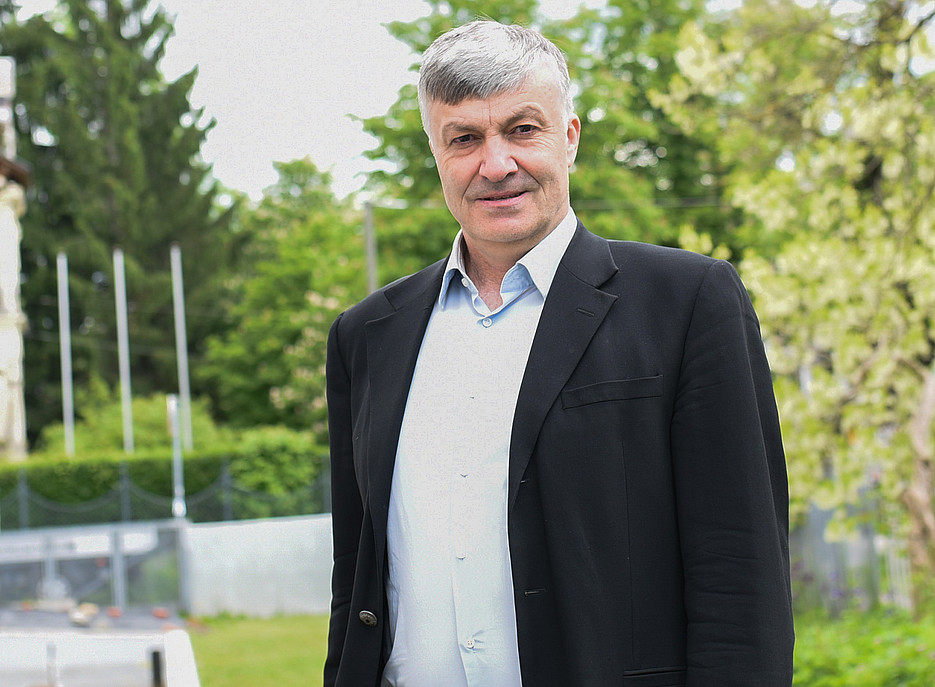
‘Preventive climate protection and adaptation measures are significantly more cost-effective in the long term than dealing with the damage caused by the effects of climate change,’ says Karl Steininger from the Wegener Centre for Climate and Global Change at the University of Graz. The climate economist coordinated the ‘Economy and energy system’ chapter as lead author. In order to realise the climate targets for 2030 and 2040, further climate protection measures are needed quickly. ‘Furthermore, additional investments of between 6.4 and 11.2 billion euros per year are required to achieve net-zero emissions from energy use in transport, industry and buildings by 2040,’ Steininger cites specific figures. The electrification of industry, mobility and heat supply is essential, along with the simultaneous expansion of the grids and a tripling of electricity generation from wind energy and photovoltaics in the coming years. Climate-neutral energy sources such as sustainable biomass, biomethane, green hydrogen and e-fuels are also needed in industry, heavy goods transport and aviation. ‘Measures to reduce emissions and adapt to climate change not only increase resilience, but can also halve dependence on energy imports by 2040 and improve the quality of life in Austria,’ Steininger emphasises further benefits.

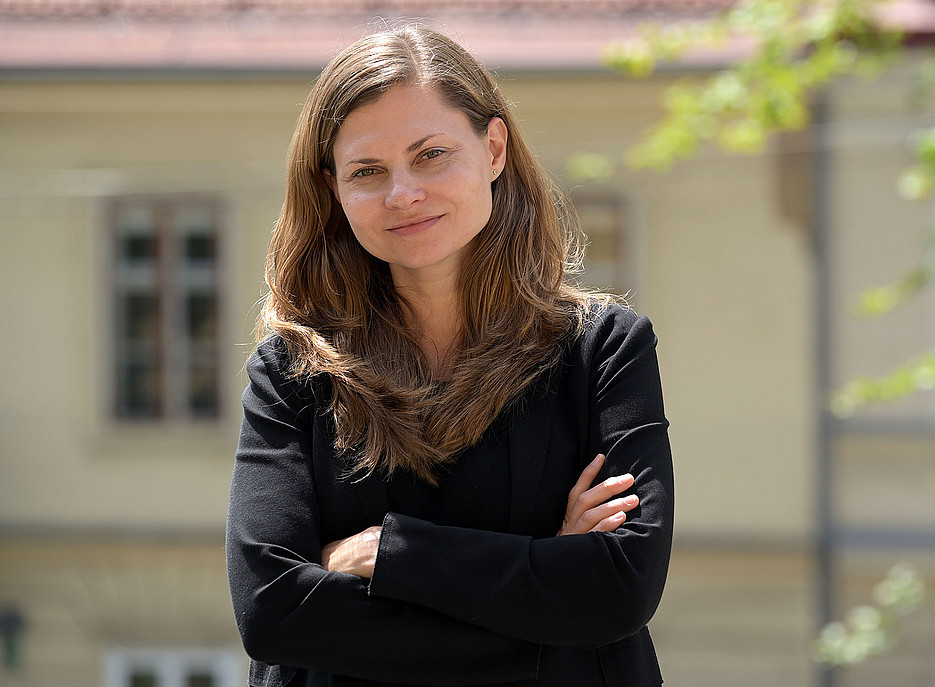
Ilona M. Otto, sociologist and resource economist at the Wegener Center at the University of Graz, is the lead author of the chapter of the report that deals with the management of behavior and decisions on the path to climate neutrality. ‘The net-zero emissions system can be achieved in Austria by the middle of the century because we have the necessary technologies, resources, knowledge and skills. However, effective measures are needed to accelerate the necessary changes and ensure a just and fair transformation process. These include regulations, technology standards, the development of infrastructure to support a low-carbon lifestyle, incentives and, in some cases, the removal of disincentives and sanctions,’ says the researcher. Austrian companies are already contributing to reducing emissions with innovative technologies and considerable financial resources. ‘At the same time, however, there is also a lot of greenwashing and other forms of misleading information that undermine consumers' efforts to consume in a more environmentally friendly way,’ Otto points out. ‘Measures that create more transparency and reduce negative practices by companies could increase the proportion of climate-friendly products in the economy.’

The Second Austrian Assessment Report on Climate Change was compiled by over 200 scientists at more than 50 institutions in accordance with the methods and procedures of the Intergovernmental Panel on Climate Change (IPCC). At around 800 pages, it is the most comprehensive scientific basis on climate change in Austria to date. The Assessment Report was made possible by funding from the Climate and Energy Fund with funds from the Federal Ministry of Agriculture, Forestry, Environment, Regions and Water Management.
⇒ If you want to take an interdisciplinary approach to climate change, its consequences and the transformation to a resilient society, the master's programme in Environmental Systems Sciences / Climate Change and Transformation Science at the University of Graz is the right choice.

Karl Steininger ©University of Graz / Kanizaj
©University of Graz / Kanizaj
Karl Steininger, climate economist. Photo: Uni Graz/Kanizaj
Ilona Otto, portrait, with folded arms ©Uni Graz / Tzivanopoulos
©Uni Graz / Tzivanopoulos
Ilona Otto, sociologist and resource economist. Photo: University of Graz/Tzivanopoulos
created by Gudrun Pichler

Related news

Studying at the University of Graz: How to enrol

Ready for a new chapter in your life with the start of your studies at the University of Graz in the winter semester 2026/27? Here you will find information on deadlines, admission procedures, registration, and everything else you need to successfully start your studies in the fall.

Europe Day: Strengthening international expertise with Arqus

On 9 May, the spotlight will be on Europe. At the University of Graz, European cooperation is also a tangible part of everyday student life – not least through the Arqus university alliance. Master’s and PhD students can currently register for the Arqus micro-credential in ‘Advanced Creative Thinking and Communication’.

A substantial community: the key role of soil crusts in the earth system

They are often overshadowed by the plant world: lichens, fungi, mosses and bacteria, which form unique communities on rocks and trees or as soil crusts. Bettina Weber from the University of Graz is bringing this biological alliance into the research spotlight. Her research shows that these communities form an essential part of the Earth’s critical zone and play a key role in the interactions between land and atmosphere. Bettina Weber was honoured by the European Geosciences Union for her groundbreaking research at the beginning of May.

The digital world of tomorrow: University of Graz works with people to shape the future

Digitalisation is supposed to make everything better: artificial intelligence that even organises travel. The car that drives itself. Robots that care for us in our old age. But what kind of future do people actually want? What role should technology play in this? The University of Graz is exploring these questions through a new research facility. At the Graz Sociodigital and Participatory Futures Studio – or GraSP Futures Studio for short – young and old work together with researchers to design visions of the future that also critically examine technical innovations.

Begin of page section:
Additional information:

University of Graz
Universitaetsplatz 3
8010 Graz
Austria
  • Contact
  • Web Editors
  • Moodle
  • UNIGRAZonline
  • Imprint
  • Data Protection Declaration
  • Accessibility Declaration
Weatherstation
Uni Graz

End of this page section. Go to overview of page sections

End of this page section. Go to overview of page sections

Begin of page section:

End of this page section. Go to overview of page sections