



Begin of page section:
Page sections:

  • Go to contents (Accesskey 1)
  • Go to position marker (Accesskey 2)
  • Go to main navigation (Accesskey 3)
  • Go to sub navigation (Accesskey 4)
  • Go to additional information (Accesskey 5)
  • Go to page settings (user/language) (Accesskey 8)
  • Go to search (Accesskey 9)

End of this page section. Go to overview of page sections

Begin of page section:
Page settings:

English en
Deutsch de
Search
Login

End of this page section. Go to overview of page sections

Begin of page section:
Search:

Search for details about Uni Graz
Close

End of this page section. Go to overview of page sections


Search

Begin of page section:
Main navigation:

Page navigation:

  • University

    University
    • About the University
    • Organisation
    • Faculties
    • Library
    • Working at University of Graz
    • Campus
    Developing solutions for the world of tomorrow - that is our mission. Our students and our researchers take on the great challenges of society and carry the knowledge out.
  • Research Profile

    Research Profile
    • Our Expertise
    • Research Questions
    • Research Portal
    • Promoting Research
    • Research Transfer
    • Ethics in Research
    • Commission for Scientific Integrity
    Scientific excellence and the courage to break new ground. Research at the University of Graz creates the foundations for making the future worth living.
  • Studies

    Studies
    • Prospective Students
    • Students
  • Community

    Community
    • International
    • Location
    • Research and Business
    • Alumni
    The University of Graz is a hub for international research and brings together scientists and business experts. Moreover, it fosters the exchange and cooperation in study and teaching.
  • Spotlight
Topics
  • Sustainable University
  • Researchers answer
  • Work for us
Close menu

End of this page section. Go to overview of page sections

Begin of page section:
You are here:

University of Graz News Natur am Rückzug

End of this page section. Go to overview of page sections

Tuesday, 08 October 2019

Natur am Rückzug

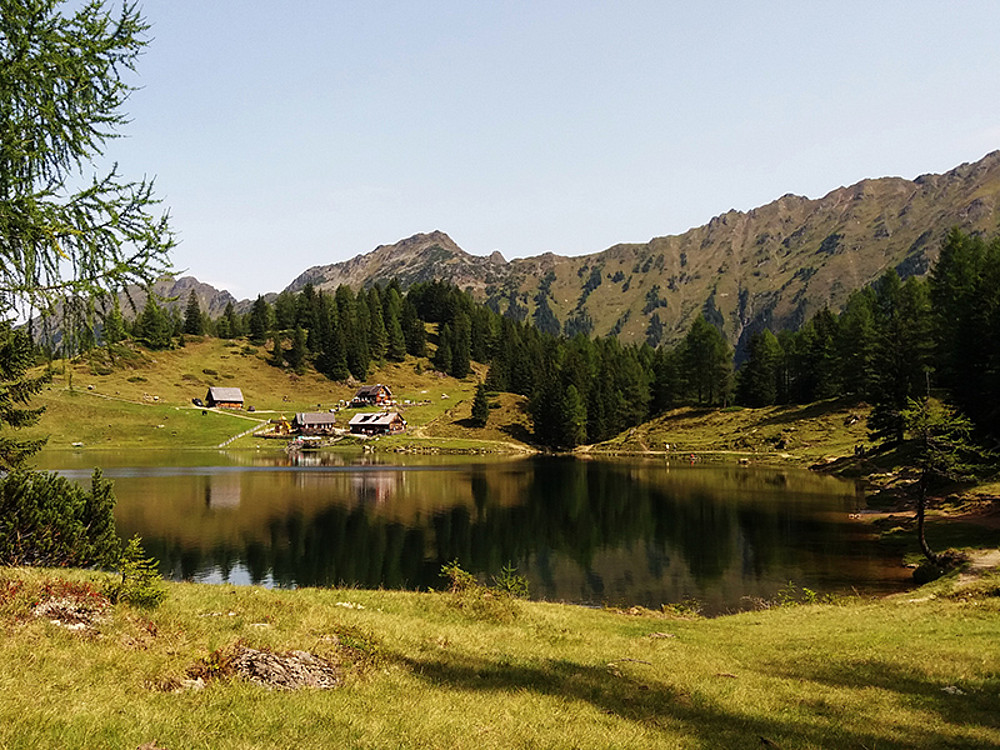
Natur am Rückzug: Forscher sagen in den kommenden 100 Jahren Rückgang von alpinen Lebensraumtypen von bis zu neunzig Prozent voraus, wenn der Klimawandel nicht gebremst wird. Foto: Ennstaler/pixabay.com

Natur am Rückzug: Forscher sagen in den kommenden 100 Jahren Rückgang von alpinen Lebensraumtypen von bis zu neunzig Prozent voraus, wenn der Klimawandel nicht gebremst wird. Foto: Ennstaler/pixabay.com

Forscher sagen Rückgang von alpinen Lebensraumtypen von bis zu neunzig Prozent voraus

Der Klimawandel macht sich schon jetzt in den steirischen Alpen und heimischen Schutzgebieten bemerkbar – in den kommenden 100 Jahren drohen noch drastischere Folgen. Forscher der Universität Graz sagen in einer aktuellen Publikation bis zum Jahr 2100 einen Rückgang an alpinen Lebensräumen von bis zu 90 Prozent voraus. „Eine derart dramatische Schwächung der alpinen Ökosysteme würde das Ende zahlreicher Pflanzen bedeuten und weitreichende Auswirkungen haben“, schildern die Studienautoren Patrick Schwager und Christian Berg vom Institut für Biologie. Ihre Studie zu klimabedingten Veränderungen in der Steiermark wurde im Journal „Regional Environmental Change“ veröffentlicht.

Drei Jahre lang haben die Wissenschafter Daten zum Vorkommen alpiner Pflanzenarten in den steirischen Alpen gesammelt und darauf aufbauend unterschiedliche Klimawandel-Szenarien für alpine Graslandökosysteme in Silikat- beziehungsweise in Kalksteingebieten entworfen. „Einmal sind wir von einem durchschnittlichen Temperaturanstieg von zwei Grad, das andere Mal von vier Grad ausgegangen. Angesehen haben wir uns, welche Auswirkungen das auf die beiden europaweit geschützten Lebensraumtypen hat“, schildert Patrick Schwager. Die Forscher verglichen zudem die Veränderungen innerhalb und außerhalb von deklarierten Natura-2000-Schutzgebieten.

Ihr Fazit: „Starke Rückgänge – beim Vier-Grad-Szenario würden wir in den Silikatalpen sogar bis zu 90 Prozent an geeignetem Lebensraum verlieren“, unterstreicht Christian Berg. Als Indikatoren nutzten die Forscher 15 unterschiedliche alpine Pflanzenarten, vom Steinbrech über Primeln und Silberwurz bis hin zu Glockenblumen. „Verändern sich die Lebensbedingungen für diese Pflanzenarten, wandeln sich die Natura-2000-Lebensraumtypen um“, schildern Schwager und Berg. „Langfristig führt das Verschwinden der alpinen Pflanzenarten zu instabilen Ökosystemen. Beispielsweise kann lockerer Boden Murenabgänge nicht mehr halten. Naturschutzstrategien in den Alpen müssten ganz neu gedacht werden“, betonen die Forscher die weitreichenden Konsequenzen des Klimawandels für die Steiermark. Die EU sieht übrigens ein Verschlechterungsverbot für die gelisteten Schutzgüter vor, allerdings macht der Klimawandel dieser Richtlinie aus dem Jahr 1992 einen Strich durch die Rechnung.


Publikation: Patrick Schwager & Christian Berg, Global warming threatens conservation status of alpine EU habitat types in the European Eastern Alps, in: Regional Environmental Change, 2019. https://doi.org/10.1007/s10113-019-01554-z


 

created by Gerhild Leljak

Related news

Higher Education Strategy 2040: Austria’s universities on course for the future

Austria has 77 higher education institutions, which is above the EU average – but does this really make sense? The new Higher Education Strategy 2040 focuses on cooperation rather than mergers. As one of the six largest universities in Austria, the University of Graz plays a central role in this.

Climate research in Greenland: Old data provides new insights

The polar explorer and University of Graz professor Alfred Wegener left behind a unique collection of climate data from Greenland. A research team from the University of Graz is now analysing this 100-year-old treasure trove of data and comparing it with current measurements.

Diversity in nature and science: How we talk about plants and each other

Ginkgo, kiwi, hemp: they exist as male and female plants. Anyone who paid attention in biology class will confirm this. But is this categorisation, established by Carl von Linné almost 300 years ago, still valid today? An interdisciplinary team at the University of Graz is questioning these attributions and using this as a starting point to provide food for thought for gender-sensitive interaction between students, scientific and teaching staff.

Around the world in eight stops: the Long Night of Research at the University of Graz

On 24 April from 5 pm, you can take a short trip around the globe at the University of Graz, discovering pecularities of foreign countries or new local features in the entrance hall of the University Library. The itinerary takes you through introduced animal species, political attitudes and the omnipotence of algorithms. There will also be a programme in the historic reading hall, as well as at the UniGraz@Museum and the University Archive.

Begin of page section:
Additional information:

University of Graz
Universitaetsplatz 3
8010 Graz
Austria
  • Contact
  • Web Editors
  • Moodle
  • UNIGRAZonline
  • Imprint
  • Data Protection Declaration
  • Accessibility Declaration
Weatherstation
Uni Graz

End of this page section. Go to overview of page sections

End of this page section. Go to overview of page sections

Begin of page section:

End of this page section. Go to overview of page sections

