Begin of page section:
Page sections:

  • Go to contents (Accesskey 1)
  • Go to position marker (Accesskey 2)
  • Go to main navigation (Accesskey 3)
  • Go to sub navigation (Accesskey 4)
  • Go to additional information (Accesskey 5)
  • Go to page settings (user/language) (Accesskey 8)
  • Go to search (Accesskey 9)

End of this page section. Go to overview of page sections

Begin of page section:
Page settings:

English en
Deutsch de
Search
Login

End of this page section. Go to overview of page sections

Begin of page section:
Search:

Search for details about Uni Graz
Close

End of this page section. Go to overview of page sections


Search

Begin of page section:
Main navigation:

Page navigation:

  • University

    University
    • About the University
    • Organisation
    • Faculties
    • Library
    • Working at University of Graz
    • Campus
    Developing solutions for the world of tomorrow - that is our mission. Our students and our researchers take on the great challenges of society and carry the knowledge out.
  • Research Profile

    Research Profile
    • Our Expertise
    • Research Questions
    • Research Portal
    • Promoting Research
    • Research Transfer
    • Ethics in Research
    • Commission for Scientific Integrity
    Scientific excellence and the courage to break new ground. Research at the University of Graz creates the foundations for making the future worth living.
  • Studies

    Studies
    • Prospective Students
    • Students
  • Community

    Community
    • International
    • Location
    • Research and Business
    • Alumni
    The University of Graz is a hub for international research and brings together scientists and business experts. Moreover, it fosters the exchange and cooperation in study and teaching.
  • Spotlight
Topics
  • Sustainable University
  • Researchers answer
  • Work for us
Close menu

End of this page section. Go to overview of page sections

Begin of page section:
You are here:

University of Graz News Take a break: psychologist at the University of Graz explains how to manage stress better

End of this page section. Go to overview of page sections

Thursday, 19 December 2024

Take a break: psychologist at the University of Graz explains how to manage stress better

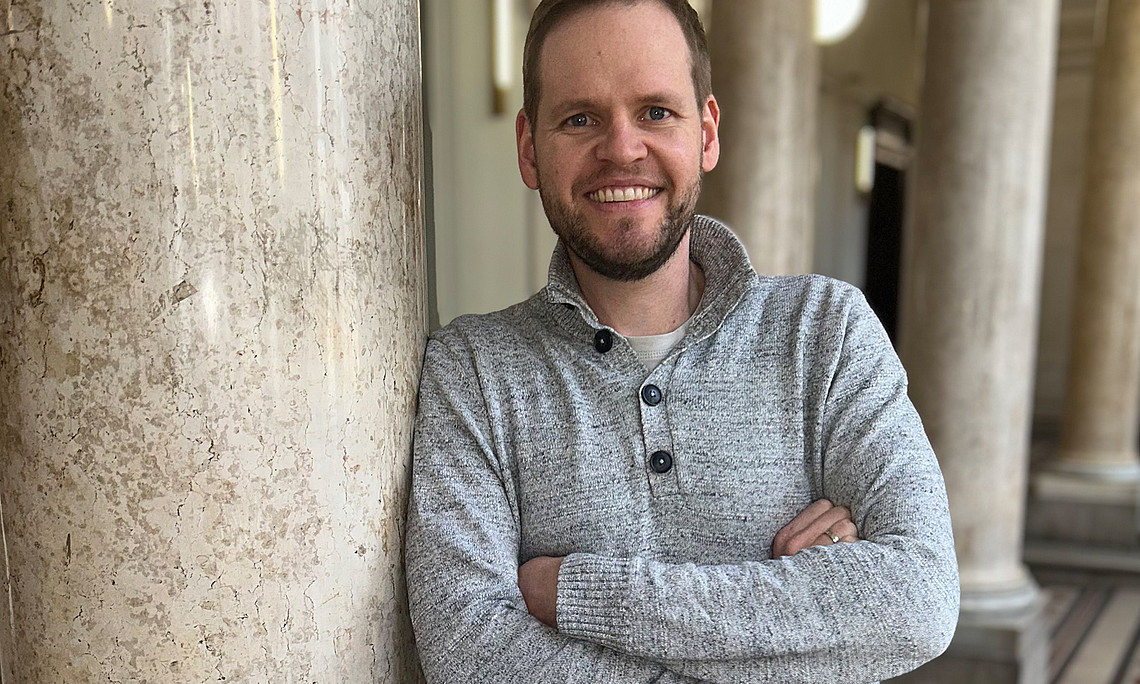
Claudia Traunmüller, leaning against a grey wall ©Uni Graz/Tzivanopoulos

Claudia Traunmüller investigates how people can easily and individually strengthen their resources in everyday life. Photo: Uni Graz/Tzivanopoulos

Completing the most urgent tasks in the office and quickly getting the last presents, before the Christmas holidays once again sap your energy, despite all the joy. Is it possible to arm yourself against stress? Yes, says Claudia Traunmüller. The psychologist from the University of Graz is researching how we can strengthen our resources and thus cope better with challenges. In addition to periods of relaxation, physical fitness and sufficient sleep are among the most important factors for stress resistance.


"If you don't allow yourself time to recover, you will eventually become ill or at least less and less resilient and productive," says health psychologist Claudia Traunmüller. Whether in sports or at work, the body mobilises its strength through regeneration. This also includes mental resources.

But how can you recover when you're busy with work and family and constantly available digitally? "First of all, you have to recognise that you need to regenerate," says Traunmüller. "Many people don't even realise that their body is constantly running at full speed and that they are slowly but surely losing strength as a result," she says, speaking from the many conversations she has had in the course of her research. It is then important to find out: what do I actually need to recover from? "It's not always excessive demands at work. An unhealthy relationship or caring for relatives can also cause stress. Regeneration is always a counterbalance to what drains my energy," says the psychologist from the University of Graz. For example, someone who sits in front of a computer screen all day could go for a run in the evening. Someone who is constantly travelling for work might find that a holiday on their own balcony is the best way to recover. If everyday life is monotonous, a cultural trip might bring new energy.


You can train your ability to recover
Even if time is short, breaks in between are essential for recovery and pay off in terms of performance. One tip from the expert: “Abdominal breathing brings relaxation in just a few minutes. This involves breathing in slowly through the nose and out through the mouth, using the diaphragm.”

Regular exercise is particularly important. "Strengthening the cardiovascular system makes the body and mind more resilient. It can significantly improve both the ability to adapt to different demands and the ability to regenerate," says Traunmüller, referring to research findings. "Physical fitness also increases the quality of sleep because the part of the autonomic nervous system that is responsible for regeneration is more functional," reports the scientist. In general, getting enough sleep is one of the most important factors for recovery. A healthy diet, social contacts and breaks from constant sensory overload caused by smartphones and the like are also beneficial. "Music and videos accompany young people in particular through almost every free minute of the day. This is distracting. Unfortunately, it also distracts them from their sense of self," the psychologist points out.

The full article can be read in the current issue of UNIZEIT.
created by Gudrun Pichler

Related news

Higher Education Strategy 2040: Austria’s universities on course for the future

Austria has 77 higher education institutions, which is above the EU average – but does this really make sense? The new Higher Education Strategy 2040 focuses on cooperation rather than mergers. As one of the six largest universities in Austria, the University of Graz plays a central role in this.

Climate research in Greenland: Old data provides new insights

The polar explorer and University of Graz professor Alfred Wegener left behind a unique collection of climate data from Greenland. A research team from the University of Graz is now analysing this 100-year-old treasure trove of data and comparing it with current measurements.

Diversity in nature and science: How we talk about plants and each other

Ginkgo, kiwi, hemp: they exist as male and female plants. Anyone who paid attention in biology class will confirm this. But is this categorisation, established by Carl von Linné almost 300 years ago, still valid today? An interdisciplinary team at the University of Graz is questioning these attributions and using this as a starting point to provide food for thought for gender-sensitive interaction between students, scientific and teaching staff.

Around the world in eight stops: the Long Night of Research at the University of Graz

On 24 April from 5 pm, you can take a short trip around the globe at the University of Graz, discovering pecularities of foreign countries or new local features in the entrance hall of the University Library. The itinerary takes you through introduced animal species, political attitudes and the omnipotence of algorithms. There will also be a programme in the historic reading hall, as well as at the UniGraz@Museum and the University Archive.

Begin of page section:
Additional information:

University of Graz
Universitaetsplatz 3
8010 Graz
Austria
  • Contact
  • Web Editors
  • Moodle
  • UNIGRAZonline
  • Imprint
  • Data Protection Declaration
  • Accessibility Declaration
Weatherstation
Uni Graz

End of this page section. Go to overview of page sections

End of this page section. Go to overview of page sections

Begin of page section:

End of this page section. Go to overview of page sections