Begin of page section:
Page sections:

  • Go to contents (Accesskey 1)
  • Go to position marker (Accesskey 2)
  • Go to main navigation (Accesskey 3)
  • Go to sub navigation (Accesskey 4)
  • Go to additional information (Accesskey 5)
  • Go to page settings (user/language) (Accesskey 8)
  • Go to search (Accesskey 9)

End of this page section. Go to overview of page sections

Begin of page section:
Page settings:

English en
Deutsch de
Search
Login

End of this page section. Go to overview of page sections

Begin of page section:
Search:

Search for details about Uni Graz
Close

End of this page section. Go to overview of page sections


Search

Begin of page section:
Main navigation:

Page navigation:

  • University

    University
    • About the University
    • Organisation
    • Faculties
    • Library
    • Working at University of Graz
    • Campus
    Developing solutions for the world of tomorrow - that is our mission. Our students and our researchers take on the great challenges of society and carry the knowledge out.
  • Research Profile

    Research Profile
    • Our Expertise
    • Research Questions
    • Research Portal
    • Promoting Research
    • Research Transfer
    • Ethics in Research
    • Commission for Scientific Integrity
    Scientific excellence and the courage to break new ground. Research at the University of Graz creates the foundations for making the future worth living.
  • Studies

    Studies
    • Prospective Students
    • Students
    • Post-registration Law
  • Community

    Community
    • International
    • Location
    • Research and Business
    • Alumni
    The University of Graz is a hub for international research and brings together scientists and business experts. Moreover, it fosters the exchange and cooperation in study and teaching.
Topics
  • Sustainable University
  • Researchers answer
  • Work for us
Close menu

End of this page section. Go to overview of page sections

Begin of page section:
You are here:

University of Graz News Learning lightness: How prayers can create well-being

End of this page section. Go to overview of page sections

Monday, 30 September 2024

Learning lightness: How prayers can create well-being

young woman smiling confidently praying at seaside

Praying can relax and increase well-being. Peter Ebenbauer has found that similar rituals can also help non-religious people.

Liturgical scholar Peter Ebenbauer analyses the healing effect of religious rituals.

A break from everyday life, the emergency brake in the hamster wheel, relaxation before going to sleep: prayers can be all of these things. "They come from the ascetic tradition and were an exercise in letting go," explains theologian Peter Ebenbauer. Sleep was seen as death's little brother, and waking up meant you could celebrate your own resurrection. "Of course, this attitude makes you aware of transience, but at the same time it can be a great relief. We don't have to take anything with us into the night that worries us," explains the researcher.
In addition, evening and morning prayers are good exercises to listen to your inner voice. "You enter into a dialog with the source of your existence. This can provide comfort and hope," says Ebenbauer. At the same time, this interruption to everyday life frees you from the pressure to perform and gives you the opportunity to refocus and reorient yourself. If you no longer have much to do with religion, you can also create your own rituals for going to sleep or between waking up and breakfast, the scientist recommends. "Many people today are trying to find their own rhythm again through mediation, yoga or other techniques. There are similar approaches in psychotherapy," says Ebenbauer. So praying is nothing outdated or old-fashioned.

Peter Ebenbauer is a liturgical scholar and researches the similarities between Jewish and Christian prayer rituals, among other things. On 28 and 29 October, he is organizing the symposium "Rituale - Fenster zum Sinn", where he will shed more light on religious customs.
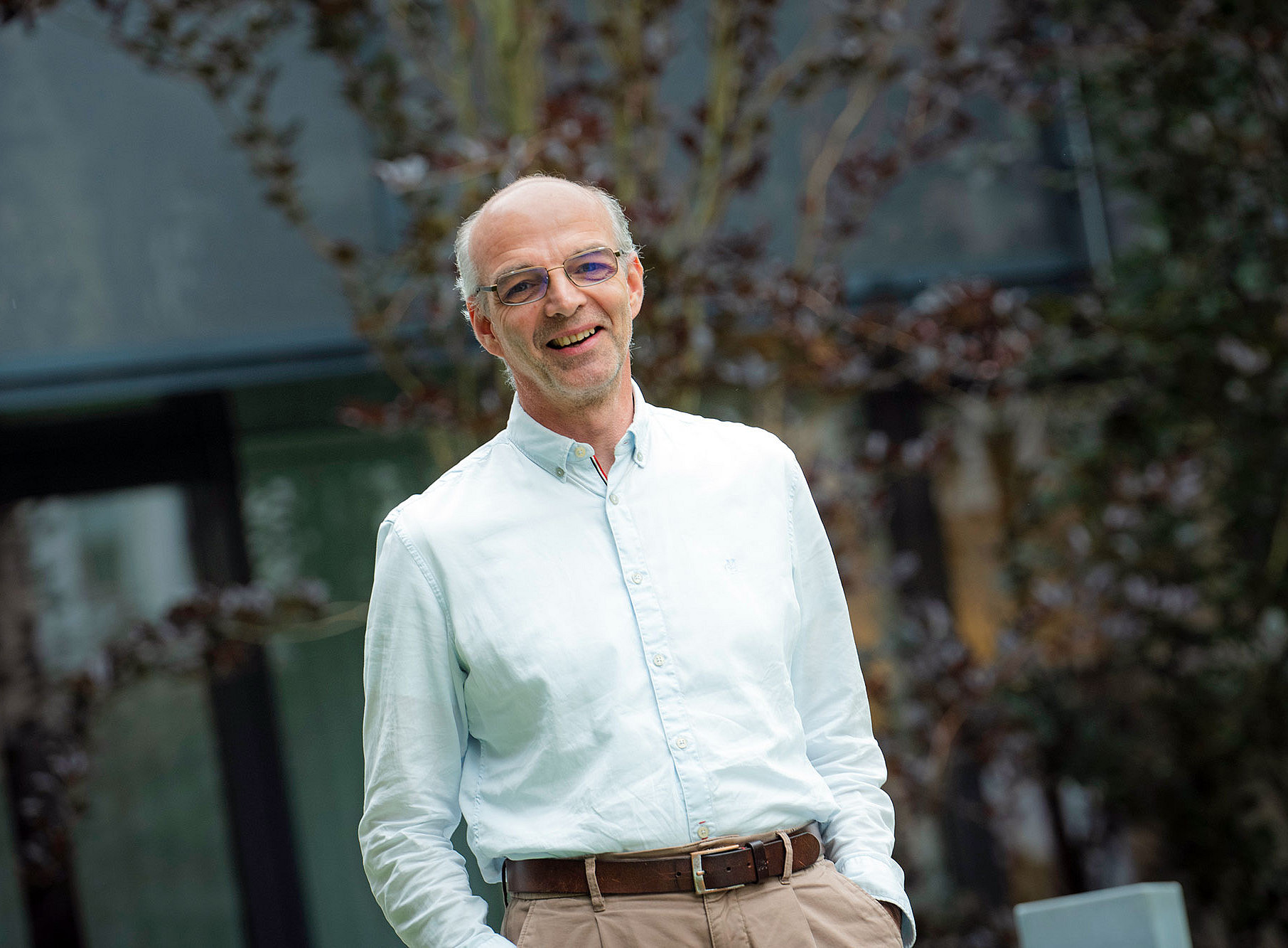
 

Theologian Peter Ebenbauer in front of the University Centre for Theology ©Uni Graz/Tzivanopoulos
©Uni Graz/Tzivanopoulos
Peter Ebenbauer researches religious rituals in Judaism and Christianity. Photo: University of Graz/Tzivanopoulos
created by Dagmar Eklaude

Related news

Studying at the University of Graz: How to enrol

Ready for a new chapter in your life with the start of your studies at the University of Graz in the winter semester 2026/27? Here you will find information on deadlines, admission procedures, registration, and everything else you need to successfully start your studies in the fall.

Europe Day: Strengthening international expertise with Arqus

On 9 May, the spotlight will be on Europe. At the University of Graz, European cooperation is also a tangible part of everyday student life – not least through the Arqus university alliance. Master’s and PhD students can currently register for the Arqus micro-credential in ‘Advanced Creative Thinking and Communication’.

A substantial community: the key role of soil crusts in the earth system

They are often overshadowed by the plant world: lichens, fungi, mosses and bacteria, which form unique communities on rocks and trees or as soil crusts. Bettina Weber from the University of Graz is bringing this biological alliance into the research spotlight. Her research shows that these communities form an essential part of the Earth’s critical zone and play a key role in the interactions between land and atmosphere. Bettina Weber was honoured by the European Geosciences Union for her groundbreaking research at the beginning of May.

The digital world of tomorrow: University of Graz works with people to shape the future

Digitalisation is supposed to make everything better: artificial intelligence that even organises travel. The car that drives itself. Robots that care for us in our old age. But what kind of future do people actually want? What role should technology play in this? The University of Graz is exploring these questions through a new research facility. At the Graz Sociodigital and Participatory Futures Studio – or GraSP Futures Studio for short – young and old work together with researchers to design visions of the future that also critically examine technical innovations.

Begin of page section:
Additional information:

University of Graz
Universitaetsplatz 3
8010 Graz
Austria
  • Contact
  • Web Editors
  • Moodle
  • UNIGRAZonline
  • Imprint
  • Data Protection Declaration
  • Accessibility Declaration
Weatherstation
Uni Graz

End of this page section. Go to overview of page sections

End of this page section. Go to overview of page sections

Begin of page section:

End of this page section. Go to overview of page sections