



Begin of page section:
Page sections:

  • Go to contents (Accesskey 1)
  • Go to position marker (Accesskey 2)
  • Go to main navigation (Accesskey 3)
  • Go to sub navigation (Accesskey 4)
  • Go to additional information (Accesskey 5)
  • Go to page settings (user/language) (Accesskey 8)
  • Go to search (Accesskey 9)

End of this page section. Go to overview of page sections

Begin of page section:
Page settings:

English en
Deutsch de
Search
Login

End of this page section. Go to overview of page sections

Begin of page section:
Search:

Search for details about Uni Graz
Close

End of this page section. Go to overview of page sections


Search

Begin of page section:
Main navigation:

Page navigation:

  • University

    University
    • About the University
    • Organisation
    • Faculties
    • Library
    • Working at University of Graz
    • Campus
    Developing solutions for the world of tomorrow - that is our mission. Our students and our researchers take on the great challenges of society and carry the knowledge out.
  • Research Profile

    Research Profile
    • Our Expertise
    • Research Questions
    • Research Portal
    • Promoting Research
    • Research Transfer
    • Ethics in Research
    • Commission for Scientific Integrity
    Scientific excellence and the courage to break new ground. Research at the University of Graz creates the foundations for making the future worth living.
  • Studies

    Studies
    • Prospective Students
    • Students
  • Community

    Community
    • International
    • Location
    • Research and Business
    • Alumni
    The University of Graz is a hub for international research and brings together scientists and business experts. Moreover, it fosters the exchange and cooperation in study and teaching.
  • Spotlight
Topics
  • Sustainable University
  • Researchers answer
  • Work for us
Close menu

End of this page section. Go to overview of page sections

Begin of page section:
You are here:

University of Graz News Künstliche Intelligenz am Spielfeld

End of this page section. Go to overview of page sections

Tuesday, 23 October 2018

Künstliche Intelligenz am Spielfeld

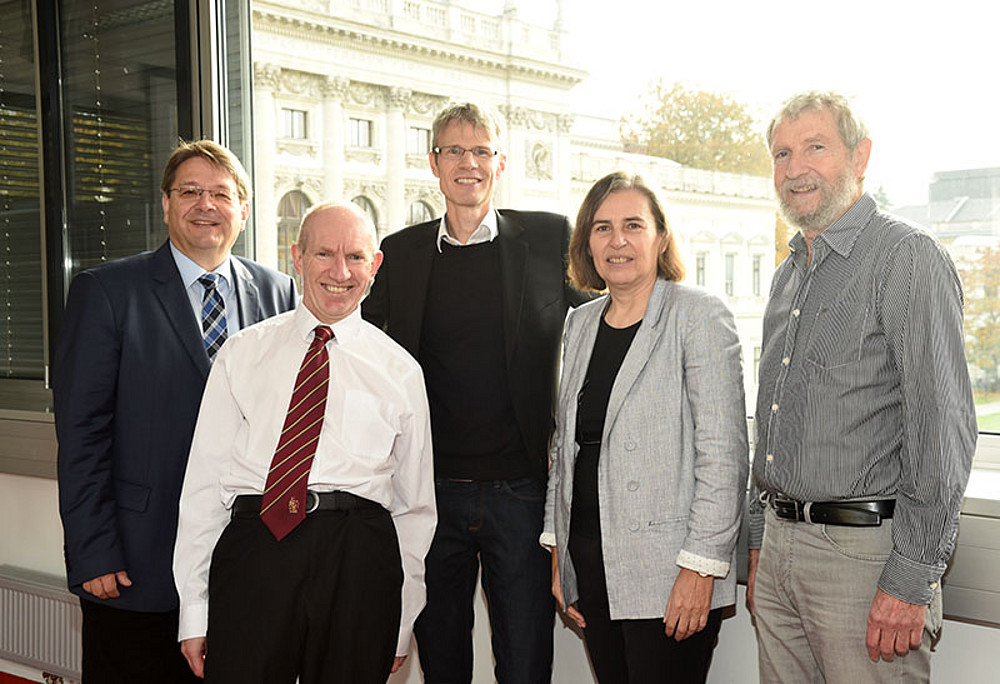
Arnold Baca, Universität Wien, Peter O'Donoghue, Cardiff School of Sport, Markus Tilp und Sigrid Thaller, beide Universität Graz, und Jürgen Perl, Universität Mainz (v.l.). Fotos: Uni Graz/Leljak.

Arnold Baca, Universität Wien, Peter O'Donoghue, Cardiff School of Sport, Markus Tilp und Sigrid Thaller, beide Universität Graz, und Jürgen Perl, Universität Mainz (v.l.). Fotos: Uni Graz/Leljak.

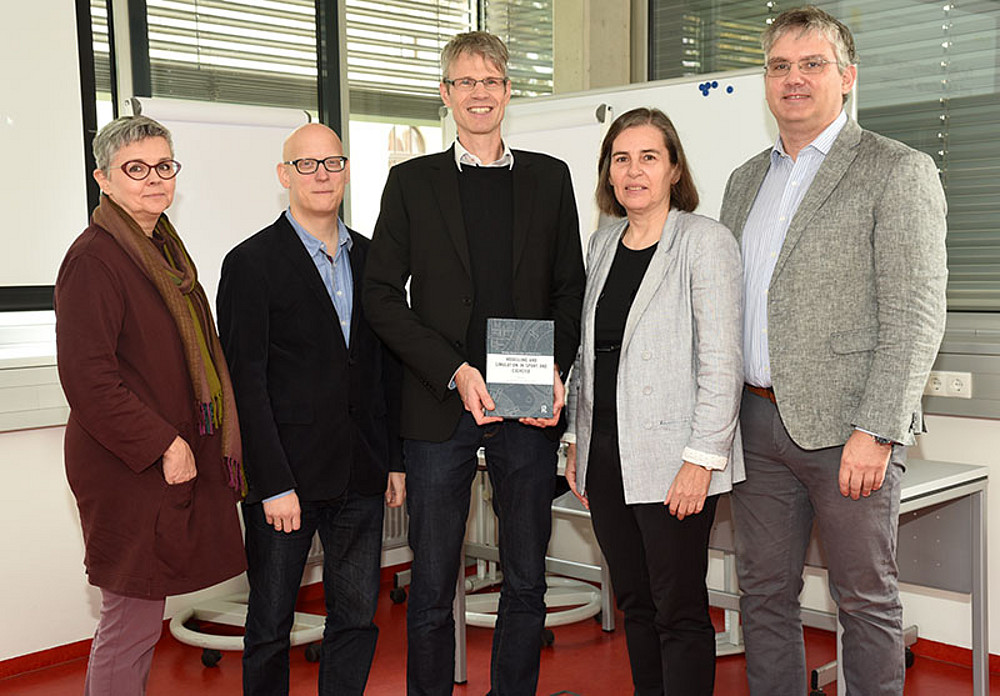
Vizerektorin Renate Dworczak, Adrian-Daniel Boese, Vize-Sprecher des Forschungsschwerpunkts "Modelling and Simulation", Markus Tilp und Sigrid Thaller mit Rupert Baumgartner, Vizedekan der URBI-Fakultät (v.l.).

Vizerektorin Renate Dworczak, Adrian-Daniel Boese, Vize-Sprecher des Forschungsschwerpunkts "Modelling and Simulation", Markus Tilp und Sigrid Thaller mit Rupert Baumgartner, Vizedekan der URBI-Fakultät (v.l.).

Digitalisierung bereichert die sportwissenschaftliche Forschung

Wo wird der Gegner oder die Gegnerin einen Wurf platzieren oder wie erfolgreich ist mein Taktiktraining? Solche oder ähnliche Fragen versucht die Arbeitsgruppe von Markus Tilp am Institut für Sportwissenschaft zu beantworten. „Die Digitalisierung schreitet auch in der Sportwissenschaft voran und hilft mit, taktische Muster in Sportspielen mit Hilfe künstlicher neuronaler Netze zu erkennen“, erklärt Tilp.

Die in Zusammenarbeit mit der TU Graz eigens konzipierte Software MASA („Motion and Action Sequence Analysis“) nutzen die ForscherInnen, um exakte Positionsdaten und Informationen über das SpielerInnenverhalten zu generieren. Anschließend werden die Daten mithilfe von künstlichen neuronalen Netzen untersucht. So gelingt es den SportwissenschafterInnen zum Beispiel, Offensiv- und Defensivverhalten im Handball zu analysieren und sogar die wahrscheinlichsten Wurfpositionen vorherzusagen. „Auch den Erfolg eines Taktiktrainings konnten wir anhand der künstlichen neuronalen Netze evaluieren“, so Tilp. Die SpielerInnen-Positionsdaten wurden dafür ins neuronale Netz eingespeist und mit den eintrainierten Mustern verglichen. Das Netz konnte dabei objektiv zeigen, dass 58 Prozent aller Angriffe mit den im Vorfeld eintrainierten übereinstimmen.

Diese Forschungsergebnisse wurden kürzlich an der Universität Graz im Rahmen des internationalen Workshops „Modelling & Simulation in Sports“ gemeinsam mit weiteren Anwendungsbeispielen vom Einzelmuskel bis zur Fußballmannschaft präsentiert. Alle Beiträge des Workshops sind in dem Buch „Modelling and Simulation in Sports & Exercise“ veröffentlicht worden.


Publikationslinks:

Positionsvorhersage im Handball:
https://www.tandfonline.com/doi/full/10.1080/24748668.2017.1336688

Evaluation Taktiktraining im Handball:
https://www.tandfonline.com/doi/full/10.1080/02640414.2016.1183804

Buch „Modelling and Simulation in Sports & Exercise“:
https://www.routledge.com/Modelling-and-Simulation-in-Sport-and-Exercise/Baca-Perl/p/book/9781138059931
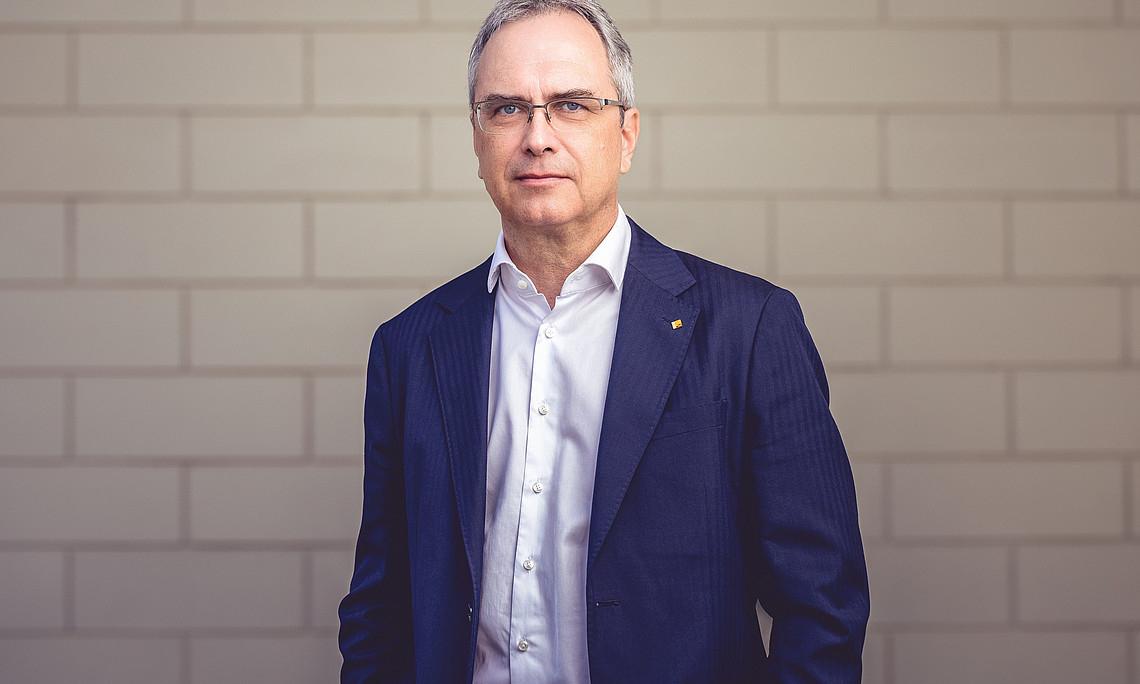



created by Markus Tilp & Gerhild Leljak

Related news

Higher Education Strategy 2040: Austria’s universities on course for the future

Austria has 77 higher education institutions, which is above the EU average – but does this really make sense? The new Higher Education Strategy 2040 focuses on cooperation rather than mergers. As one of the six largest universities in Austria, the University of Graz plays a central role in this.

Climate research in Greenland: Old data provides new insights

The polar explorer and University of Graz professor Alfred Wegener left behind a unique collection of climate data from Greenland. A research team from the University of Graz is now analysing this 100-year-old treasure trove of data and comparing it with current measurements.

Diversity in nature and science: How we talk about plants and each other

Ginkgo, kiwi, hemp: they exist as male and female plants. Anyone who paid attention in biology class will confirm this. But is this categorisation, established by Carl von Linné almost 300 years ago, still valid today? An interdisciplinary team at the University of Graz is questioning these attributions and using this as a starting point to provide food for thought for gender-sensitive interaction between students, scientific and teaching staff.

Around the world in eight stops: the Long Night of Research at the University of Graz

On 24 April from 5 pm, you can take a short trip around the globe at the University of Graz, discovering pecularities of foreign countries or new local features in the entrance hall of the University Library. The itinerary takes you through introduced animal species, political attitudes and the omnipotence of algorithms. There will also be a programme in the historic reading hall, as well as at the UniGraz@Museum and the University Archive.

Begin of page section:
Additional information:

University of Graz
Universitaetsplatz 3
8010 Graz
Austria
  • Contact
  • Web Editors
  • Moodle
  • UNIGRAZonline
  • Imprint
  • Data Protection Declaration
  • Accessibility Declaration
Weatherstation
Uni Graz

End of this page section. Go to overview of page sections

End of this page section. Go to overview of page sections

Begin of page section:

End of this page section. Go to overview of page sections

