



Begin of page section:
Page sections:

  • Go to contents (Accesskey 1)
  • Go to position marker (Accesskey 2)
  • Go to main navigation (Accesskey 3)
  • Go to sub navigation (Accesskey 4)
  • Go to additional information (Accesskey 5)
  • Go to page settings (user/language) (Accesskey 8)
  • Go to search (Accesskey 9)

End of this page section. Go to overview of page sections

Begin of page section:
Page settings:

English en
Deutsch de
Search
Login

End of this page section. Go to overview of page sections

Begin of page section:
Search:

Search for details about Uni Graz
Close

End of this page section. Go to overview of page sections


Search

Begin of page section:
Main navigation:

Page navigation:

  • University

    University
    • About the University
    • Organisation
    • Faculties
    • Library
    • Working at University of Graz
    • Campus
    Developing solutions for the world of tomorrow - that is our mission. Our students and our researchers take on the great challenges of society and carry the knowledge out.
  • Research Profile

    Research Profile
    • Our Expertise
    • Research Questions
    • Research Portal
    • Promoting Research
    • Research Transfer
    • Ethics in Research
    • Commission for Scientific Integrity
    Scientific excellence and the courage to break new ground. Research at the University of Graz creates the foundations for making the future worth living.
  • Studies

    Studies
    • Prospective Students
    • Students
  • Community

    Community
    • International
    • Location
    • Research and Business
    • Alumni
    The University of Graz is a hub for international research and brings together scientists and business experts. Moreover, it fosters the exchange and cooperation in study and teaching.
  • Spotlight
Topics
  • Sustainable University
  • Researchers answer
  • Work for us
Close menu

End of this page section. Go to overview of page sections

Begin of page section:
You are here:

University of Graz News All-round Check

End of this page section. Go to overview of page sections

Wednesday, 25 March 2020

All-round Check

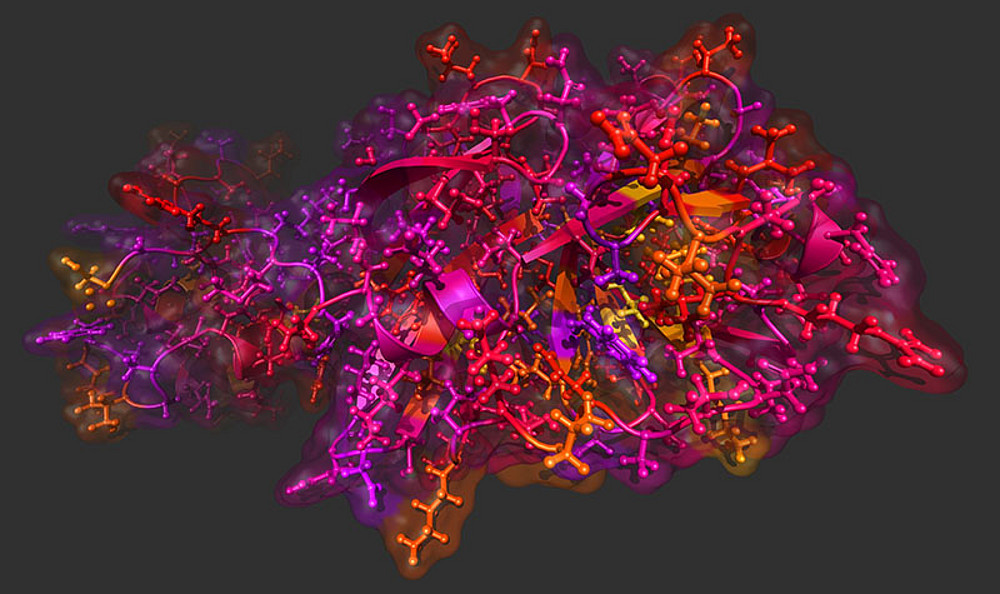
Which agent will be effective against the corona virus? Some two billion possible candidates are currently being tested in the world's largest computer-aided screening project. Picture credit: Innophore.

Which agent will be effective against the corona virus? Some two billion possible candidates are currently being tested in the world's largest computer-aided screening project. Picture credit: Innophore.

Styrians work with Harvard and Google on possible drugs against Covid-19: some two billion agents are to be tested

Once again, Styrian Coronavirus research is attracting international attention. Together with the renowned Harvard University, the project in which some two billion potentially effective agents against COVID-19 are going to be screened with the aid of computers, has just started. The Google parent company, Alphabet, contributes a tremendous amount of Google Cloud computing power.to allow the simulation of such a vast number of agents for the first time in history. Vienna Scientific Cluster, a collaboration between several Austrian universities, also provides the resources of its supercomputers.

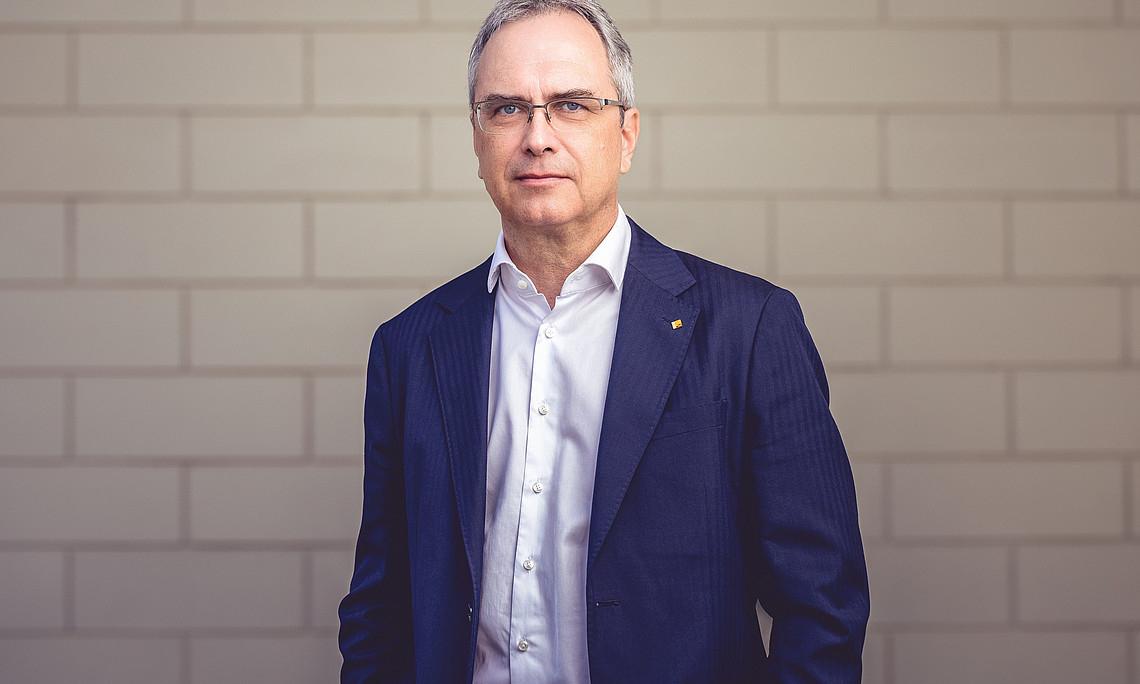
“In virtual drug discovery at this scale, the biggest challenge is not only to obtain the data for these billions of compounds, but computing power. At the moment we assume that we have to perform more than 100 billion individual computations as each of the approximately 1 billion potential compounds is being screened individually against many targets. We are delighted to receive Austrian and international support from the Vienna Scientific Cluster and Alphabet, respectively,” says Christian Gruber, CEO of Innophore, a spin off company of the University of Graz and acib, the Austrian Centre of Industrial Biotechnology.


Harvard Medical School contributes promising method
The novelty in this project’s approach is in the computer-aided method used to screen all the individual agents. “Virtual Flow” was developed at the Harvard Medical School and recently published in Nature, one of the leading scientific journals. Together with the University of Graz, acib contributes its Austrian-wide resources. “We are very pleased that biotechnology know-how from Styria is appreciated all over the world and actively contributes to fighting the Coronavirus,” comments Mathias Drexler, Managing Director at acib.

Graz-based start-up Innophore had already attracted international attention in recent weeks by suggesting agents suitable for clinical studies. Currently, Innophore supports Harvard’s Virtual Flow process by simulating countless potential starting points of druggable targets using its patented 3D point cloud technology. The results are filtered by artificial intelligence before feeding them into
the Virtual Flow pipeline. “Even though some promising drugs have been identified already, the project we are launching still has lots of potential to find further suitable candidates. Combining the 3D point cloud technology with large scale virtual screening and vast computing power is promising and we can’t wait to see what results we will achieve over the coming weeks,” Prof. Arthanari from Harvard Medical School concludes.
created by Christopher Trummer & Gerhild Leljak

Related news

Higher Education Strategy 2040: Austria’s universities on course for the future

Austria has 77 higher education institutions, which is above the EU average – but does this really make sense? The new Higher Education Strategy 2040 focuses on cooperation rather than mergers. As one of the six largest universities in Austria, the University of Graz plays a central role in this.

Climate research in Greenland: Old data provides new insights

The polar explorer and University of Graz professor Alfred Wegener left behind a unique collection of climate data from Greenland. A research team from the University of Graz is now analysing this 100-year-old treasure trove of data and comparing it with current measurements.

Diversity in nature and science: How we talk about plants and each other

Ginkgo, kiwi, hemp: they exist as male and female plants. Anyone who paid attention in biology class will confirm this. But is this categorisation, established by Carl von Linné almost 300 years ago, still valid today? An interdisciplinary team at the University of Graz is questioning these attributions and using this as a starting point to provide food for thought for gender-sensitive interaction between students, scientific and teaching staff.

Around the world in eight stops: the Long Night of Research at the University of Graz

On 24 April from 5 pm, you can take a short trip around the globe at the University of Graz, discovering pecularities of foreign countries or new local features in the entrance hall of the University Library. The itinerary takes you through introduced animal species, political attitudes and the omnipotence of algorithms. There will also be a programme in the historic reading hall, as well as at the UniGraz@Museum and the University Archive.

Begin of page section:
Additional information:

University of Graz
Universitaetsplatz 3
8010 Graz
Austria
  • Contact
  • Web Editors
  • Moodle
  • UNIGRAZonline
  • Imprint
  • Data Protection Declaration
  • Accessibility Declaration
Weatherstation
Uni Graz

End of this page section. Go to overview of page sections

End of this page section. Go to overview of page sections

Begin of page section:

End of this page section. Go to overview of page sections

