Begin of page section:
Page sections:

  • Go to contents (Accesskey 1)
  • Go to position marker (Accesskey 2)
  • Go to main navigation (Accesskey 3)
  • Go to sub navigation (Accesskey 4)
  • Go to additional information (Accesskey 5)
  • Go to page settings (user/language) (Accesskey 8)
  • Go to search (Accesskey 9)

End of this page section. Go to overview of page sections

Begin of page section:
Page settings:

English en
Deutsch de
Search
Login

End of this page section. Go to overview of page sections

Begin of page section:
Search:

Search for details about Uni Graz
Close

End of this page section. Go to overview of page sections


Search

Begin of page section:
Main navigation:

Page navigation:

  • University

    University
    • About the University
    • Organisation
    • Faculties
    • Library
    • Working at University of Graz
    • Campus
    Developing solutions for the world of tomorrow - that is our mission. Our students and our researchers take on the great challenges of society and carry the knowledge out.
  • Research Profile

    Research Profile
    • Our Expertise
    • Research Questions
    • Research Portal
    • Promoting Research
    • Research Transfer
    • Ethics in Research
    • Commission for Scientific Integrity
    Scientific excellence and the courage to break new ground. Research at the University of Graz creates the foundations for making the future worth living.
  • Studies

    Studies
    • Prospective Students
    • Students
    • Registration for Study Programme (Winter semester 2026/27)
  • Community

    Community
    • International
    • Location
    • Research and Business
    • Alumni
    The University of Graz is a hub for international research and brings together scientists and business experts. Moreover, it fosters the exchange and cooperation in study and teaching.
Topics
  • Sustainable University
  • Researchers answer
  • Work for us
Close menu

End of this page section. Go to overview of page sections

Begin of page section:
You are here:

University of Graz News Impulse

End of this page section. Go to overview of page sections

Wednesday, 08 March 2023

Impulse

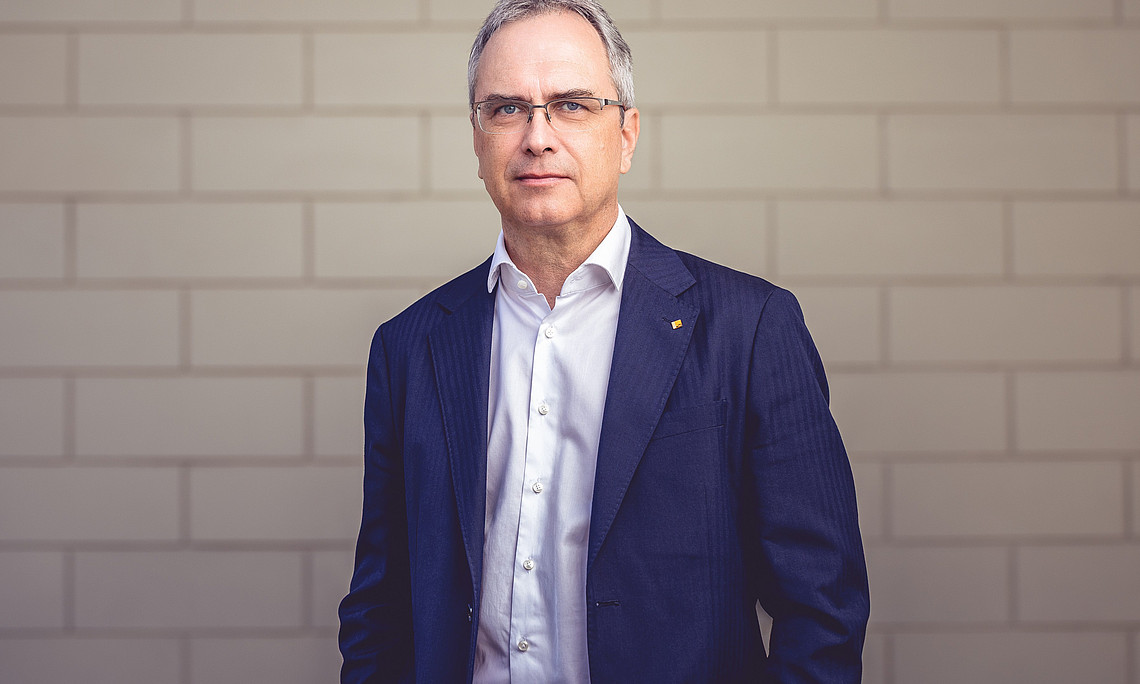
Mireille van Poppel, Vizerektorin für Internationalisierung und Gleichstellung, will Mehrsprachigkeit am Campus stärken. Foto: Uni Graz/Tzivanopoulos ©Uni Graz/Tzivanopoulos

Mireille van Poppel, Vizerektorin für Internationalisierung und Gleichstellung, will Mehrsprachigkeit am Campus stärken. Foto: Uni Graz/Tzivanopoulos

Mireille van Poppel, Vizerektorin für Internationalisierung und Gleichstellung, über ihre Schwerpunkte

Bewegung bestimmt ihre Forschungsarbeit. Ebenso ihre Tätigkeit als Vizerektorin der Universität Graz. Was Mireille van Poppel als Vizerektorin für Internationalisierung und Gleichstellung bewegen möchte, schildert sie im Interview.

Welche Schwerpunkte werden Sie im Bereich Internationalisierung setzen?
Mireille van Poppel: Mir ist es sehr wichtig, die Präsenz unserer Universität weiter zu erhöhen. Das geht Hand in Hand mit dem Bekanntheitsgrad des gesamten Standorts. Viele wissen nicht, wo die Stadt Graz liegt. Dabei schwärmen alle, sobald sie einmal hier gewesen sind. Das muss sich noch mehr herumsprechen.

Wie lässt sich das verbessern?
Van Poppel: Zum Beispiel, in dem wir mehr große Veranstaltungen an die Universität Graz holen. So können wir sowohl unseren wunderschönen Campus, um den uns viele beneiden, als auch die Stadt herzeigen. Und das bedeutet, aktiv Werbung für Uni und Standort zu machen.

Nach drei Jahren Pandemie ist nun die Mobilität der Studierenden und Wissenschaftler:innen nun wieder angelaufen. Gibt es bestimmte Regionen, denen Sie mehr Augenmerk schenken möchten?
Van Poppel: Die Mobilität erholt sich tatsächlich wieder, hier passiert schon sehr viel. Abhängig vom Studium, wollen wir künftig spezifische Regionen und Länder ansprechen, um Interessierte zu erreichen. Doch wenn wir weitere internationale Studierende und Forscher:innen gewinnen möchten, müssen wir den mehrsprachigen Campus ausbauen. Das heißt vor allem Englisch überall an der Universität von Lehrveranstaltungen über Web bis hin zu Formularen verankern.

Wie haben Sie selbst die Uni Graz erlebt, als sie 2015 von der Niederlande als Professorin am Institut für Bewegungswissenschaften, Sport und Gesundheit an die Universität Graz gekommen sind?
Van Poppel: Die Sprache hat mich zu Beginn eingeschränkt, denn ich wollte alles auf Deutsch machen. Grundsätzlich habe ich ein sehr positives Umfeld vorgefunden, das ich bis heute sehr schätze.  

Ihr anderes Kernthema als Vizerektorin betrifft die Gleichstellung. Welche Akzente planen Sie hier?
Van Poppel: Bei der Gleichstellung ist die Universität Graz gut aufgestellt. Auch wenn es noch nicht in allen Bereichen so ist, wie es sein sollte. Darüber hinaus ist es mir wichtig, die Frage breiter zu denken, nicht nur auf Gleichstellung von Männern und Frauen zu beschränken. Mehr Bewusstsein möchte ich für das Thema sexuelle Belästigung schaffen, außerdem geht damit oft Machtmissbrauch einher. Wir werden daher eine Initiative der Stadt Graz an unserer Universität einrichten. „Luisa ist da“ richtet sich an Frauen, die sich aus einer unangenehmen Situation befreien möchten und unmittelbar Hilfe bekommen. Gleichstellung betrifft ebenso den barrierefreien Zugang des Campus, darauf werden wir während des Baus das Graz Center of Physics besonders achten. Dieses einzigartige Vorzeigeprojekt wird den Standort ebenfalls enorm aufwerten.

created by Interview: Andreas Schweiger

Related news

Complying with the norm: Why Do Standards Shape Our Lives, Elisabeth Staudegger?

Standards determine whether a sheet of paper fits in a printer or whether a charging plug can power multiple devices. These standards shape our everyday lives. But who actually sets these standards? Where are the weaknesses, and how could science help to improve them? Elisabeth Staudegger, Head of the ‘Law and IT’ Department at the Institute for Legal Foundations at the University of Graz, host the Academic Standards Day on 16 June. Here she relays how sciences can contribute to the topic of standardisation and reveals her personal favourite standard.

More body awareness than a culture war

In Italy, sex education lessons will in future only be permitted with parental consent, and will be banned entirely in nurseries and primary schools. At the same time, Pride Month highlights why knowledge about the body, relationships, boundaries and diversity is important for young people. A study by the University of Graz shows how important knowledge about the body, contraception, relationship skills and protection against violence is

Will Austria win the World Cup? Mathematician reveals calculation method

Michael Fischer uses the football tournament as a practical example for highschool lessons.

Survival strategies: How plants respond to drought

According to Geosphere Austria, this spring was the driest in Austria since records began around 170 years ago. The low rainfall put particular pressure on the agricultural sector. And climate change is set to make the situation even worse in the coming decades. We asked Johannes Liesche, a professor at the Department of Biology at the University of Graz, how plants react to water shortages and how they survive periods of drought.

Begin of page section:
Additional information:

University of Graz
Universitaetsplatz 3
8010 Graz
Austria
  • Contact
  • Web Editors
  • Moodle
  • UNIGRAZonline
  • Imprint
  • Data Protection Declaration
  • Accessibility Declaration
Weatherstation
Uni Graz

End of this page section. Go to overview of page sections

End of this page section. Go to overview of page sections

Begin of page section:

End of this page section. Go to overview of page sections