



Begin of page section:
Page sections:

  • Go to contents (Accesskey 1)
  • Go to position marker (Accesskey 2)
  • Go to main navigation (Accesskey 3)
  • Go to sub navigation (Accesskey 4)
  • Go to additional information (Accesskey 5)
  • Go to page settings (user/language) (Accesskey 8)
  • Go to search (Accesskey 9)

End of this page section. Go to overview of page sections

Begin of page section:
Page settings:

English en
Deutsch de
Search
Login

End of this page section. Go to overview of page sections

Begin of page section:
Search:

Search for details about Uni Graz
Close

End of this page section. Go to overview of page sections


Search

Begin of page section:
Main navigation:

Page navigation:

  • University

    University
    • About the University
    • Organisation
    • Faculties
    • Library
    • Working at University of Graz
    • Campus
    Developing solutions for the world of tomorrow - that is our mission. Our students and our researchers take on the great challenges of society and carry the knowledge out.
  • Research Profile

    Research Profile
    • Our Expertise
    • Research Questions
    • Research Portal
    • Promoting Research
    • Research Transfer
    • Ethics in Research
    • Commission for Scientific Integrity
    Scientific excellence and the courage to break new ground. Research at the University of Graz creates the foundations for making the future worth living.
  • Studies

    Studies
    • Prospective Students
    • Students
  • Community

    Community
    • International
    • Location
    • Research and Business
    • Alumni
    The University of Graz is a hub for international research and brings together scientists and business experts. Moreover, it fosters the exchange and cooperation in study and teaching.
  • Spotlight
Topics
  • Sustainable University
  • Researchers answer
  • Work for us
Close menu

End of this page section. Go to overview of page sections

Begin of page section:
You are here:

University of Graz News Inklusion

End of this page section. Go to overview of page sections

Tuesday, 15 January 2019

Inklusion

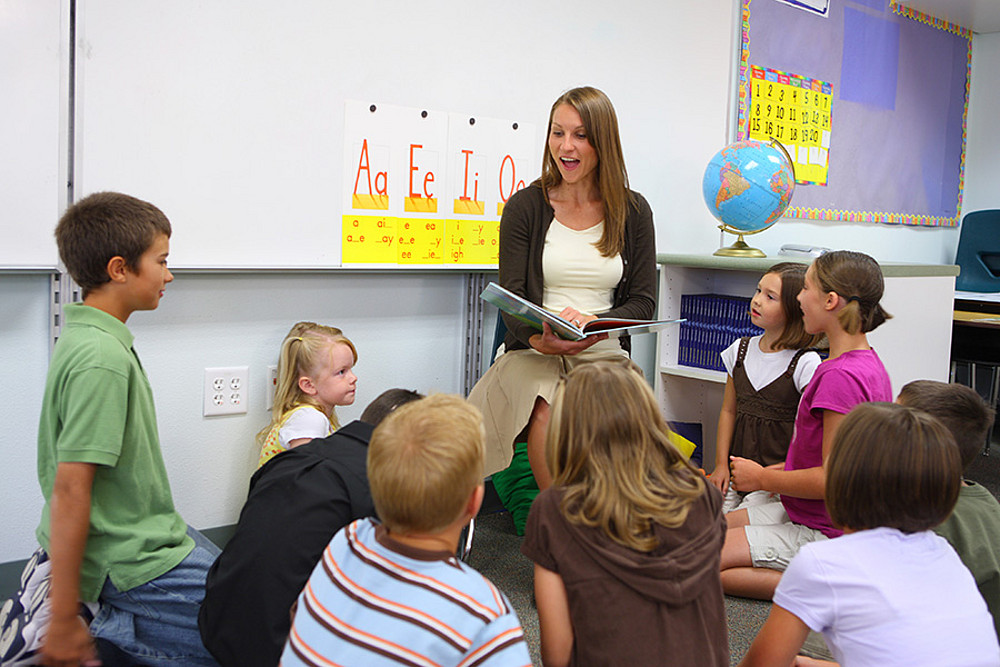
Erziehungs- und BildungswissenschafterInnen arbeiten daran, die Tätigkeit von SchulassistentInnen aufzuwerten. Foto: shutterstock / Hurst Photo

Erziehungs- und BildungswissenschafterInnen arbeiten daran, die Tätigkeit von SchulassistentInnen aufzuwerten. Foto: shutterstock / Hurst Photo

Wie Kinder mit Behinderung besser lernen: Universität Graz stärkt Weiterbildung von SchulassistentInnen

Behinderte Kinder und Jugendliche brauchen besondere Förderung. Vor allem wenn es ums Lernen und die soziale Einbindung im Unterricht geht. Dafür sorgen sogenannte SchulassistentInnen, die ebenfalls Unterstützung benötigen. Denn ihre Arbeit ist oft von geringem Lohn, wenig Anerkennung und unzureichenden Weiterbildungsmöglichkeiten geprägt. Letztere will die Universität Graz mit einem EU-Projekt verbessern. 

Erziehungs- und BildungswissenschafterInnen arbeiten daran, die Tätigkeit von SchulassistentInnen aufzuwerten. Und das gemeinsam mit KollegInnen in Österreich, Portugal, Bulgarien, Slowakei und Großbritannien. IMAS (Improving Assistance in Inclusive Educational Settings) lautet der Titel des Erasmus+ Projekts der Europäischen Union, das mittlerweile in der zweiten Runde läuft. Nach Teil 1 zeichnet Integrationspädagogin Barbara Gasteiger-Klicpera, zugleich Koordinatorin von IMAS, ein sehr heterogenes Bild: „Die Betreuung behinderter SchülerInnen ist europaweit höchst unterschiedlich geregelt.“ So werden SchulassistentInnen über Trägerorganisationen, wie in Österreich, beschäftigt. Anderswo, etwa in Finnland, sind sie in die Schulen selbst integriert. Darüber hinaus, hält Gasteiger-Klicpera fest, stehen hierzulande weniger pädagogische, sondern vielmehr pflegerische Kompetenzen im Vordergrund. 
„Ganz generell betrachtet“, schildert Projektassistentin Caroline Breyer, „ist die Tätigkeit der SchulassistentInnen von hoher Arbeitsbelastung, niedrigem Status in der Schulhierarchie sowie einer geringeren Qualifikation gekennzeichnet.“ Bei der Verbesserung der Weiterbildung setzt nun IMAS II an.

Wissensboxen für BetreuerInnen
Das Wissen zu unterschiedlichen Themen – von Lernschwierigkeiten über physische Beeinträchtigung bis hin zu Mehrfachbehinderung – wird in webbasierten „Wissensboxen“ gesammelt und mithilfe von Texten, Videos, Quiz etc. leicht zugänglich und interaktiv bereitgestellt. „Wir wollen Tools und Materialien anbieten, um die praktische Arbeit mit Kindern zu unterstützen“, begründet Gasteiger-Klicpera. Interessierte SchulassistentInnen können sich auf diese Weise praxisnahe Handlungsanleitungen holen, Tipps bei Problemen erhalten und ihre Kenntnisse auf den aktuellen Stand bringen. 

Mit Partnerinstitutionen – Universität Trnava (Slowakei), Centre for Social Studies an der Universität Coimbra (Portugal), Agency Vision (Bulgarien), Centre for Studies on Inclusive Education (Vereinigtes Königreich) und European Association of Service Providers for Persons with Disabilities (Belgien) – sowie den SchulassistentInnen selbst werden derzeit die Wissensboxen entwickelt. Fünf sind geplant – unter anderem mit Antworten auf folgende Fragen: Wie und wann nehmen wir Behinderung wahr? Wie sieht die Kommunikation zwischen den beteiligten Gruppen aus? Was heißt das für den Lernprozess und das Verhalten der SchülerInnen mit Behinderung? Wie gehen wir mit sensorischer und physischer Beeinträchtigung um? 
Nach einer Testphase im Herbst 2019 sollen die Wissensboxen, die in fünf Sprachen verfügbar sein sollen, 2020 evaluiert werden und dann öffentlich zugänglich sein. 
created by Andreas Schweiger

Related news

Higher Education Strategy 2040: Austria’s universities on course for the future

Austria has 77 higher education institutions, which is above the EU average – but does this really make sense? The new Higher Education Strategy 2040 focuses on cooperation rather than mergers. As one of the six largest universities in Austria, the University of Graz plays a central role in this.

Climate research in Greenland: Old data provides new insights

The polar explorer and University of Graz professor Alfred Wegener left behind a unique collection of climate data from Greenland. A research team from the University of Graz is now analysing this 100-year-old treasure trove of data and comparing it with current measurements.

Diversity in nature and science: How we talk about plants and each other

Ginkgo, kiwi, hemp: they exist as male and female plants. Anyone who paid attention in biology class will confirm this. But is this categorisation, established by Carl von Linné almost 300 years ago, still valid today? An interdisciplinary team at the University of Graz is questioning these attributions and using this as a starting point to provide food for thought for gender-sensitive interaction between students, scientific and teaching staff.

Around the world in eight stops: the Long Night of Research at the University of Graz

On 24 April from 5 pm, you can take a short trip around the globe at the University of Graz, discovering pecularities of foreign countries or new local features in the entrance hall of the University Library. The itinerary takes you through introduced animal species, political attitudes and the omnipotence of algorithms. There will also be a programme in the historic reading hall, as well as at the UniGraz@Museum and the University Archive.

Begin of page section:
Additional information:

University of Graz
Universitaetsplatz 3
8010 Graz
Austria
  • Contact
  • Web Editors
  • Moodle
  • UNIGRAZonline
  • Imprint
  • Data Protection Declaration
  • Accessibility Declaration
Weatherstation
Uni Graz

End of this page section. Go to overview of page sections

End of this page section. Go to overview of page sections

Begin of page section:

End of this page section. Go to overview of page sections


