Begin of page section:
Page sections:

  • Go to contents (Accesskey 1)
  • Go to position marker (Accesskey 2)
  • Go to main navigation (Accesskey 3)
  • Go to sub navigation (Accesskey 4)
  • Go to additional information (Accesskey 5)
  • Go to page settings (user/language) (Accesskey 8)
  • Go to search (Accesskey 9)

End of this page section. Go to overview of page sections

Begin of page section:
Page settings:

English en
Deutsch de
Search
Login

End of this page section. Go to overview of page sections

Begin of page section:
Search:

Search for details about Uni Graz
Close

End of this page section. Go to overview of page sections


Search

Begin of page section:
Main navigation:

Page navigation:

  • University

    University
    • About the University
    • Organisation
    • Faculties
    • Library
    • Working at University of Graz
    • Campus
    Developing solutions for the world of tomorrow - that is our mission. Our students and our researchers take on the great challenges of society and carry the knowledge out.
  • Research Profile

    Research Profile
    • Our Expertise
    • Research Questions
    • Research Portal
    • Promoting Research
    • Research Transfer
    • Ethics in Research
    • Commission for Scientific Integrity
    Scientific excellence and the courage to break new ground. Research at the University of Graz creates the foundations for making the future worth living.
  • Studies

    Studies
    • Prospective Students
    • Students
  • Community

    Community
    • International
    • Location
    • Research and Business
    • Alumni
    The University of Graz is a hub for international research and brings together scientists and business experts. Moreover, it fosters the exchange and cooperation in study and teaching.
  • Spotlight
Topics
  • Sustainable University
  • Researchers answer
  • Work for us
Close menu

End of this page section. Go to overview of page sections

Begin of page section:
You are here:

University of Graz News Die grünen Partikel-Fresserchen

End of this page section. Go to overview of page sections

Wednesday, 02 January 2019

Die grünen Partikel-Fresserchen

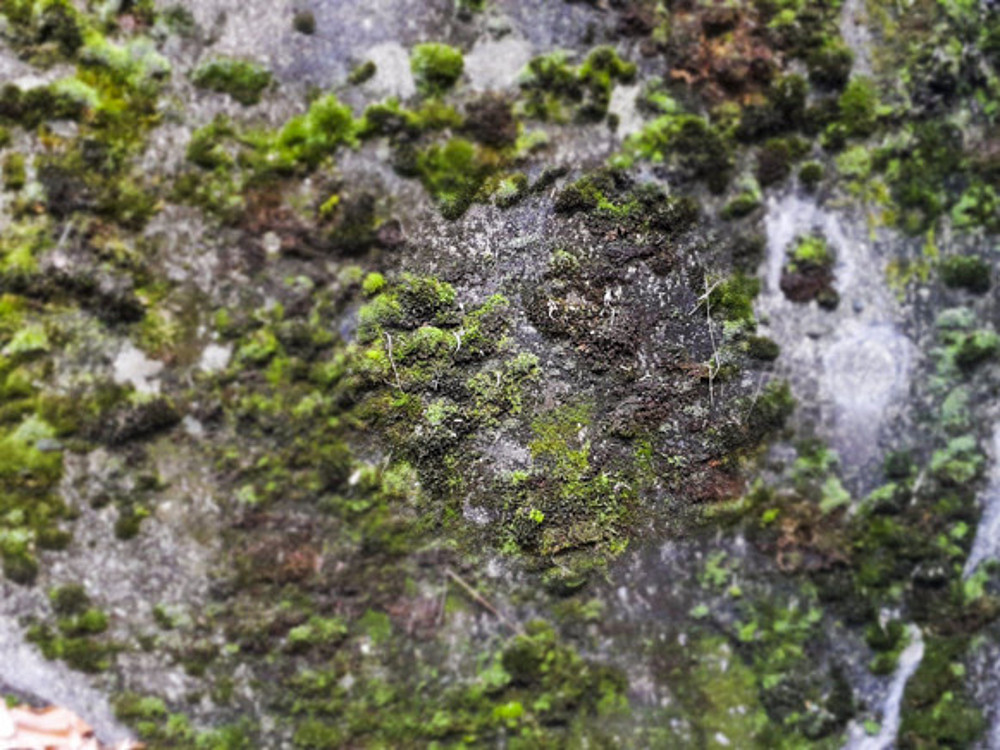
Moose auf Beton(fassaden) sind nicht nur störend, sie sind sehr behilflich beim Kampf gegen den Feinstaub. Fotos: Uni Graz/Tzivanopoulos

Moose auf Beton(fassaden) sind nicht nur störend, sie sind sehr behilflich beim Kampf gegen den Feinstaub. Fotos: Uni Graz/Tzivanopoulos

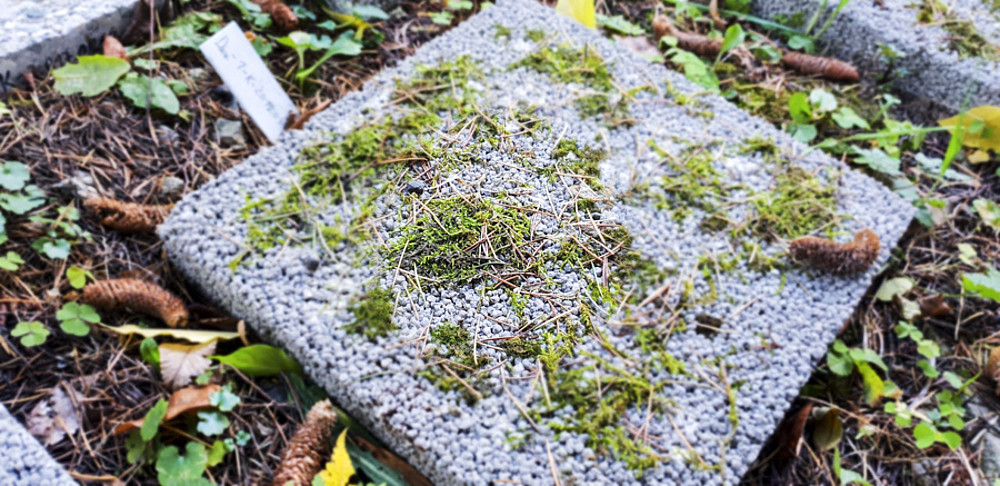
Im Botanischen Garten wurden nun Platten, die aus unterschiedlichen Betonsorten bestehen, mit Moosen beimpft. Die Messdaten werden nun ausgewertet. Die ForscherInnen erhoffen sich dadurch neue Erkenntnisse im Zusammenspiel von Baumaterial und Moosart

Im Botanischen Garten wurden nun Platten, die aus unterschiedlichen Betonsorten bestehen, mit Moosen beimpft. Die Messdaten werden nun ausgewertet. Die ForscherInnen erhoffen sich dadurch neue Erkenntnisse im Zusammenspiel von Baumaterial und Moosart

Moose können mehr als man ihnen zutraut. Da wäre zum Beispiel die Sache mit dem Feinstaubschlucken

Sie sind unliebsam und idyllisch zugleich: Moose. Sie werden gewollt aus so manchem englischen Rasen vernichtet, zugleich werden sie als weicher Gartenfußboden oder gar als grünes Dekormittel eingesetzt. Die Wissenschaft hat aber ein besonderes Interesse an diesen ältesten Landpflanzen der Erde. „Moose haben den positiven Effekt, dass sie Partikel aus der Luft filtern. Wie zum Beispiel Feinstaub, den es in Graz ja zuhauf gibt“, weiß Christian Berg. Der wissenschaftliche Leiter des Botanischen Gartens Graz arbeitet mit KollegInnen von der TU Graz an Lösungen, wie diese Pflanzen praktisch in das Stadtbild integriert werden können und somit aktiv für die Lebensqualität arbeiten. „Stellen Sie sich vor, Sie bepflanzen Ihre Fassade gewollt mit Moos. Machen das viele Bezirke oder gar die ganze Stadt Graz, so könnte das einen wertvollen Beitrag zur Verbesserung der Luftgüte leisten“, betont der Wissenschafter.

Können Moose Feinstaub fressen?

Dazu hat Berg im Mai 2018 mit Joachim Juthart vom Institut für Materialprüfung und Baustofftechnologie der TU Graz acht verschiedene Moosarten auf Betonplatten mit unterschiedlicher Dichte, Porosität und pH-Wert gesetzt, um die Symbiose zwischen Material und Pflanze unter sonnigen und schattigen Bedingungen zu erforschen. Berg und sein Team untersuchen das Wachstumsverhalten der Moose. Erste Ergebnisse sollen Anfang nächsten Jahres vorliegen. Das Projekt soll auch Aufschluss darüber bringen, wie sehr Moose den Baustoff Beton langfristig beeinflussen. Und schließlich auch, wie viel Wasser sie speichern und wie sehr Moosflächen eine spürbare Abkühlung in Städten bringen.

So wächst das Wissen im Botanischen Garten
Im kommenden Jahr feiert der Botanische Garten am Standort Schubertstraße sein 130jähriges Bestehen. Dazu hat die Universität Graz eine Fundraising-Aktion initiiert. In Form von Pflanzenpatenschaften, Kleinspenden und auch Quartier-Patenschaften können sich Interessierte an der Neugestaltung des Wegenetzes im Garten beteiligen. 43 Pflanzen haben bereits ihre PatInnen gefunden. Mehr zum Projekt unter https://lasswissenwachsen.at/ 
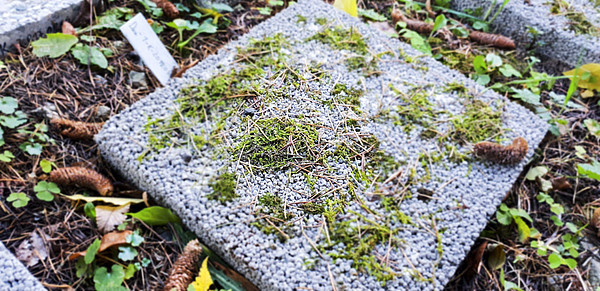
 

Im Botanischen Garten wurden nun Platten, die aus unterschiedlichen Betonsorten bestehen, mit Moosen beimpft. Die Messdaten werden nun ausgewertet. Die ForscherInnen erhoffen sich dadurch neue Erkenntnisse im Zusammenspiel von Baumaterial und Moosart
created by Konstantin Tzivanopoulos

Related news

Higher Education Strategy 2040: Austria’s universities on course for the future

Austria has 77 higher education institutions, which is above the EU average – but does this really make sense? The new Higher Education Strategy 2040 focuses on cooperation rather than mergers. As one of the six largest universities in Austria, the University of Graz plays a central role in this.

Climate research in Greenland: Old data provides new insights

The polar explorer and University of Graz professor Alfred Wegener left behind a unique collection of climate data from Greenland. A research team from the University of Graz is now analysing this 100-year-old treasure trove of data and comparing it with current measurements.

Diversity in nature and science: How we talk about plants and each other

Ginkgo, kiwi, hemp: they exist as male and female plants. Anyone who paid attention in biology class will confirm this. But is this categorisation, established by Carl von Linné almost 300 years ago, still valid today? An interdisciplinary team at the University of Graz is questioning these attributions and using this as a starting point to provide food for thought for gender-sensitive interaction between students, scientific and teaching staff.

Around the world in eight stops: the Long Night of Research at the University of Graz

On 24 April from 5 pm, you can take a short trip around the globe at the University of Graz, discovering pecularities of foreign countries or new local features in the entrance hall of the University Library. The itinerary takes you through introduced animal species, political attitudes and the omnipotence of algorithms. There will also be a programme in the historic reading hall, as well as at the UniGraz@Museum and the University Archive.

Begin of page section:
Additional information:

University of Graz
Universitaetsplatz 3
8010 Graz
Austria
  • Contact
  • Web Editors
  • Moodle
  • UNIGRAZonline
  • Imprint
  • Data Protection Declaration
  • Accessibility Declaration
Weatherstation
Uni Graz

End of this page section. Go to overview of page sections

End of this page section. Go to overview of page sections

Begin of page section:

End of this page section. Go to overview of page sections