Begin of page section:
Page sections:

  • Go to contents (Accesskey 1)
  • Go to position marker (Accesskey 2)
  • Go to main navigation (Accesskey 3)
  • Go to sub navigation (Accesskey 4)
  • Go to additional information (Accesskey 5)
  • Go to page settings (user/language) (Accesskey 8)
  • Go to search (Accesskey 9)

End of this page section. Go to overview of page sections

Begin of page section:
Page settings:

English en
Deutsch de
Search
Login

End of this page section. Go to overview of page sections

Begin of page section:
Search:

Search for details about Uni Graz
Close

End of this page section. Go to overview of page sections


Search

Begin of page section:
Main navigation:

Page navigation:

  • University

    University
    • About the University
    • Organisation
    • Faculties
    • Library
    • Working at University of Graz
    • Campus
    Developing solutions for the world of tomorrow - that is our mission. Our students and our researchers take on the great challenges of society and carry the knowledge out.
  • Research Profile

    Research Profile
    • Our Expertise
    • Research Questions
    • Research Portal
    • Promoting Research
    • Research Transfer
    • Ethics in Research
    Scientific excellence and the courage to break new ground. Research at the University of Graz creates the foundations for making the future worth living.
  • Studies

    Studies
    • Prospective Students
    • Students
  • Community

    Community
    • International
    • Location
    • Research and Business
    • Alumni
    The University of Graz is a hub for international research and brings together scientists and business experts. Moreover, it fosters the exchange and cooperation in study and teaching.
  • Spotlight
Topics
  • Our digital Advent calendar
  • Sustainable University
  • Researchers answer
  • Work for us
Close menu

End of this page section. Go to overview of page sections

Begin of page section:
You are here:

University of Graz News Gott und die City

End of this page section. Go to overview of page sections

Monday, 01 August 2022

Gott und die City

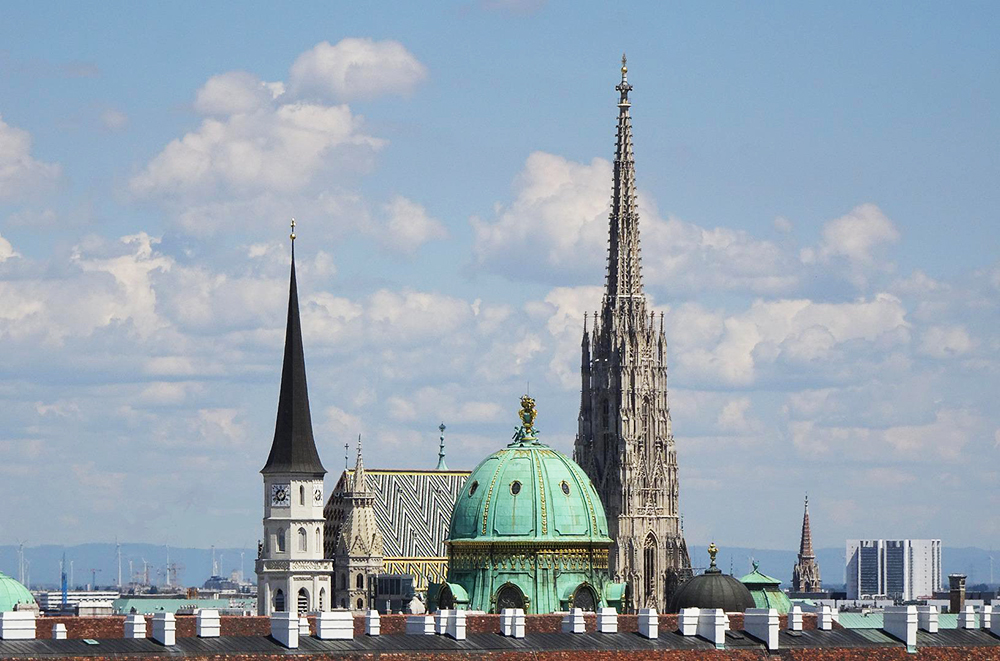
Kirchtürme prägen die Skyline vieler Städte - so auch Wien (Foto). Foto: Roland Kadan - pixabay

Kirchtürme prägen die Skyline vieler Städte - so auch Wien (Foto). Foto: Roland Kadan - pixabay

Mit dem Verhältnis zwischen Stadt und Religion beschäftigt sich Fundamentaltheologin Martina Bär

Ob Wien, Köln oder Prag – kirchliche Bauten prägen die Skyline großer Städte. Das religiöse Leben in Metropolen ist hingegen weniger präsent. Martina Bär, seit April 2022 Professorin für Fundamentaltheologie an der Universität Graz, will Beziehungsarbeit leisten, um Stadt und Religion näher zueinander zu bringen.

Die Großstadt ist Sinnbild für ein freies Leben. Einher geht oft die Abkehr von Religion. „Ihre Relevanz im Alltag verliert in der städtischen Gesellschaft an Bedeutung“, bestätigt Martina Bär. Wie aber gehen die Menschen mit ihrer Spiritualität um? Und wie kann die katholische Kirche darauf reagieren? Fragen, mit denen sich die Theologin auseinandersetzt. Eine Antwort lautet: „Auf Menschen zugehen, sie in ihrer Lebenswelt abholen.“ Dass dies funktionieren kann, hat die Wissenschafterin bei einem Forschungsaufenthalt in Mexico City erfahren. „Es gibt Priester, die auf der Straße Gottesdienste abhalten und die Beichte abnehmen.“

Letztes Abendmahl als Performance
Strategien gibt es auch in Europa: karitative Angebote stärken, Gesprächsabende organisieren. Weiters können Kunstaktionen, etwa wenn an einem Tisch vor dem Brandenburger Tor – in Analogie zum Letzten Abendmahl – zwölf Personen Platz nehmen, verbinden.
Bär spricht zudem von einer Eigenlogik einer Stadt: „Die BerlinerInnen haben – allgemein gesprochen – wenig Geld, geben aber gerne aus. Die Frankfurter wiederum verfügen im Großen und Ganzen über mehr Einkommen, sind aber sparsamer.“ Diese Aspekte könne man in der Pastoralarbeit berücksichtigen: „Zum Beispiel den Gott, der teilt oder der gerne gibt, in den Mittelpunkt stellen.“

Ein Haus der Religionen
Wie sich das Verhältnis zwischen Stadt und Religion gut gestalten lässt, hat Martina Bär am Haus der Religionen in Bern kennengelernt. Dort hat sie den interreligiösen Dialog wissenschaftlich begleitet: „Menschen verschiedener Konfessionen, darunter Hindus, BuddhistInnen, AlevitInnen und Angehörige anderer kleinerer Gemeinschaften, haben jeweils einen eigenen sakralen Raum, begegnen sich unter einem Dach und feiern auch gemeinsam.“ Diese Idee möchte die Theologin ebenfalls in Graz vorantreiben.

Weitere Beziehungsarbeit wird Martina Bär im kommenden Wintersemester leisten. „Kunst im Krieg“ lautet der Titel der öffentlichen Vortragsreihe, die sie gemeinsam mit dem Minoritenkloster in Graz vorbereitet. Der inhaltliche Bogen spannt sich von den Bauernkriegen vor 500 Jahren, die zum Beispiel auf Altarbildern dargestellt sind, bis hin zur künstlerischen Auseinandersetzung mit dem Ukraine-Krieg.

created by Andreas Schweiger

Related news

Semester abroad without barriers: University of Graz wins award for promoting inclusion

The University of Graz has been awarded the Internationalization Award for its new inclusion initiative. Students with fewer opportunities now also receive financial support for their semester abroad outside Europe.

Fair distribution: Researchers determine just greenhouse gas budgets for all EU regions

Ten years ago, on 12 December 2015, the Paris Climate Agreement was signed at the UN Climate Conference. In order to limit global warming to well below two degrees, only a certain amount of CO2 may be emitted worldwide. While the focus was originally on national emission targets, more than 200 subnational regions and almost 300 cities have now adopted their own targets. But how many emissions are they fairly entitled to? Researchers at the University of Graz have now developed transparent criteria for fair distribution at the subnational level for the first time and determined corresponding greenhouse gas budgets for all European regions. The paper was published today in the scientific journal Nature Communications.

Chemical Christmas show at the University of Graz: An explosive evening at the Schauspielh

At the beginning of December, the University of Graz transformed the theater into a laboratory: as part of “Chemical Life,” teacher training students staged a chemical Christmas show for Styrian school classes—complete with ethanol rockets, nitrogen snow, and glowing effects. An evening designed to inspire interest in studying chemistry.

Train by train: Koralm railway accelerates exchange between the Universities

Lectures at the University of Klagenfurt in the morning, seminars at the University of Graz in the afternoon: Austria's longest tunnel and a journey time of around 45 minutes make it easy. The Koralm railway increases the speed of networking between the two university locations. The collaboration builds on existing cooperation - for example in the areas of teacher training, Slavic studies and as employers, the universities are well coordinated.

Begin of page section:
Additional information:

University of Graz
Universitaetsplatz 3
8010 Graz
Austria
  • Contact
  • Web Editors
  • Moodle
  • UNIGRAZonline
  • Imprint
  • Data Protection Declaration
  • Accessibility Declaration
Weatherstation
Uni Graz

End of this page section. Go to overview of page sections

End of this page section. Go to overview of page sections

Begin of page section:

End of this page section. Go to overview of page sections