



Begin of page section:
Page sections:

  • Go to contents (Accesskey 1)
  • Go to position marker (Accesskey 2)
  • Go to main navigation (Accesskey 3)
  • Go to sub navigation (Accesskey 4)
  • Go to additional information (Accesskey 5)
  • Go to page settings (user/language) (Accesskey 8)
  • Go to search (Accesskey 9)

End of this page section. Go to overview of page sections

Begin of page section:
Page settings:

English en
Deutsch de
Search
Login

End of this page section. Go to overview of page sections

Begin of page section:
Search:

Search for details about Uni Graz
Close

End of this page section. Go to overview of page sections


Search

Begin of page section:
Main navigation:

Page navigation:

  • University

    University
    • About the University
    • Organisation
    • Faculties
    • Library
    • Working at University of Graz
    • Campus
    Developing solutions for the world of tomorrow - that is our mission. Our students and our researchers take on the great challenges of society and carry the knowledge out.
  • Research Profile

    Research Profile
    • Our Expertise
    • Research Questions
    • Research Portal
    • Promoting Research
    • Research Transfer
    • Ethics in Research
    • Commission for Scientific Integrity
    Scientific excellence and the courage to break new ground. Research at the University of Graz creates the foundations for making the future worth living.
  • Studies

    Studies
    • Prospective Students
    • Students
  • Community

    Community
    • International
    • Location
    • Research and Business
    • Alumni
    The University of Graz is a hub for international research and brings together scientists and business experts. Moreover, it fosters the exchange and cooperation in study and teaching.
  • Spotlight
Topics
  • Sustainable University
  • Researchers answer
  • Work for us
Close menu

End of this page section. Go to overview of page sections

Begin of page section:
You are here:

University of Graz News Gegenwehr

End of this page section. Go to overview of page sections

Monday, 22 June 2020

Gegenwehr

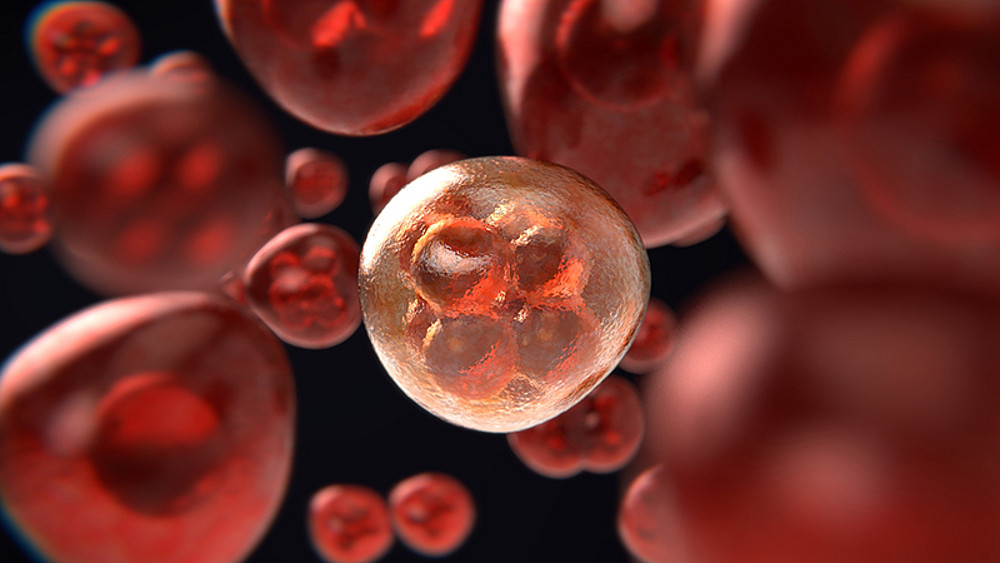
Was macht Krebszellen verwundbar? Ein körpereigener Abwehrmechanismus könnte eine mögliche Antwort auf diese Frage sein. Biochemikerin Dagmar Zweytick spricht darüber in der aktuellen Episode von "Hör-Saal: 15 Minuten Forschung". Foto: ColiN00B/pixaby.com

Was macht Krebszellen verwundbar? Ein körpereigener Abwehrmechanismus könnte eine mögliche Antwort auf diese Frage sein. Biochemikerin Dagmar Zweytick spricht darüber in der aktuellen Episode von "Hör-Saal: 15 Minuten Forschung". Foto: ColiN00B/pixaby.com

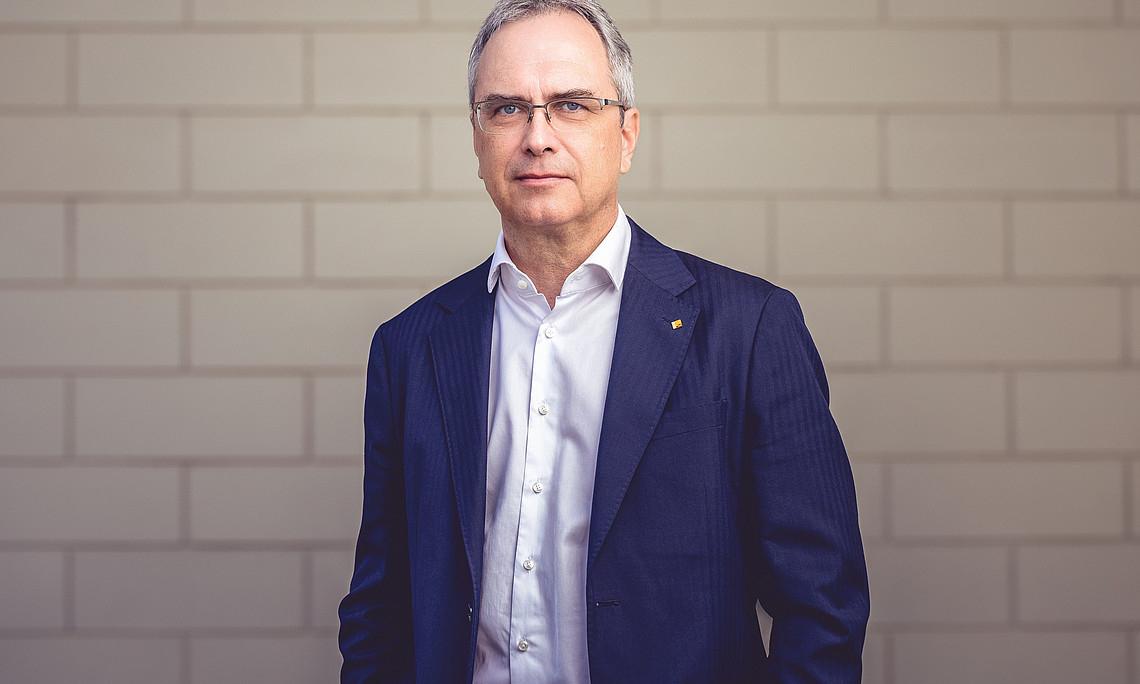
Dagmar Zweytick im Podcastformat "Hör-Saal" im Gespräch: Was macht Krebszellen verwundbar?

Im Podcast-Format "Hör-Saal: 15 Minuten Forschung" haben ForscherInnen der Universität Graz seit Mitte März ein Mal pro Woche verschiedene Fragen rund um die Corona-Krise aufgeworfen, diskutiert und beantwortet. Nachdem sich die Covid-19-Situation in Österreich zum Glück sehr positiv entwickelt hat, wird das Gesprächsformat jetzt erweitert: Seit vergangener Woche geht es um auch aktuelle sowie um allgemein spannende Wissenschaftsthemen, um neue Ergebnisse und Erkenntnisse und darum, die Persönlichkeiten hinter der Forschungsarbeit etwas näher kennenzulernen.

Diese Woche spricht die Biochemikerin Dagmar Zweytick über ihre Forschungen an einem Wirkstoff gegen besonders aggressive Krebsarten. Mit ihrem Team nutzt sie dabei einen körpereigenen Abwehrmechanismus, der den natürlichen Zelltod von Krebszellen auslösen kann. "Dieser natürliche Wirkstoff kommt zum Beispiel in der Muttermilch vor, schont deshalb die gesunden Zellen und pusht aber gleichzeitig auch das menschliche Immunsystem, damit es schnell und zielgerichtet auf die Krebszellen reagieren kann", erklärt die Wissenschafterin. Der mittlerweile patentierte Wirkstoff wird jetzt gemeinsam mit einem austro-amerikanischen Firmenkonsortium weiter untersucht.


>> Zum Podcast

>> Zur Sedcard


>> Mitmachen? Gerne!
Wenn Sie Interesse an einem Gespräch über Ihr Forschungsthema haben, schreiben Sie bitte ein E-Mail an die Redaktion - Vorschläge und Ideen sind jederzeit gerne willkommen!


Folgen zum Nachhören:

>> Episode #13: Astrophysikerin Astrid Veronig über die Solar Orbiter Mission, die aktuell zur Sonne fliegt


Die Corona-Hör-Saal-Folgen:

>> Episode # 01 (23.03.2020) – "Warum hamstern wir?" (mit Sonja Rinofner-Kreidl)
>> Episode # 02 (30.03.2020) – "Was können wir aus Pandemien lernen?" (mit Johannes Gießauf)
>> Episode # 03 (06.04.2020) – "Raubt uns die Krise die Menschenwürde?" (mit Reinhold Esterbauer)
>> Episode # 04 (14.04.2020) – "Wie funktioniert ein Wirkstoff-Screening?" (mit Ulrich Stelzl)
>> Episode # 05 (20.04.2020) – "Was bewirkt flexible Arbeit?" (mit Bettina Kubicek)
>> Episode # 06 (27.04.2020) – "Ist die Digitalisierung die Gewinnerin der Krise?" (mit Petra Schaper-Rinkel)
>> Episode # 07 (04.05.2020) – "Sind Krieg und Krise vergleichbar?" (mit Barbara Stelzl-Marx)
>> Epsiode # 08 (11.05.2020) – "Braucht der Rechtstaat Krisen?" (mit Anita Ziegerhofer)
>> Episode # 09 (18.05.2020) – "Vergessen wir auf die Klimakrise?" (mit Jochen Ostheimer)
>> Episode # 10 (25.05.2020) – "Wie verändert das Virus unsere Wirtschaft?" (mit Jörn Kleinert)
>> Episode # 11 (02.06.2020) – "Folgt dem Virus in Südosteuropa die Autokratie?" (mit Florian Bieber)
>> Episode #12 (08.06.2020)  – "Wie begegnen wir uns nach der Pandemie?" (mit Anke Strüver)
created by Gerhild Leljak

Related news

Higher Education Strategy 2040: Austria’s universities on course for the future

Austria has 77 higher education institutions, which is above the EU average – but does this really make sense? The new Higher Education Strategy 2040 focuses on cooperation rather than mergers. As one of the six largest universities in Austria, the University of Graz plays a central role in this.

Climate research in Greenland: Old data provides new insights

The polar explorer and University of Graz professor Alfred Wegener left behind a unique collection of climate data from Greenland. A research team from the University of Graz is now analysing this 100-year-old treasure trove of data and comparing it with current measurements.

Diversity in nature and science: How we talk about plants and each other

Ginkgo, kiwi, hemp: they exist as male and female plants. Anyone who paid attention in biology class will confirm this. But is this categorisation, established by Carl von Linné almost 300 years ago, still valid today? An interdisciplinary team at the University of Graz is questioning these attributions and using this as a starting point to provide food for thought for gender-sensitive interaction between students, scientific and teaching staff.

Around the world in eight stops: the Long Night of Research at the University of Graz

On 24 April from 5 pm, you can take a short trip around the globe at the University of Graz, discovering pecularities of foreign countries or new local features in the entrance hall of the University Library. The itinerary takes you through introduced animal species, political attitudes and the omnipotence of algorithms. There will also be a programme in the historic reading hall, as well as at the UniGraz@Museum and the University Archive.

Begin of page section:
Additional information:

University of Graz
Universitaetsplatz 3
8010 Graz
Austria
  • Contact
  • Web Editors
  • Moodle
  • UNIGRAZonline
  • Imprint
  • Data Protection Declaration
  • Accessibility Declaration
Weatherstation
Uni Graz

End of this page section. Go to overview of page sections

End of this page section. Go to overview of page sections

Begin of page section:

End of this page section. Go to overview of page sections


