Begin of page section:
Page sections:

  • Go to contents (Accesskey 1)
  • Go to position marker (Accesskey 2)
  • Go to main navigation (Accesskey 3)
  • Go to sub navigation (Accesskey 4)
  • Go to additional information (Accesskey 5)
  • Go to page settings (user/language) (Accesskey 8)
  • Go to search (Accesskey 9)

End of this page section. Go to overview of page sections

Begin of page section:
Page settings:

English en
Deutsch de
Search
Login

End of this page section. Go to overview of page sections

Begin of page section:
Search:

Search for details about Uni Graz
Close

End of this page section. Go to overview of page sections


Search

Begin of page section:
Main navigation:

Page navigation:

  • University

    University
    • About the University
    • Organisation
    • Faculties
    • Library
    • Working at University of Graz
    • Campus
    Developing solutions for the world of tomorrow - that is our mission. Our students and our researchers take on the great challenges of society and carry the knowledge out.
  • Research Profile

    Research Profile
    • Our Expertise
    • Research Questions
    • Research Portal
    • Promoting Research
    • Research Transfer
    • Ethics in Research
    • Commission for Scientific Integrity
    Scientific excellence and the courage to break new ground. Research at the University of Graz creates the foundations for making the future worth living.
  • Studies

    Studies
    • Prospective Students
    • Students
  • Community

    Community
    • International
    • Location
    • Research and Business
    • Alumni
    The University of Graz is a hub for international research and brings together scientists and business experts. Moreover, it fosters the exchange and cooperation in study and teaching.
  • Spotlight
Topics
  • Sustainable University
  • Researchers answer
  • Work for us
Close menu

End of this page section. Go to overview of page sections

Begin of page section:
You are here:

University of Graz News dIGITAL im Netz

End of this page section. Go to overview of page sections

Thursday, 14 November 2019

dIGITAL im Netz

Informationskompetenz ist das A und O einer guten Ausbildung. Ein MOOC in sechs Sprachen soll nun das Wissen stillen. Foto: Pixabay/Gerd Altmann

Informationskompetenz ist das A und O einer guten Ausbildung. Ein MOOC in sechs Sprachen soll nun das Wissen stillen. Foto: Pixabay/Gerd Altmann

MOOC zur Förderung der Informationskompetenz in sechs Sprachen. Uni Graz leitete die Entwicklung, PartnerInnen aus dem europäischen Raum waren mit im Boot

Vielen InternetnutzerInnen ist das Problem bestens bekannt: Man sucht mit einer gängigen Suchmaschine nach einem Begriff und wird mit zahlreichen Ergebnissen konfrontiert, nur nicht mit dem, was man eigentlich gesucht hatte. Oder man findet zwar eine Antwort, ist sich aber nicht sicher wie vertrauenswürdig diese ist, denkt hier vielleicht sogar an „Fake News“. Die Fähigkeiten Informationen zu finden, verwalten, erstellen und bewerten wird als Informationskompetenz bezeichnet.

Auch bei der Generation digital oder auch Digital Natives genannt, können sich Lücken in der Informationskompetenz einschleichen; die Fähigkeiten gehören also ausgebaut und erschlossen. Eine Variante sich diese anzueignen, kann über Massive Open Online Courses (MOOCs) geschehen. Dieses Format wurde 2008 geprägt und erlebte in den vergangenen Jahren einen regelrechten Boom. Hierbei wird ein Kurs mit einer unbegrenzten Teilnehmerzahl und ohne formale Zugangsvoraussetzungen rein online angeboten – und noch dazu kostenlos. Der Vorteil liegt klar auf der Hand: Dieses Kursformat kann jederzeit und ortsunabhängig absolviert werden. Die einzige Voraussetzung ist ein Gerät mit Internetzugang.

Unter der Leitung von Stefan Dreisiebner vom Institut für Informationswissenschaft und Wirtschaftsinformatik an der Karl-Franzens-Universität Graz wurde in den vergangenen drei Jahren gemeinsam mit sechs Partnerinstitutionen aus Deutschland, Großbritannien, Spanien, Slowenien und Kroatien ein derartiger MOOC zur Förderung der Informationskompetenz entwickelt.

Dieses Projekt mit dem Titel „Information Literacy Online“ wurde im Rahmen der Erasmus+ Strategischen Partnerschaften in der Hochschulbildung von der Europäischen Union mitfinanziert. „Inhaltlich ist dieser MOOC auf Studierende, insbesondere zu Beginn ihres Studiums, ausgerichtet. Aber die Inhalte sind für alle Bevölkerungsgruppen interessant“, erklärt Dreisiebner. Der Kurs beginnt mit einer allgemeinen Einführung in die Informationslandschaft, geht über zum Prozess der Informationsrecherche und der richtigen Formulierung von Suchbegriffen bis hin zur kritischen Informationsbewertung. Ergänzt werden die theoretischen Teile mit zahlreichen Übungsaufgaben, kurzen Quiz und einen interaktiven Wissenstest.

Das Besondere an diesem Projekt ist, dass der MOOC in sechs verschiedenen Sprachen entwickelt wurde: Er steht in Deutsch, Englisch, Spanisch, Katalanisch, Slowenisch und Kroatisch zur Verfügung. lockern den Kurs auf. Die Inhalte wurden unter Verwendung einer offenen CC-BY Lizenz veröffentlicht und können somit in die eigene Lehre eingebunden oder dafür adaptiert werden.

Nähere Informationen hier
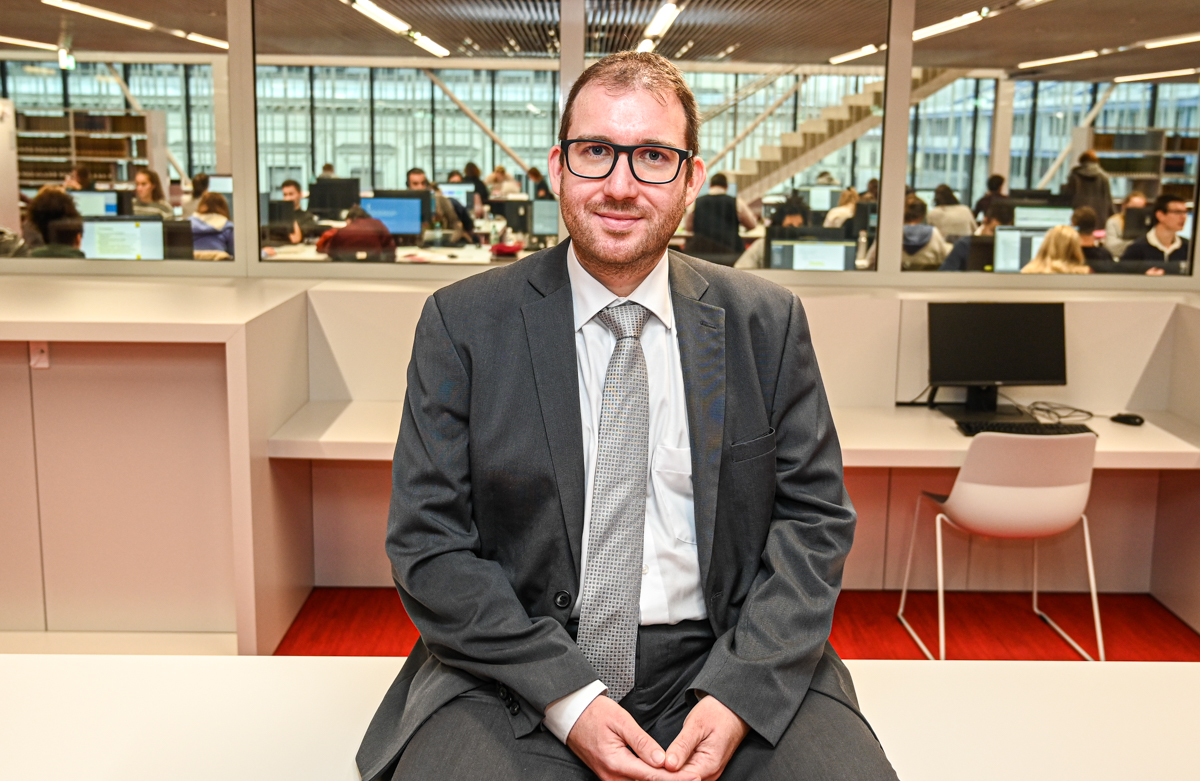
Stefan Dreisiebner vom Institut für Informationswissenschaft und Wirtschaftsinformatik war maßgeblich an der Entwicklung dieses Online-Kurses beteiligt. Foto: Uni Graz/Tzivanopoulos
created by Konstantin Tzivanopoulos

Related news

Higher Education Strategy 2040: Austria’s universities on course for the future

Austria has 77 higher education institutions, which is above the EU average – but does this really make sense? The new Higher Education Strategy 2040 focuses on cooperation rather than mergers. As one of the six largest universities in Austria, the University of Graz plays a central role in this.

Climate research in Greenland: Old data provides new insights

The polar explorer and University of Graz professor Alfred Wegener left behind a unique collection of climate data from Greenland. A research team from the University of Graz is now analysing this 100-year-old treasure trove of data and comparing it with current measurements.

Diversity in nature and science: How we talk about plants and each other

Ginkgo, kiwi, hemp: they exist as male and female plants. Anyone who paid attention in biology class will confirm this. But is this categorisation, established by Carl von Linné almost 300 years ago, still valid today? An interdisciplinary team at the University of Graz is questioning these attributions and using this as a starting point to provide food for thought for gender-sensitive interaction between students, scientific and teaching staff.

Around the world in eight stops: the Long Night of Research at the University of Graz

On 24 April from 5 pm, you can take a short trip around the globe at the University of Graz, discovering pecularities of foreign countries or new local features in the entrance hall of the University Library. The itinerary takes you through introduced animal species, political attitudes and the omnipotence of algorithms. There will also be a programme in the historic reading hall, as well as at the UniGraz@Museum and the University Archive.

Begin of page section:
Additional information:

University of Graz
Universitaetsplatz 3
8010 Graz
Austria
  • Contact
  • Web Editors
  • Moodle
  • UNIGRAZonline
  • Imprint
  • Data Protection Declaration
  • Accessibility Declaration
Weatherstation
Uni Graz

End of this page section. Go to overview of page sections

End of this page section. Go to overview of page sections

Begin of page section:

End of this page section. Go to overview of page sections