Begin of page section:
Page sections:

  • Go to contents (Accesskey 1)
  • Go to position marker (Accesskey 2)
  • Go to main navigation (Accesskey 3)
  • Go to sub navigation (Accesskey 4)
  • Go to additional information (Accesskey 5)
  • Go to page settings (user/language) (Accesskey 8)
  • Go to search (Accesskey 9)

End of this page section. Go to overview of page sections

Begin of page section:
Page settings:

English en
Deutsch de
Search
Login

End of this page section. Go to overview of page sections

Begin of page section:
Search:

Search for details about Uni Graz
Close

End of this page section. Go to overview of page sections


Search

Begin of page section:
Main navigation:

Page navigation:

  • University

    University
    • About the University
    • Organisation
    • Faculties
    • Library
    • Working at University of Graz
    • Campus
    Developing solutions for the world of tomorrow - that is our mission. Our students and our researchers take on the great challenges of society and carry the knowledge out.
  • Research Profile

    Research Profile
    • Our Expertise
    • Research Questions
    • Research Portal
    • Promoting Research
    • Research Transfer
    • Ethics in Research
    • Commission for Scientific Integrity
    Scientific excellence and the courage to break new ground. Research at the University of Graz creates the foundations for making the future worth living.
  • Studies

    Studies
    • Prospective Students
    • Students
    • Welcome Weeks for First Year Students
  • Community

    Community
    • International
    • Location
    • Research and Business
    • Alumni
    The University of Graz is a hub for international research and brings together scientists and business experts. Moreover, it fosters the exchange and cooperation in study and teaching.
Topics
  • Sustainable University
  • Researchers answer
  • Work for us
Close menu

End of this page section. Go to overview of page sections

Begin of page section:
You are here:

University of Graz News Expanding awareness: Why we should change our idea of multilingualism

End of this page section. Go to overview of page sections

Friday, 13 September 2024

Expanding awareness: Why we should change our idea of multilingualism

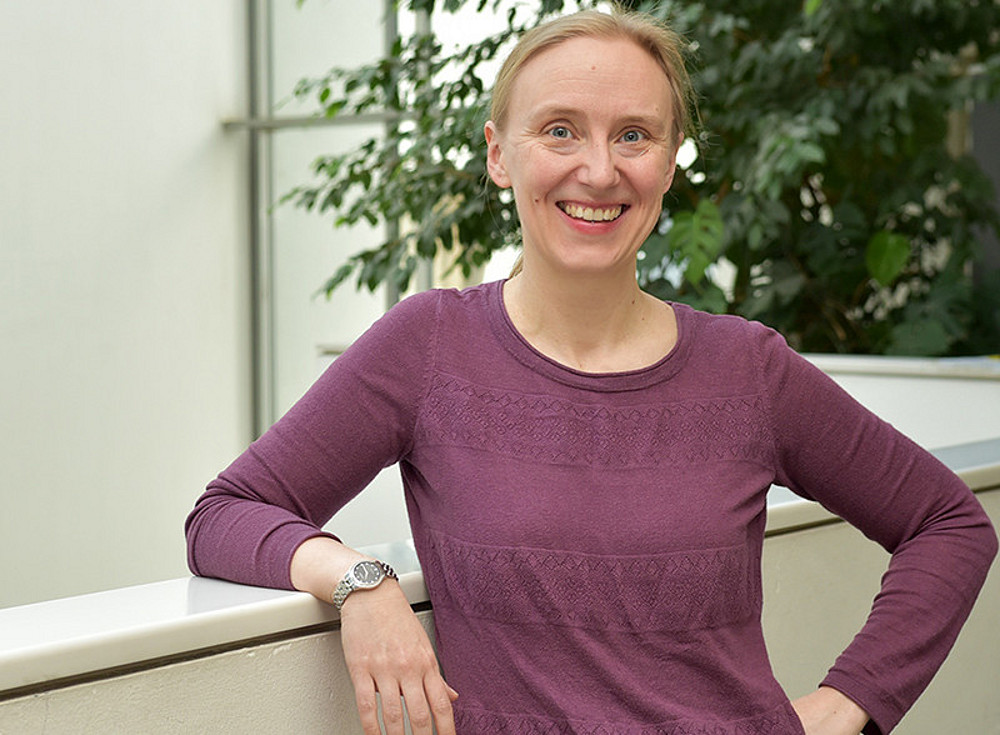
Linguist Anouschka Foltz at the Department of English Studies

Anouschka Foltz is in favour of promoting different native languages, including sign language. Photo: University of Graz/Leljak

In 2005, Austrian Sign Language was recognised as a language in its own right. From the school year 26/27, it is also to be included in the curricula of grammar schools. It is high time, because children and young people who do not have a perfect command of spoken German are classified as problem cases. Anouschka Foltz from the Department of English Studies at the University of Graz explains why this is the case and how things could be done differently. She is a researcher in the focus area of multilingualism, migration and cultural transformation and co-investigator in research project "Deaf Health and Well-Being Wales" at the Bangor University in Wales, which is funded by the British Government.

Deaf children are at an educational disadvantage almost everywhere in Europe. If they do not learn sign language as their native language from an early age, they may lack the basis for another language - that of the hearing people around them. Those affected sometimes acquire this language with difficulty and therefore often have problems understanding written texts. Many of them only come into contact with sign language in their late teens or early adulthood.
In Wales, where I worked for four years and also made contact with other researchers, the situation is particularly difficult. No sign language interpreters are trained there - and the dialectal differences in British Sign Language (BSL) are so great that Deaf peple from different regions in Great Britain might not understand each other. Since the public sector invests a lot of money in promoting the Welsh language, there are hardly any resources left for BSL. Deaf people theoretically have the right to communicate in BSL, with the help of interpreters if necessary. However, BSL is only considered an aid, not a language. Many people believe that communication can work without help. The lack of awareness of language barriers is a particularly big problem in the medical field. Even making appointments with doctors is usually only possible by telephone.
In our research project, we want to improve the legal situation of deaf people and provide them with helpful resources - such as video translations of essential information that can be accessed via QR codes. We are also working on a dictionary of medical terms in the different Welsh variants of British Sign Language.

Sign language is - with a few exceptions - barely visible throughout Europe, there is a lack of awareness of the needs of Deaf people. In Styria, the situation is a little better than in Wales because we at least offer training in Austrian Sign Language (ÖGS) at the university. However, it would be perfect if there were bilingual kindergartens and schools where hearing and deaf people could learn ÖGS together. Bilingual teaching exists for English, but not for other languages. In general, the topic of domestic multilingualism is usually viewed very negatively. The attitude is that everyone has to speak German at a high level, and then perhaps another one or two foreign languages at a high level too. However, this in no way takes into account the existing diversity. A whole range of students' native language are not taught at schools. There is little appreciation and patience when children learn several languages at the same time and therefore acquire German not as fast as others. Few take into account the huge advantage that they master two or three languages fluently as adults. Too little consideration is given to this, too much attention is paid to the deficits.
In the case of sign language, we have to reach out to the deaf community and also learn their language, otherwise integration won't work. It would be great for everyone involved if this were to happen at bilingual schools. Much more could be done to make teaching multilingual, whether it's sign language, Turkish, Arabic or Serbian.

created by Dagmar Eklaude

Related news

Austria’s emissions rose in 2025: University of Graz researchers analyse the causes

The Environment Agency Austria has today published the figures for the country’s greenhouse gas emissions in 2025. While emissions fell sharply year on year from 2022 to 2024, they rose again by just under 0.7 per cent in 2025. Researchers at the University of Graz have analysed how much of this increase was due to structural changes in the economy and how much was attributable to external factors over which there is little control. “In 2025, the colder winter compared with 2024 increased emissions by 0.81 per cent, while the weak economy reduced them by 0.38 per cent. If we factor out these influences, we find an underlying increase of 0.26 per cent compared with the previous year,” reports economist Karl Steininger. “This clearly means that Austria is not on track to meet its climate targets, which require a substantial reduction in emissions by 2030.”

Electrifying: Researchers film the first moments on the way from light to electricity

Physicists at the University of Graz (Austria), in collaboration with colleagues from Marburg University and Forschungszentrum Jülich (Germany), have achieved a scientific breakthrough. For the first time, the generation of electrical energy from light has been filmed and described theoretically. This work is of far-reaching significance, not least for optimising sustainable energy production from photovoltaics. This is because it provides fundamental building blocks for understanding the physical processes that take place, for example, in organic solar cells. The paper was published in the journal Physical Review X, one of the world’s most prestigious physics journals.

University of Graz: Working together to make Styria a sustainable centre of learning

Round table calls for sustainable funding for the 2028–2030 performance agreement period between the five Styrian universities and the federal government.

How can we teach using YouTube and AI? The University of Graz is strengthening media education in schools

A journey through the blood vessels using VR headsets brings biology lessons to life. An interactive quiz brings physics to life. The YouTube video explains the First World War. Whilst mobile phones are increasingly being banned from the classroom, social media platforms, apps and AI are playing an ever-greater role in knowledge transfer at school. But how can teaching with media be made even more effective? What are the challenges in media-based teaching? At the University of Graz, researchers are discussing these issues at a conference being held in Austria for the first time.

Begin of page section:
Additional information:

University of Graz
Universitaetsplatz 3
8010 Graz
Austria
  • Contact
  • Web Editors
  • Moodle
  • UNIGRAZonline
  • Imprint
  • Data Protection Declaration
  • Accessibility Declaration
Weatherstation
Uni Graz

End of this page section. Go to overview of page sections

End of this page section. Go to overview of page sections

Begin of page section:

End of this page section. Go to overview of page sections