Begin of page section:
Page sections:

  • Go to contents (Accesskey 1)
  • Go to position marker (Accesskey 2)
  • Go to main navigation (Accesskey 3)
  • Go to sub navigation (Accesskey 4)
  • Go to additional information (Accesskey 5)
  • Go to page settings (user/language) (Accesskey 8)
  • Go to search (Accesskey 9)

End of this page section. Go to overview of page sections

Begin of page section:
Page settings:

English en
Deutsch de
Search
Login

End of this page section. Go to overview of page sections

Begin of page section:
Search:

Search for details about Uni Graz
Close

End of this page section. Go to overview of page sections


Search

Begin of page section:
Main navigation:

Page navigation:

  • University

    University
    • About the University
    • Organisation
    • Faculties
    • Library
    • Working at University of Graz
    • Campus
    Developing solutions for the world of tomorrow - that is our mission. Our students and our researchers take on the great challenges of society and carry the knowledge out.
  • Research Profile

    Research Profile
    • Our Expertise
    • Research Questions
    • Research Portal
    • Promoting Research
    • Research Transfer
    • Ethics in Research
    • Commission for Scientific Integrity
    Scientific excellence and the courage to break new ground. Research at the University of Graz creates the foundations for making the future worth living.
  • Studies

    Studies
    • Prospective Students
    • Students
  • Community

    Community
    • International
    • Location
    • Research and Business
    • Alumni
    The University of Graz is a hub for international research and brings together scientists and business experts. Moreover, it fosters the exchange and cooperation in study and teaching.
  • Spotlight
Topics
  • Sustainable University
  • Researchers answer
  • Work for us
Close menu

End of this page section. Go to overview of page sections

Begin of page section:
You are here:

University of Graz News Auf Distanz: Warum Abstand auch ganz nah sein kann, untersuchte Soziologin Antonia Schirgi

End of this page section. Go to overview of page sections

Wednesday, 31 May 2023

Auf Distanz: Warum Abstand auch ganz nah sein kann, untersuchte Soziologin Antonia Schirgi

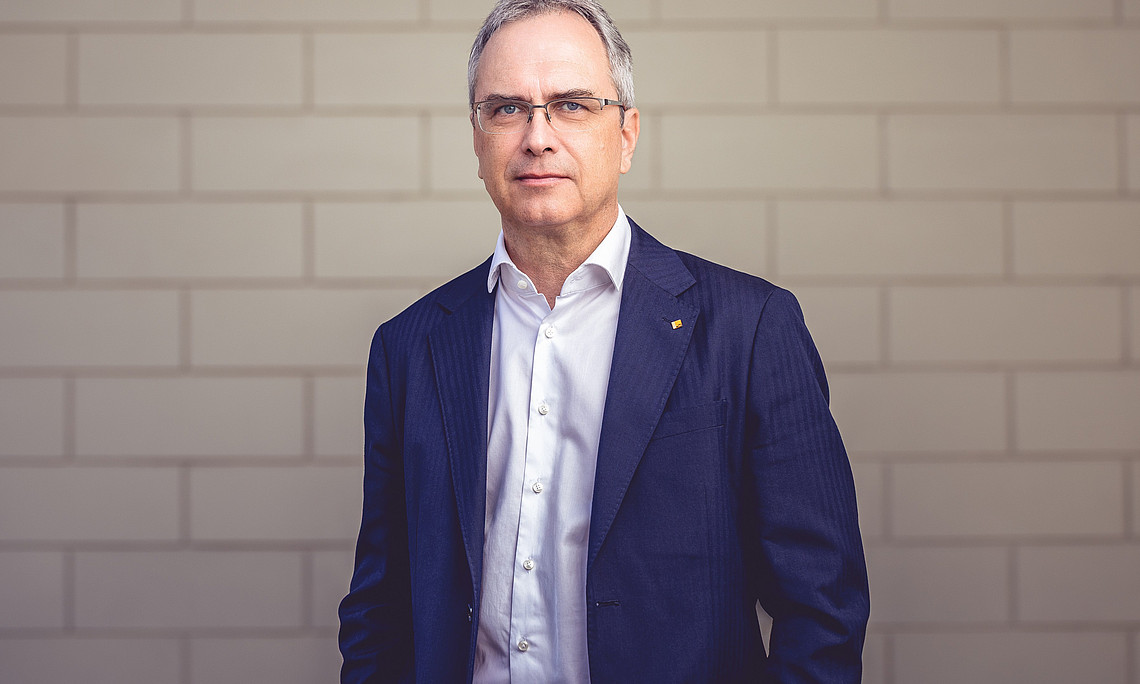
Antonia Schirgi

Antonia Schirgi beschäftigte sich in ihrer Doktorarbeit an der Uni Graz mit Interaktionen in Distanz. Foto: Uni Graz/Schweiger

Händeschütteln war ein No-Go. Freunde durften wir nicht treffen. Arbeit und Schule absolvierten wir daheim. Abstand bestimmte fast drei Jahre lang unser Leben. Distanz ist längst kein neues Phänomen zwischenmenschlicher Beziehungen. „Schon das Schreiben von Briefen war eine Begegnung mit dem Fernen“, erinnert Soziologin Antonia Schirgi. Die Nachwuchswissenschaftlerin beschäftigte sich in ihrer Doktorarbeit an der Uni Graz mit Interaktionen in Distanz.

Von Corona war noch weit und breit nichts zu sehen, als Antonia Schirgi mit ihrer Dissertation – betreut von Stephan Moebius und Sonja Rinofner-Kreidl – begann. Heute ist das Thema aktueller denn je. Wir wissen, dass eine Videokonferenz ein guter Ersatz sein kann, aber auch Mängel verursacht, weil das Gegenüber nur über den Bildschirm (audiovisuell) wahrgenommen wird. Dabei ist nicht nur die räumliche Entfernung entscheidend.

„Selbst bei Face-to-Face-Begegnungen werden selten alle Sinne beansprucht“, zeigt die Soziologin auf. „Wir verwenden etwa den Geschmacksinn nicht, sprechen in diesem Fall kaum von Distanz.“ Doch wo beginnt sie. Eine Frage, die Antonia Schirgi mithilfe der Philosophie von Maurice Merleau-Ponty (1961 verstorben) zu beantworten suchte. Dessen philosophisch-theoretischen Ansatz fasst die Wissenschaftlerin so zusammen: „Nur wenn die Möglichkeit besteht, alle Sinne einzusetzen sowie der:dem anderen gegenüber angreif- und verletzbar zu sein, dann bin ich ihr:ihm wirklich nahe.“, hält die Forscherin fest, die zugleich Vorstandsmitglied der Österreichischen Gesellschaft für Soziologie ist.

Ihre Schlussfolgerung: Jedes Hindernis einer multisensorischen Wahrnehmung, der Angreifbarkeit und Verletzbarkeit stellt einen Moment der Distanz dar, auch wenn uns die:der Andere räumlich nahe ist. Obwohl wir es mittlerweile aufgrund der Technologie gewohnt sind, in unseren Begegnungen mit weniger Sinnen auszukommen, bleibt das Empfinden, so Antonia Schirgi, dennoch fragil.

created by Andreas Schweiger

Related news

Around the world in eight stops: the Long Night of Research at the University of Graz

On 24 April from 5 pm, you can take a short trip around the globe at the University of Graz, discovering pecularities of foreign countries or new local features in the entrance hall of the University Library. The itinerary takes you through introduced animal species, political attitudes and the omnipotence of algorithms. There will also be a programme in the historic reading hall, as well as at the UniGraz@Museum and the University Archive.

Studying at the University of Graz: How to enrol

Ready for a new chapter in your life with the start of your studies at the University of Graz in the winter semester 2026/27? Here you will find information on deadlines, admission procedures, registration, and everything else you need to successfully start your studies in the fall.

Interpreting data: Why studies sometimes get it wrong

Hilmar Brohmer and Ziva Korda from the Institute of Psychology, together with 500 international colleagues, have re-evaluated a hundred scientific publications and have often come to different conclusions.

Crystal-clear: AI method revolutionises solar observation

The Sun makes life on Earth possible. However, its magnetic fields can also cause massive disruption. This makes it all the more important to gain a better understanding of the processes taking place on our nearest star. A research team from the University of Graz and the High Altitude Observatory in Boulder (USA) has succeeded in doing just that. The astrophysicists have developed an AI-supported method that makes even the smallest structures on the Sun visible. The scientists are convinced that this will bring about a lasting change in solar observation and that the new method can be used for the planned European Solar Telescope.

Begin of page section:
Additional information:

University of Graz
Universitaetsplatz 3
8010 Graz
Austria
  • Contact
  • Web Editors
  • Moodle
  • UNIGRAZonline
  • Imprint
  • Data Protection Declaration
  • Accessibility Declaration
Weatherstation
Uni Graz

End of this page section. Go to overview of page sections

End of this page section. Go to overview of page sections

Begin of page section:

End of this page section. Go to overview of page sections