Begin of page section:
Page sections:

  • Go to contents (Accesskey 1)
  • Go to position marker (Accesskey 2)
  • Go to main navigation (Accesskey 3)
  • Go to sub navigation (Accesskey 4)
  • Go to additional information (Accesskey 5)
  • Go to page settings (user/language) (Accesskey 8)
  • Go to search (Accesskey 9)

End of this page section. Go to overview of page sections

Begin of page section:
Page settings:

English en
Deutsch de
Search
Login

End of this page section. Go to overview of page sections

Begin of page section:
Search:

Search for details about Uni Graz
Close

End of this page section. Go to overview of page sections


Search

Begin of page section:
Main navigation:

Page navigation:

  • University

    University
    • About the University
    • Organisation
    • Faculties
    • Library
    • Working at University of Graz
    • Campus
    Developing solutions for the world of tomorrow - that is our mission. Our students and our researchers take on the great challenges of society and carry the knowledge out.
  • Research Profile

    Research Profile
    • Our Expertise
    • Research Questions
    • Research Portal
    • Promoting Research
    • Research Transfer
    • Ethics in Research
    • Commission for Scientific Integrity
    Scientific excellence and the courage to break new ground. Research at the University of Graz creates the foundations for making the future worth living.
  • Studies

    Studies
    • Prospective Students
    • Students
    • Registration for Study Programme (Winter semester 2026/27)
    • Welcome Weeks for First Year Students
  • Community

    Community
    • International
    • Location
    • Research and Business
    • Alumni
    The University of Graz is a hub for international research and brings together scientists and business experts. Moreover, it fosters the exchange and cooperation in study and teaching.
Topics
  • Sustainable University
  • Researchers answer
  • Work for us
Close menu

End of this page section. Go to overview of page sections

Begin of page section:
You are here:

University of Graz News A toast to the job: why company parties can boost team spirit

End of this page section. Go to overview of page sections

Monday, 19 May 2025

A toast to the job: why company parties can boost team spirit

Four young people raising their cups at the Uni vibes festival ©Uni Graz / Kanizaj
©Uni Graz / Kanizaj

Toasting to achievements strengthens motivation and team spirit with colleagues. Uni Vibes on Friday offers another opportunity to do so. Photo: Uni Graz/Kanizaj

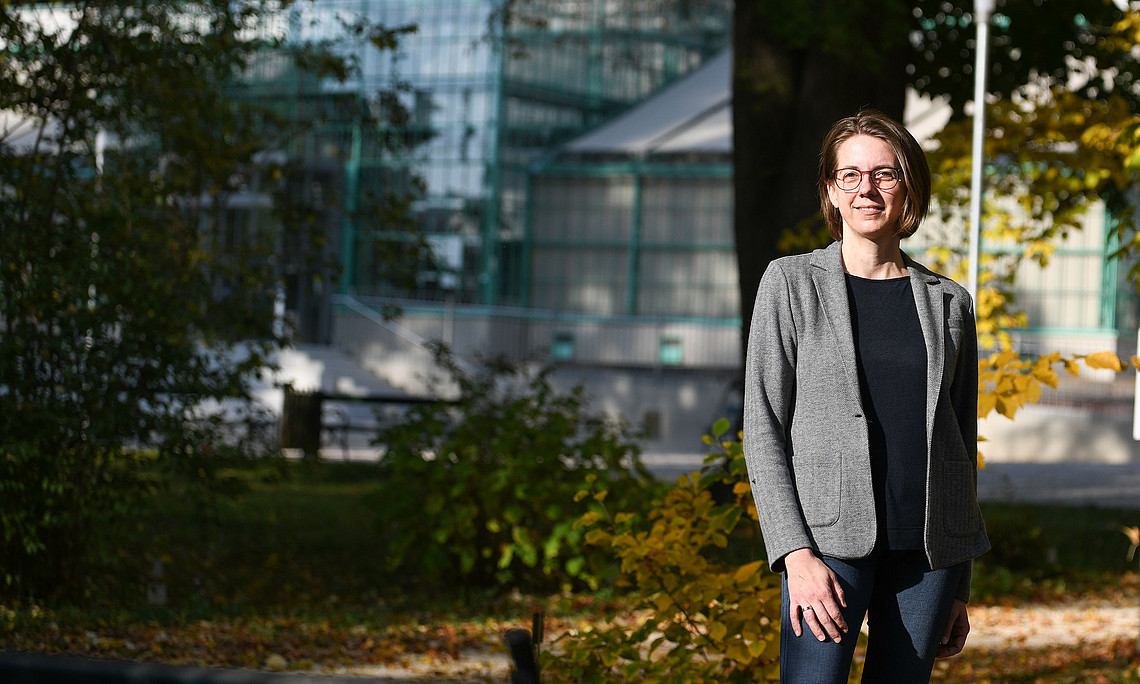
Celebrating together promotes cohesion, increases motivation and identification with the company. At least if the party guests enjoy spending time with their colleagues. Psychologist Sabine Bergner knows how else to convey a corporate culture and strengthen team spirit.

Uni Vibes, the big festival at the University of Graz, takes place on Friday. Fun and good entertainment should be pre-programmed. "The university presents itself as cosmopolitan, diverse and inclusive. These values are implicitly communicated to everyone present," explains psychologist Sabine Bergner. A good opportunity to convey a positive organisational culture. Not only the external image of the institution, but also the students and employees benefit from the party programme: "Celebrating triggers pleasant feelings in us, we experience joy and identify more strongly with our colleagues," says Bergner. This in turn builds trust and increases the willingness to commit to the company.
Having fun together therefore promotes motivation at work and consequently also health. "It's a great emotional resource that alleviates stress," explains the psychologist. However, this only applies to people who enjoy socialising with their team in their free time. "If someone is less sociable or wants to keep work and private life strictly separate, a company party increases the pressure," the researcher qualifies. "Then it backfires."

Marvellous Misktakes
However, there are lower-threshold ways to promote cohesion and commitment for people who are withdrawn or the dull daily routine: an open error culture and celebrating the work done rather than the results achieved. "Especially in science, there are often more setbacks than successes. Toasting failure helps to keep motivation and appreciation high within the team," explains Bergner. That's why she and Johanna Stadlbauer from the Research Careers Campus launched the Fiasco Festival a few years ago, which has since spread far and wide. "Last year, we organised it together with our partner institutions in the ARQUS network, and this year we have already received numerous enquiries from international universities," reports the researcher.

As hackneyed as the phrase may sound, you can actually learn from mistakes - and draw new energy. "They increase creativity because we have to look for new solutions," adds Bergner. And invite you to the next party.
created by Dagmar Eklaude

Related news

The Arctic up close: ORF special feature on the University of Graz’s research station in S

Students from the University of Graz are spending two weeks conducting research at the Univerisity of Graz research station at the Sermilik Fjord in Greenland, which has been operational for three years. They are measuring glacial runoff, tracking ice melt in real time and installing weather stations. ORF is following the expedition and will be reporting on the special feature ‘Arctic Adventure’ across its various channels from 20 July.

Chemical crash: Researchers at the University of Graz are investigating the reactions in detail for the first time

Matthew Timm and Leonhard Grill have, for the first time, succeeded in unravelling how fundamental chemical processes take place and how new molecules are formed. The findings of this study have just been published in the journal Science.

What is ‘Dr AI’ supposed to decide, Giovanni Rubeis?

Analysing X-rays, documenting diagnoses, searching through databases: artificial intelligence is already providing significant support with administrative and routine tasks in the healthcare sector. To what extent should it be involved in clinical matters – that is, in treatment recommendations or treatment decisions? How do we prevent built-in biases that could be detrimental to certain individuals?

Commissioned by NATO: University of Graz tests high-tech textiles

As part of an international project, antimicrobial and fire-resistant fabrics with UV protection are being developed in Zagreb. Pharmacists from the University of Graz are ensuring that these fabrics are skin-friendly.

Begin of page section:
Additional information:

University of Graz
Universitaetsplatz 3
8010 Graz
Austria
  • Contact
  • Web Editors
  • Moodle
  • UNIGRAZonline
  • Imprint
  • Data Protection Declaration
  • Accessibility Declaration
Weatherstation
Uni Graz

End of this page section. Go to overview of page sections

End of this page section. Go to overview of page sections

Begin of page section:

End of this page section. Go to overview of page sections