Begin of page section:
Page sections:

  • Go to contents (Accesskey 1)
  • Go to position marker (Accesskey 2)
  • Go to main navigation (Accesskey 3)
  • Go to sub navigation (Accesskey 4)
  • Go to additional information (Accesskey 5)
  • Go to page settings (user/language) (Accesskey 8)
  • Go to search (Accesskey 9)

End of this page section. Go to overview of page sections

Begin of page section:
Page settings:

English en
Deutsch de
Search
Login

End of this page section. Go to overview of page sections

Begin of page section:
Search:

Search for details about Uni Graz
Close

End of this page section. Go to overview of page sections


Search

Begin of page section:
Main navigation:

Page navigation:

  • University

    University
    • About the University
    • Organisation
    • Faculties
    • Library
    • Working at University of Graz
    • Campus
    Developing solutions for the world of tomorrow - that is our mission. Our students and our researchers take on the great challenges of society and carry the knowledge out.
  • Research Profile

    Research Profile
    • Our Expertise
    • Research Questions
    • Research Portal
    • Promoting Research
    • Research Transfer
    • Ethics in Research
    Scientific excellence and the courage to break new ground. Research at the University of Graz creates the foundations for making the future worth living.
  • Studies

    Studies
    • Prospective Students
    • Students
  • Community

    Community
    • International
    • Location
    • Research and Business
    • Alumni
    The University of Graz is a hub for international research and brings together scientists and business experts. Moreover, it fosters the exchange and cooperation in study and teaching.
  • Spotlight
Topics
  • Our digital Advent calendar
  • Sustainable University
  • Researchers answer
  • Work for us
Close menu

End of this page section. Go to overview of page sections

Begin of page section:
You are here:

University of Graz News Zwischentöne

End of this page section. Go to overview of page sections

Wednesday, 24 August 2022

Zwischentöne

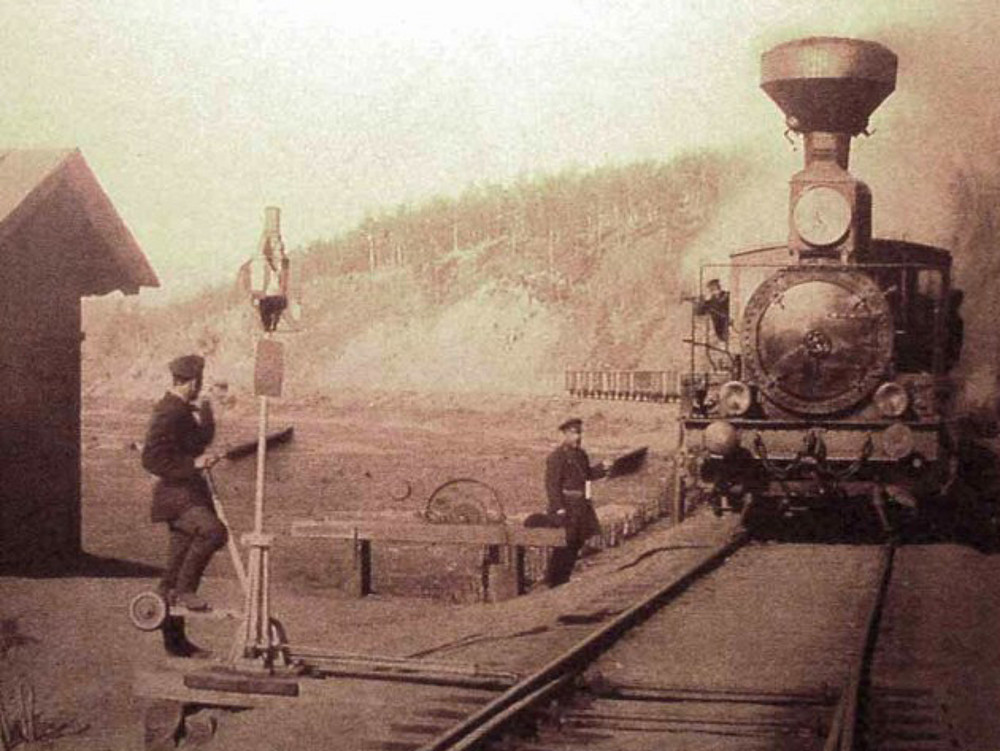
Seit der Zeit der Zaren fungierten Züge als imperiale Werkzeuge - auch in der späteren Sowjetunion. Das Trillern einer Pfeife oder die schnaufende Lokomotive suggerieren deshalb in der Belletristik oft latente Bedrohung, wie auch in Tschingis Aitmatows Roman „Ein Tag länger als ein Leben“. Hier eine Szene aus dem Jahr 1903 am Bahnhof von Chilok (Transbaikalien). Foto: https://commons.wikimedia.org/ CC by 4.0.

Seit der Zeit der Zaren fungierten Züge als imperiale Werkzeuge - auch in der späteren Sowjetunion. Das Trillern einer Pfeife oder die schnaufende Lokomotive suggerieren deshalb in der Belletristik oft latente Bedrohung, wie auch in Tschingis Aitmatows Roman „Ein Tag länger als ein Leben“. Hier eine Szene aus dem Jahr 1903 am Bahnhof von Chilok (Transbaikalien). Foto: https://commons.wikimedia.org/ CC by 4.0.

Zuggeräusche als Symbol eines imperialen Systems: Nur ein Beispiel, wie Gewalt in der Literatur hörbar wird

Wie können wir Gewalt in Büchern "hören"? In Beschreibungen, Lautmalereien oder in Dialogen – das ist klar. Doch auch zwischen den Zeilen ist sie spürbar. Sei es als direkte, körperliche Kraft, als strukturelle Form der Unterdrückung oder als bewusste Entziehung von Anerkennung oder Wertschätzung. Vermittelt werden diese verschiedenen Gesichter der Gewalt in Werken der Literatur oft auf viel subtilere Weise als es auf den ersten Blick scheint.

Wie verschiedene AutorInnen den Wechsel zwischen Hörbarem ins Schriftliche bewerkstelligen und wofür die dargestellte Gewalt in ausgewählten Werken exemplarisch steht, das hat sich Dimitri Smirnov in seiner Dissertation angesehen. Zeitlich und räumlich verortet der Kulturwissenschafter seine Analyse im Postkolonialismus – konkret an Schauplätzen in Südafrika, Haiti, der Karibik und damit einhergehend England, sowie dem heutigen Kasachstan.

Für seine Arbeit zeichnete ihn die Geisteswissenschaftliche Fakultät der Uni Graz mit dem GEWI-Preis für die beste Dissertation 2022 aus (ex aequo mit Susanne Christ). In einer neuen Ausgabe des Wissenschaftspodcasts „HörSaal: 15 Minuten Forschung“ spricht Smirnov über gehörte/hörbare Gewalt in den folgenden Romanen: „Voyage in the Dark“ von Jean Rhys, „Waiting for the Barbarians“ von J.M. Coetzee, „Ein Tag länger als ein Leben“ von Tschingis Aitmatow und „Les Affres d'un Défi“ von Frankétienne.

Zur Folge auf:

Spotify
Apple Podcasts
Anchor.fm
UniTube

created by Gerhild Leljak

Related news

Semester abroad without barriers: University of Graz wins award for promoting inclusion

The University of Graz has been awarded the Internationalization Award for its new inclusion initiative. Students with fewer opportunities now also receive financial support for their semester abroad outside Europe.

Fair distribution: Researchers determine just greenhouse gas budgets for all EU regions

Ten years ago, on 12 December 2015, the Paris Climate Agreement was signed at the UN Climate Conference. In order to limit global warming to well below two degrees, only a certain amount of CO2 may be emitted worldwide. While the focus was originally on national emission targets, more than 200 subnational regions and almost 300 cities have now adopted their own targets. But how many emissions are they fairly entitled to? Researchers at the University of Graz have now developed transparent criteria for fair distribution at the subnational level for the first time and determined corresponding greenhouse gas budgets for all European regions. The paper was published today in the scientific journal Nature Communications.

Chemical Christmas show at the University of Graz: An explosive evening at the Schauspielh

At the beginning of December, the University of Graz transformed the theater into a laboratory: as part of “Chemical Life,” teacher training students staged a chemical Christmas show for Styrian school classes—complete with ethanol rockets, nitrogen snow, and glowing effects. An evening designed to inspire interest in studying chemistry.

Train by train: Koralm railway accelerates exchange between the Universities

Lectures at the University of Klagenfurt in the morning, seminars at the University of Graz in the afternoon: Austria's longest tunnel and a journey time of around 45 minutes make it easy. The Koralm railway increases the speed of networking between the two university locations. The collaboration builds on existing cooperation - for example in the areas of teacher training, Slavic studies and as employers, the universities are well coordinated.

Begin of page section:
Additional information:

University of Graz
Universitaetsplatz 3
8010 Graz
Austria
  • Contact
  • Web Editors
  • Moodle
  • UNIGRAZonline
  • Imprint
  • Data Protection Declaration
  • Accessibility Declaration
Weatherstation
Uni Graz

End of this page section. Go to overview of page sections

End of this page section. Go to overview of page sections

Begin of page section:

End of this page section. Go to overview of page sections