Begin of page section:
Page sections:

  • Go to contents (Accesskey 1)
  • Go to position marker (Accesskey 2)
  • Go to main navigation (Accesskey 3)
  • Go to sub navigation (Accesskey 4)
  • Go to additional information (Accesskey 5)
  • Go to page settings (user/language) (Accesskey 8)
  • Go to search (Accesskey 9)

End of this page section. Go to overview of page sections

Begin of page section:
Page settings:

English en
Deutsch de
Search
Login

End of this page section. Go to overview of page sections

Begin of page section:
Search:

Search for details about Uni Graz
Close

End of this page section. Go to overview of page sections


Search

Begin of page section:
Main navigation:

Page navigation:

  • University

    University
    • About the University
    • Organisation
    • Faculties
    • Library
    • Working at University of Graz
    • Campus
    Developing solutions for the world of tomorrow - that is our mission. Our students and our researchers take on the great challenges of society and carry the knowledge out.
  • Research Profile

    Research Profile
    • Our Expertise
    • Research Questions
    • Research Portal
    • Promoting Research
    • Research Transfer
    • Ethics in Research
    Scientific excellence and the courage to break new ground. Research at the University of Graz creates the foundations for making the future worth living.
  • Studies

    Studies
    • Prospective Students
    • Students
  • Community

    Community
    • International
    • Location
    • Research and Business
    • Alumni
    The University of Graz is a hub for international research and brings together scientists and business experts. Moreover, it fosters the exchange and cooperation in study and teaching.
  • Spotlight
Topics
  • Sustainable University
  • Researchers answer
  • Work for us
Close menu

End of this page section. Go to overview of page sections

Begin of page section:
You are here:

University of Graz News Wortgewitter

End of this page section. Go to overview of page sections

Monday, 12 September 2022

Wortgewitter
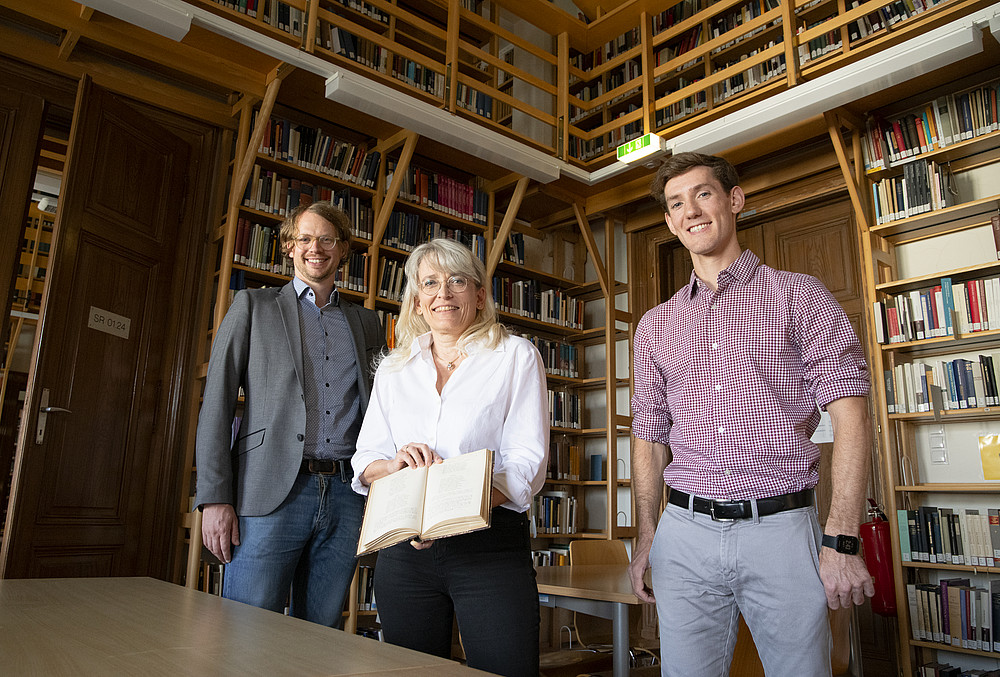
Sind den Dichtern der Antike auf der Spur: Markus Hafner, Ursula Gärtner und Christopher Londa. Foto: Uni Graz/Tzivanopoulos ©Uni Graz/Tzivanopoulos

Sind den Dichtern der Antike auf der Spur: Markus Hafner, Ursula Gärtner und Christopher Londa. Foto: Uni Graz/Tzivanopoulos

Der Shitstorm ist kein Phänomen der modernen Welt. Schon antike Autoren lieferten sich Wortgefechte unterhalb der Gürtellinie

Der Schriftsteller Joseph Roth schrieb über Stephan George, es sei „nicht die Zeit, Respekt vor einem Kerl zu bezeugen, der uns einen großen Teil der Scheiße eingebrockt hat, erhabene Scheiße meinetwegen“. Und der deutsche Dichter Friedrich Gundolf nannte den österreichischen Literaten Karl Kraus einen „ausgezeichneten Latrinenreiniger“. Solche Wortgefechte wurden nicht nur zwischen den Autoren der Neuzeit ausgetragen. So setzten sich bereits griechische wie lateinische Poeten auf wüste, jedoch meist sehr kunstvolle Weise mit konkurrierenden Dichtern und deren Dichtung auseinander. Einem modernen Shitstorm gleich, konnten sie auf diesem Weg ihren gegenseitigen Unmut kundtun.

Im Zeitalter von Social Media sind die Menschen mit Stürmen der Beschimpfung und massenhaften Twitter-Gewittern vertraut, die regelmäßig über bestimmte Personen herziehen. Solche Verachtung für Schriftsteller, die gar zu einem veritablen Dichtungs-Shitstorm anwachsen kann, bieten nicht nur moderne Medien, sondern bereits die antike Literatur. „Catull etwa verunglimpft im ersten Jahrhundert vor Christus das Gedicht eines gewissen Volusius als cacata carta – als „beschissene Schrift“, weiß die Philologin Ursula Gärtner vom Institut für Antike. Gemeinsam mit ihren Kollegen Markus Hafner und Christopher Londa erforscht Gärtner die Schriften antiker Dichter. „Passenderweise ist uns außer dieser schwerwiegenden Kritik von Volusius selbst nichts erhalten. Ohne Catulls Beschimpfung wäre nicht einmal der Name bekannt“, führt Hafner aus. „Das Beispiel zeigt sehr gut, wie dichterische Schmähung nicht nur verurteilen, sondern durch eine für würdig empfundene Nennung sogar poetisch verewigen kann.“ So konnte die Schmähung bei aller Aggression auch einen kunstvollen Charakter haben. Graffiti mit Schmähungen sind ebenfalls keine rein moderne Erfindung. Immer wieder tauchen bei Grabungen und Freilegungen antiker Stätten – zum Beispiel in Pompeji – Kommentare neben Bildern oder Texten, die an Wände geschrieben waren, auf.

Das Netz vergisst nicht
Verglichen mit antiken Texten, die nur fragmentarisch oder gar nicht erhalten sind, vergessen digitale Systeme einen Shitstorm nicht so leicht. Ist ein Tweet einmal abgesetzt, verbreitet er sich binnen Sekunden durch das Internet und ist nicht aufzuhalten. „Das Internet als Wissensspeicher hat ein großes, nie enden wollendes Gedächtnis“, erklärt Hafner. „Die Reichweite antiker Texte und von Schmähungen ist natürlich begrenzter. Dennoch konnten schriftliche Texte sie weiter überliefern.“

Im Rahmen der Fachtagung „Cacata Carta – Poetic Shitstorms in Ancient Texts“ werden vom 15. bis zum 17. September unterschiedliche Perspektiven auf das Thema Hassrede gerichtet. Dazu hat das Team 18 internationale Fachleute aus verschiedenen Disziplinen zur Tagung nach Graz geladen. 

Mehr Informationen: 
https://events.uni-graz.at/de/detail/article/cacata-carta-1/

created by Konstantin Tzivanopoulos

Related news

Cosmetics in the environment: University of Graz proves danger to ants

Titanium dioxide, which is found in cosmetics, for example, is increasingly entering the environment in the form of nanoparticles. This could also put insects at risk. If ants ingest the substance in combination with the pesticide glyphosate, it disturbs the development of their offspring. Scientists at the University of Graz are drawing attention to the negative consequences of this toxic cocktail.

How are tech companies changing democracy? Uni Graz designs exhibition for schools

Filtered information, conspiracy theories, fake news – certain groups and corporations are using social media and algorithms to try to influence public opinion in their favour. Their goal: to weaken fundamental rights and diversity of opinion and seize power. In a new exhibition, researchers at the University of Graz are working with pupils to explore the impact of social media and AI on democracy. In accompanying workshops, the scientists want to encourage young people to develop their own ideas for a socially and ecologically viable future and to actively help shape it. The exhibition, designed as a travelling exhibition for schools, will open on 9 March 2026 at the Dreihackengasse Gymnasium in Graz.

Step by step: What motivates Mireille van Poppel as a scientist and vice-rector

Improving people's health and eliminating inequalities: Mireille van Poppel pursues these goals both as a public health researcher and as vice-rector for Internationalisation and Equality. In both roles, she pays particular attention to individual needs.

Master's degree in psychotherapy in Graz: registration opens in March

Graz is becoming a hotspot for psychotherapy: from 2026, the University of Graz and the Medical University of Graz will jointly offer the new master's programme. Registration for the admission procedure for the 140 study places will start in March.

Begin of page section:
Additional information:

University of Graz
Universitaetsplatz 3
8010 Graz
Austria
  • Contact
  • Web Editors
  • Moodle
  • UNIGRAZonline
  • Imprint
  • Data Protection Declaration
  • Accessibility Declaration
Weatherstation
Uni Graz

End of this page section. Go to overview of page sections

End of this page section. Go to overview of page sections

Begin of page section:

End of this page section. Go to overview of page sections