



Begin of page section:
Page sections:

  • Go to contents (Accesskey 1)
  • Go to position marker (Accesskey 2)
  • Go to main navigation (Accesskey 3)
  • Go to sub navigation (Accesskey 4)
  • Go to additional information (Accesskey 5)
  • Go to page settings (user/language) (Accesskey 8)
  • Go to search (Accesskey 9)

End of this page section. Go to overview of page sections

Begin of page section:
Page settings:

English en
Deutsch de
Search
Login

End of this page section. Go to overview of page sections

Begin of page section:
Search:

Search for details about Uni Graz
Close

End of this page section. Go to overview of page sections


Search

Begin of page section:
Main navigation:

Page navigation:

  • University

    University
    • About the University
    • Organisation
    • Faculties
    • Library
    • Working at University of Graz
    • Campus
    Developing solutions for the world of tomorrow - that is our mission. Our students and our researchers take on the great challenges of society and carry the knowledge out.
  • Research Profile

    Research Profile
    • Our Expertise
    • Research Questions
    • Research Portal
    • Promoting Research
    • Research Transfer
    • Ethics in Research
    • Commission for Scientific Integrity
    Scientific excellence and the courage to break new ground. Research at the University of Graz creates the foundations for making the future worth living.
  • Studies

    Studies
    • Prospective Students
    • Students
    • Registration for Study Programme (Winter semester 2026/27)
    • Study Days 22-26 June 2026
  • Community

    Community
    • International
    • Location
    • Research and Business
    • Alumni
    The University of Graz is a hub for international research and brings together scientists and business experts. Moreover, it fosters the exchange and cooperation in study and teaching.
Topics
  • Sustainable University
  • Researchers answer
  • Work for us
Close menu

End of this page section. Go to overview of page sections

Begin of page section:
You are here:

University of Graz News Wortgewitter

End of this page section. Go to overview of page sections

Monday, 12 September 2022

Wortgewitter

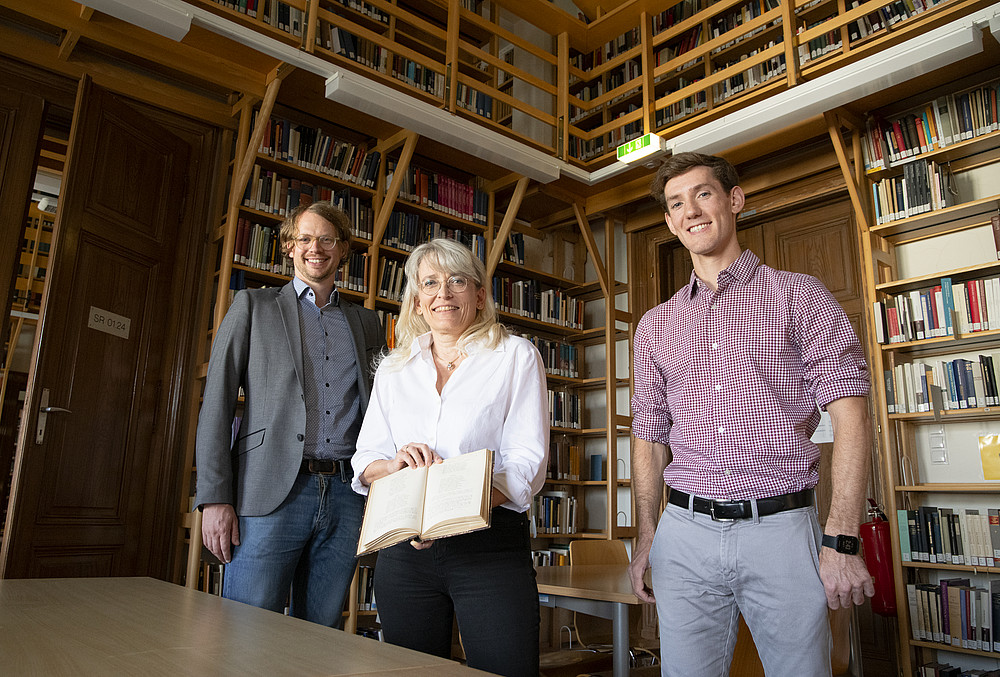
Sind den Dichtern der Antike auf der Spur: Markus Hafner, Ursula Gärtner und Christopher Londa. Foto: Uni Graz/Tzivanopoulos ©Uni Graz/Tzivanopoulos

Sind den Dichtern der Antike auf der Spur: Markus Hafner, Ursula Gärtner und Christopher Londa. Foto: Uni Graz/Tzivanopoulos
Der Shitstorm ist kein Phänomen der modernen Welt. Schon antike Autoren lieferten sich Wortgefechte unterhalb der Gürtellinie

Der Schriftsteller Joseph Roth schrieb über Stephan George, es sei „nicht die Zeit, Respekt vor einem Kerl zu bezeugen, der uns einen großen Teil der Scheiße eingebrockt hat, erhabene Scheiße meinetwegen“. Und der deutsche Dichter Friedrich Gundolf nannte den österreichischen Literaten Karl Kraus einen „ausgezeichneten Latrinenreiniger“. Solche Wortgefechte wurden nicht nur zwischen den Autoren der Neuzeit ausgetragen. So setzten sich bereits griechische wie lateinische Poeten auf wüste, jedoch meist sehr kunstvolle Weise mit konkurrierenden Dichtern und deren Dichtung auseinander. Einem modernen Shitstorm gleich, konnten sie auf diesem Weg ihren gegenseitigen Unmut kundtun.

Im Zeitalter von Social Media sind die Menschen mit Stürmen der Beschimpfung und massenhaften Twitter-Gewittern vertraut, die regelmäßig über bestimmte Personen herziehen. Solche Verachtung für Schriftsteller, die gar zu einem veritablen Dichtungs-Shitstorm anwachsen kann, bieten nicht nur moderne Medien, sondern bereits die antike Literatur. „Catull etwa verunglimpft im ersten Jahrhundert vor Christus das Gedicht eines gewissen Volusius als cacata carta – als „beschissene Schrift“, weiß die Philologin Ursula Gärtner vom Institut für Antike. Gemeinsam mit ihren Kollegen Markus Hafner und Christopher Londa erforscht Gärtner die Schriften antiker Dichter. „Passenderweise ist uns außer dieser schwerwiegenden Kritik von Volusius selbst nichts erhalten. Ohne Catulls Beschimpfung wäre nicht einmal der Name bekannt“, führt Hafner aus. „Das Beispiel zeigt sehr gut, wie dichterische Schmähung nicht nur verurteilen, sondern durch eine für würdig empfundene Nennung sogar poetisch verewigen kann.“ So konnte die Schmähung bei aller Aggression auch einen kunstvollen Charakter haben. Graffiti mit Schmähungen sind ebenfalls keine rein moderne Erfindung. Immer wieder tauchen bei Grabungen und Freilegungen antiker Stätten – zum Beispiel in Pompeji – Kommentare neben Bildern oder Texten, die an Wände geschrieben waren, auf.

Das Netz vergisst nicht
Verglichen mit antiken Texten, die nur fragmentarisch oder gar nicht erhalten sind, vergessen digitale Systeme einen Shitstorm nicht so leicht. Ist ein Tweet einmal abgesetzt, verbreitet er sich binnen Sekunden durch das Internet und ist nicht aufzuhalten. „Das Internet als Wissensspeicher hat ein großes, nie enden wollendes Gedächtnis“, erklärt Hafner. „Die Reichweite antiker Texte und von Schmähungen ist natürlich begrenzter. Dennoch konnten schriftliche Texte sie weiter überliefern.“

Im Rahmen der Fachtagung „Cacata Carta – Poetic Shitstorms in Ancient Texts“ werden vom 15. bis zum 17. September unterschiedliche Perspektiven auf das Thema Hassrede gerichtet. Dazu hat das Team 18 internationale Fachleute aus verschiedenen Disziplinen zur Tagung nach Graz geladen. 

Mehr Informationen: 
https://events.uni-graz.at/de/detail/article/cacata-carta-1/

created by Konstantin Tzivanopoulos

Related news

Full effort in the heat: the Sports Centre was in full swing at the Kleeblattlauf

On 19 June 2026, 2,000 runners and hundreds of supporters made their way to the Rosenhain for a sporting end-of-term event.

Save, invest or guarantee: What Austrians expect from the state

Austria needs to make savings. But where? And what should the Republic actually be spending its money on? The answers are provided by the initial findings of a major study involving the University of Graz. 99 per cent of those surveyed are in favour of the state ensuring healthcare provision. Almost three-quarters would like to see more public funding for education, whilst only around three per cent are in favour of cuts in this sector.

Complying with the norm: Why Do Standards Shape Our Lives, Elisabeth Staudegger?

Standards determine whether a sheet of paper fits in a printer or whether a charging plug can power multiple devices. These standards shape our everyday lives. But who actually sets these standards? Where are the weaknesses, and how could science help to improve them? Elisabeth Staudegger, Head of the ‘Law and IT’ Department at the Institute for Legal Foundations at the University of Graz, host the Academic Standards Day on 16 June. Here she relays how sciences can contribute to the topic of standardisation and reveals her personal favourite standard.

More body awareness than a culture war

In Italy, sex education lessons will in future only be permitted with parental consent, and will be banned entirely in nurseries and primary schools. At the same time, Pride Month highlights why knowledge about the body, relationships, boundaries and diversity is important for young people. A study by the University of Graz shows how important knowledge about the body, contraception, relationship skills and protection against violence is

Begin of page section:
Additional information:

University of Graz
Universitaetsplatz 3
8010 Graz
Austria
  • Contact
  • Web Editors
  • Moodle
  • UNIGRAZonline
  • Imprint
  • Data Protection Declaration
  • Accessibility Declaration
Weatherstation
Uni Graz

End of this page section. Go to overview of page sections

End of this page section. Go to overview of page sections

Begin of page section:

End of this page section. Go to overview of page sections


