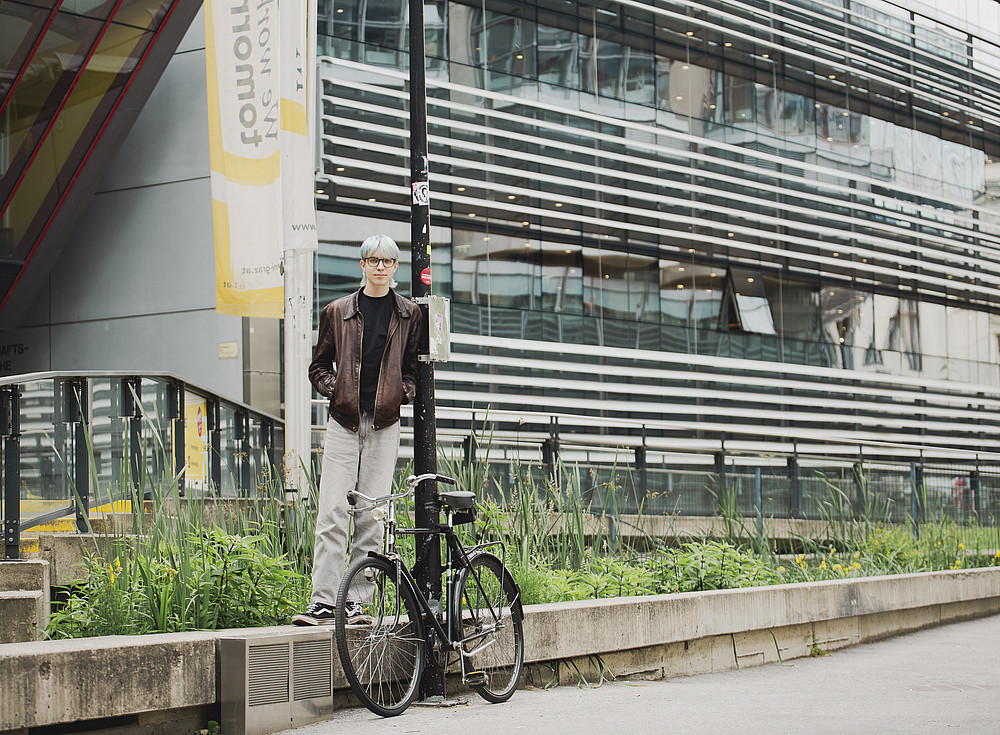
18-year-old Jan Hallmann has always been interested in socially relevant topics and their historical impact. After completing his A-levels, he realised that studying history was the right path for him. As part of a course, he gained an insight into the digital dimension of the humanities - an aspect that the versatility of the degree programme opened up to him. "At the end of the first semester, the course instructor asked me if I would consider working on a project - that was unexpected," recalls the Graz native. But curiosity prevailed. "Today it's a great opportunity to gain initial experience in research at an early stage."
Hallmann spends eight hours a week at the Institute for Digital Humanities analysing digital newspaper sources from the 18th century to the present day - with free time management. Some of the sources he analyses are also useful for his studies. However, he was already familiar with the University of Graz as a working environment before starting his studies: he completed a holiday internship in the university library for three consecutive summers. "That gave me the opportunity to gain my first insights into the digitisation of old books and other printed works."
On duty when others are celebrating
Hallmann works late into the night on Friday and Saturday evenings. He supplies users with books and literature they have ordered and closes the main library after closing time. "I enjoy the direct contact with people - explaining processes is also part of it." It's a good feeling to be able to make a concrete contribution to the running of the library, he explains. From time to time, he also has to help out as an "enquiry person" for visitors to the university. "After all, we're at the centre of the campus."
Hallmann says that studying and working are easy to combine. Many courses take place in the late afternoon or evening. "Being at the university late into the night - whether as a student or employee - is not a problem." After all, he is someone who likes to start the day quietly.