Begin of page section:
Page sections:

  • Go to contents (Accesskey 1)
  • Go to position marker (Accesskey 2)
  • Go to main navigation (Accesskey 3)
  • Go to sub navigation (Accesskey 4)
  • Go to additional information (Accesskey 5)
  • Go to page settings (user/language) (Accesskey 8)
  • Go to search (Accesskey 9)

End of this page section. Go to overview of page sections

Begin of page section:
Page settings:

English en
Deutsch de
Search
Login

End of this page section. Go to overview of page sections

Begin of page section:
Search:

Search for details about Uni Graz
Close

End of this page section. Go to overview of page sections


Search

Begin of page section:
Main navigation:

Page navigation:

  • University

    University
    • About the University
    • Organisation
    • Faculties
    • Library
    • Working at University of Graz
    • Campus
    Developing solutions for the world of tomorrow - that is our mission. Our students and our researchers take on the great challenges of society and carry the knowledge out.
  • Research Profile

    Research Profile
    • Our Expertise
    • Research Questions
    • Research Portal
    • Promoting Research
    • Research Transfer
    • Ethics in Research
    • Commission for Scientific Integrity
    Scientific excellence and the courage to break new ground. Research at the University of Graz creates the foundations for making the future worth living.
  • Studies

    Studies
    • Prospective Students
    • Students
    • Registration for Study Programme (Winter semester 2026/27)
  • Community

    Community
    • International
    • Location
    • Research and Business
    • Alumni
    The University of Graz is a hub for international research and brings together scientists and business experts. Moreover, it fosters the exchange and cooperation in study and teaching.
Topics
  • Sustainable University
  • Researchers answer
  • Work for us
Close menu

End of this page section. Go to overview of page sections

Begin of page section:
You are here:

University of Graz News Wenn Berge bröckeln: Die Erwärmung von Permafrost-Eis erhöht die Instabilität von Felsflanken

End of this page section. Go to overview of page sections

Tuesday, 13 June 2023

Wenn Berge bröckeln: Die Erwärmung von Permafrost-Eis erhöht die Instabilität von Felsflanken

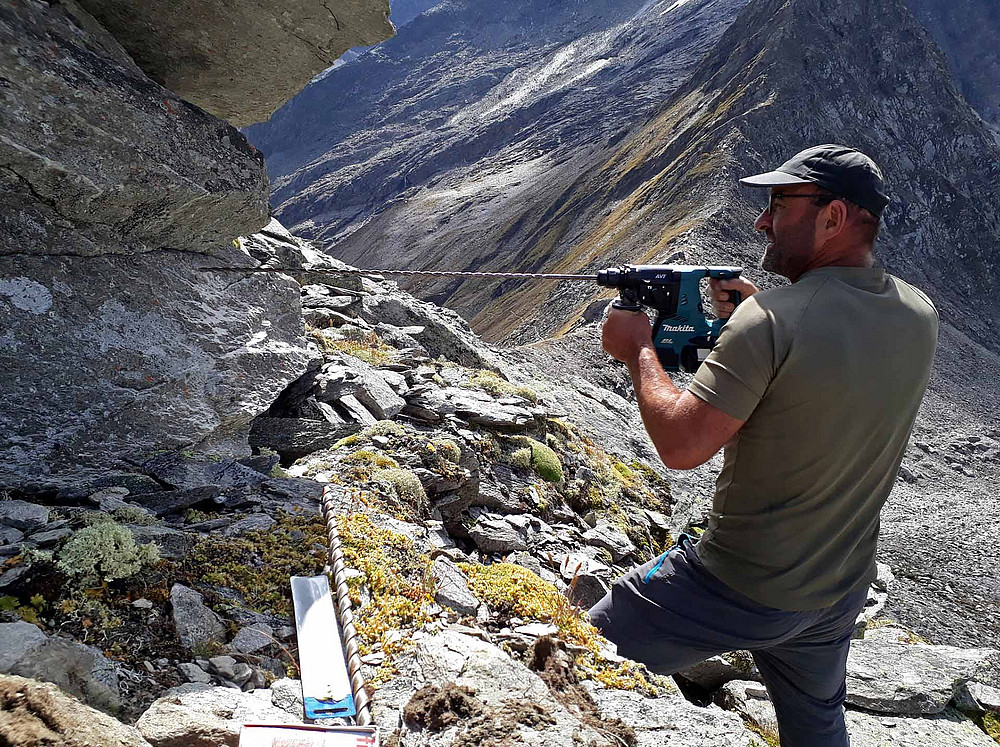
Andreas Kellerer-Pirklbauer bohrt im Gebirge einen Felsen an ©Alexander Doric

Mittels Felsbohrung untersucht Andreas Kellerer-Pirklbauer Permafrost im Hochgebirge. Foto: Alexander Doric

Der kapitale Felssturz am letzten Sonntag im Gemeindegebiet von Galtür/Tirol, bei dem am Fluchthorn ein halber Gipfel weggebrochen ist, wirft einmal mehr die Frage auf, ob Naturgefahren dieser Art im Gebirge zunehmen. „Über Felsstürze gibt es nur selten länger zurückreichende Aufzeichnungen, außer Zweifel steht aber, dass die durch den Klimawandel bedingte Erwärmung von Permafrost-Eis die Instabilität ganzer Felsflanken deutlich erhöht“, sagt Andreas Kellerer-Pirklbauer vom Institut für Geographie und Raumforschung der Universität Graz. Zwischen den Perioden 1891 bis 1920 und 1991 bis 2020 hat sich die Jahresmitteltemperatur um 1,8°C erhöht, die Sommertemperatur sogar um 2,5°C.

Dass Berge bröckeln ist grundsätzlich nichts Außergewöhnliches. Oder wie es Andreas Kellerer-Pirklbauer formuliert: „Das Gebirge hat die natürliche Neigung, kleiner zu werden. Dies kann langsam und unbemerkt, aber auch plötzlich und massiv passieren.“ Auch wenn es in der öffentlichen Wahrnehmung so scheint, als kämen Felsstürze immer häufiger vor, konkrete Zahlen für Österreich gibt es dazu nicht. Eines ist allerdings gewiss: Im Zuge des Klimawandels sind auch in höheren Lagen die Temperaturen gestiegen. Das führt nicht nur zu einem immer rasanteren Abschmelzen der Gletscher, auch das Permafrost-Eis, das den Untergrund wie Zement zusammenhält, erwärmt sich oder wird ganz zum Auftauen gebracht.

„Das Ausschmelzen von Permafrost oder auch das Eindringen von Wasser in Klüfte kann Gestein bis in mehrere Meter Tiefe lockern und in der Folge zu Felsstürzen führen“, erklärt Andreas Kellerer-Pirklbauer. „Wobei schon die bloße Erwärmung des Permafrost-Eises als Ursache ausreichen kann, denn wärmeres Eis ist mobiler, sprich kriecht besser, als kaltes.“ Häufig kommen noch weitere Effekte hinzu, etwa das Abschmelzen von Gletschereis, das den Fels zuvor stützte und Starkniederschläge, welche die Wassermenge und somit den Druck im Felsen erhöhen.

Was bedeutet das für Bewohner:innen und Tourist:innen vor Ort? Lässt sich das Risiko minimieren? „Nur bedingt“, bleibt der Forscher realistisch. „Sturzereignisse sind Teil der Natur im Gebirge. Das gilt auch für Höhenlagen ohne Permafrost. Um etwa Steinschlag auszulösen, brauche es nur tages- bis jahreszeitliche Frostwechsel, die den Untergrund bis in wenige Dezimeter unter die Oberfläche destabilisieren. Größere Felsstürze treten seltener auf, und es bedarf stärkerer Veränderungen im Gesteinsverband, damit solche Massen wie eben am Fluchthorn zu Tal donnern.“ Gefahrenbereiche zu erkennen, sie zu beobachten und entsprechende Sicherungsmaßnahmen zu treffen, wäre eine Möglichkeit, wobei vieles auch nicht vorhersehbar sei. Die Natur bleibt eben immer ein Stück weit unberechenbar.
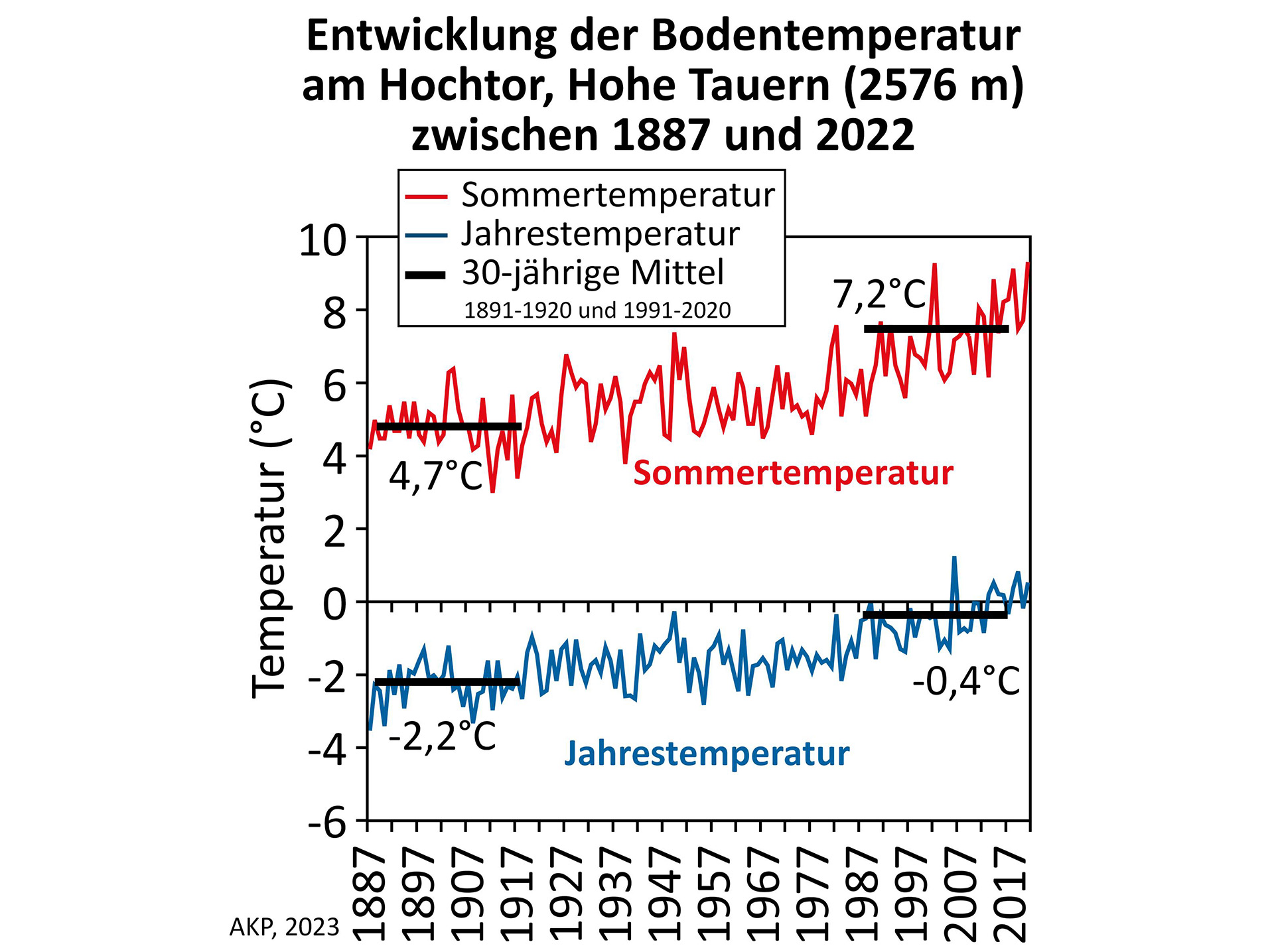
Grafik: Kellerer-Pirklbauer, Uni Graz ©Kellerer-Pirklbauer / Uni Graz
©Kellerer-Pirklbauer / Uni Graz
Grafik: Kellerer-Pirklbauer, Uni Graz
created by Gudrun Pichler

Related news

Complying with the norm: Why Do Standards Shape Our Lives, Elisabeth Staudegger?

Standards determine whether a sheet of paper fits in a printer or whether a charging plug can power multiple devices. These standards shape our everyday lives. But who actually sets these standards? Where are the weaknesses, and how could science help to improve them? Elisabeth Staudegger, Head of the ‘Law and IT’ Department at the Institute for Legal Foundations at the University of Graz, host the Academic Standards Day on 16 June. Here she relays how sciences can contribute to the topic of standardisation and reveals her personal favourite standard.

More body awareness than a culture war

In Italy, sex education lessons will in future only be permitted with parental consent, and will be banned entirely in nurseries and primary schools. At the same time, Pride Month highlights why knowledge about the body, relationships, boundaries and diversity is important for young people. A study by the University of Graz shows how important knowledge about the body, contraception, relationship skills and protection against violence is

Will Austria win the World Cup? Mathematician reveals calculation method

Michael Fischer uses the football tournament as a practical example for highschool lessons.

Survival strategies: How plants respond to drought

According to Geosphere Austria, this spring was the driest in Austria since records began around 170 years ago. The low rainfall put particular pressure on the agricultural sector. And climate change is set to make the situation even worse in the coming decades. We asked Johannes Liesche, a professor at the Department of Biology at the University of Graz, how plants react to water shortages and how they survive periods of drought.

Begin of page section:
Additional information:

University of Graz
Universitaetsplatz 3
8010 Graz
Austria
  • Contact
  • Web Editors
  • Moodle
  • UNIGRAZonline
  • Imprint
  • Data Protection Declaration
  • Accessibility Declaration
Weatherstation
Uni Graz

End of this page section. Go to overview of page sections

End of this page section. Go to overview of page sections

Begin of page section:

End of this page section. Go to overview of page sections