When walking through meadows or forests, you immerse yourself in a complex ecosystem without even noticing it. Thousands upon thousands of tiny creatures crawl and scurry through the soil, decomposing dead biomass and thus ensuring a healthy natural environment. These fascinating but little-studied soil dwellers are the focus of the Pillars of Soils project, which is being carried out by the University of Graz in collaboration with the Austrian Academy of Sciences.
“When it comes to soil quality, most people think of earthworms, but the real VIPs in the soil are actually horn mites, springtails, and millipedes,” says biologist Sylvia Schäffer. “They also occur where there are hardly any earthworms.” A census of the soil is therefore currently being carried out at 18 locations in Styria and Lower Austria.
New territory
“The exciting thing about this is that this data on different soil types does not yet exist. It's uncharted territory,” says Michaela Bodner. “It's important that we always examine soils that are close to nature and soils that have been influenced by humans at the various locations.” It will take several years to determine how the “population” at these locations is changing and why. But at least one finding is already clear: “There are fewer different species in cultivated areas than in untouched areas, but they are more numerous,” says Bodner. “Less biodiversity does not therefore automatically mean poorer soil quality.”
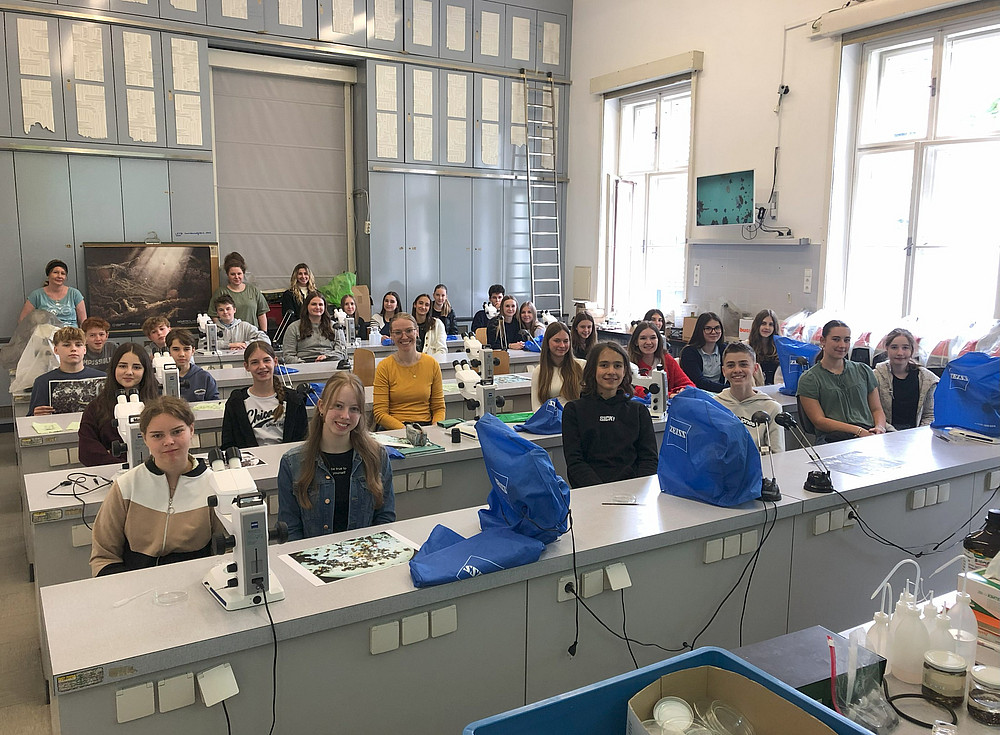
An important part of the project is also the collaboration with school students. A first partner school has already been found: the Bad Gleichenberg private high school. “The young people collected soil samples in three different subjects,” explains Schäffer. “In chemistry class, they analyzed the mineral content, in technical studies, they built Berlese filters to extract the tiny organisms from the soil, and in biology, they counted and examined the different species.” A particular highlight was a day spent in the laboratories at the University of Graz.
Search for schools
“This is a real flagship project for us,” say the biologists. “Both the teachers and the students were enthusiastic. The students not only acquired new skills, but also overcame their fear of creepy-crawlies.” The scientists now want to establish the high school as a permanent monitoring site and hope to inspire other schools to join the project. “The students learn how to work as researchers and discover how exciting science is,” Schäffer sums up.
And if, like the students, you want to see the world through new eyes, the University of Graz, with its wide range of science subjects, is the right place for you.
Would you like to be part of projects like this, experience science up close, and see the world through new eyes? Discover the diversity of science studies at the University of Graz and start your own research journey!