Begin of page section:
Page sections:

  • Go to contents (Accesskey 1)
  • Go to position marker (Accesskey 2)
  • Go to main navigation (Accesskey 3)
  • Go to sub navigation (Accesskey 4)
  • Go to additional information (Accesskey 5)
  • Go to page settings (user/language) (Accesskey 8)
  • Go to search (Accesskey 9)

End of this page section. Go to overview of page sections

Begin of page section:
Page settings:

English en
Deutsch de
Search
Login

End of this page section. Go to overview of page sections

Begin of page section:
Search:

Search for details about Uni Graz
Close

End of this page section. Go to overview of page sections


Search

Begin of page section:
Main navigation:

Page navigation:

  • University

    University
    • About the University
    • Organisation
    • Faculties
    • Library
    • Working at University of Graz
    • Campus
    Developing solutions for the world of tomorrow - that is our mission. Our students and our researchers take on the great challenges of society and carry the knowledge out.
  • Research Profile

    Research Profile
    • Our Expertise
    • Research Questions
    • Research Portal
    • Promoting Research
    • Research Transfer
    • Ethics in Research
    • Commission for Scientific Integrity
    Scientific excellence and the courage to break new ground. Research at the University of Graz creates the foundations for making the future worth living.
  • Studies

    Studies
    • Prospective Students
    • Students
    • Welcome Weeks for First Year Students
  • Community

    Community
    • International
    • Location
    • Research and Business
    • Alumni
    The University of Graz is a hub for international research and brings together scientists and business experts. Moreover, it fosters the exchange and cooperation in study and teaching.
Topics
  • Sustainable University
  • Researchers answer
  • Work for us
Close menu

End of this page section. Go to overview of page sections

Begin of page section:
You are here:

University of Graz News Tür auf

End of this page section. Go to overview of page sections

Thursday, 22 July 2021

Tür auf

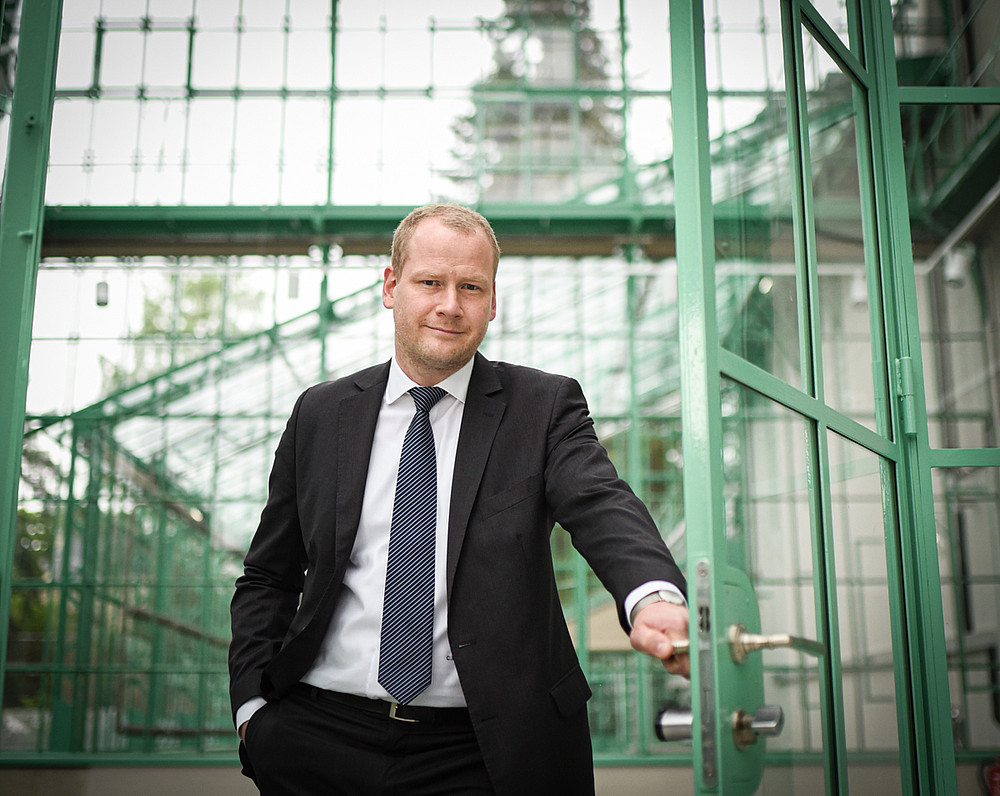
„Erholung ist nichts, was der Staat sicherzustellen hat“, betont der Rechtswissenschafter Christoph Bezemek. Foto: Uni Graz/Tzivanopoulos

„Erholung ist nichts, was der Staat sicherzustellen hat“, betont der Rechtswissenschafter Christoph Bezemek. Foto: Uni Graz/Tzivanopoulos

Christoph Bezemek, Spezialist für Öffentliches Recht, tritt für Grenzöffnungen und mehr Freiheit ein

Abstand, Maskenpflicht und Ausgangsbeschränkungen sind im vergangenen Jahr zur Normalität geworden. Die Impfung macht nun Hoffnung, dass wir uns bald wieder ohne Grenzen bewegen können. „Ein Kategorienfehler“, wie Christoph Bezemek, Spezialist für Öffentliches Recht, meint. „Freiheit ist nämlich der Grundmodus, alles andere ist die Ausnahme.“ Damit sei die Rückführung in diesen „Grundmodus“ kein Privileg, sondern verfassungsrechtlich angezeigt, sobald die Möglichkeit dazu bestehe. „Wenn unmittelbar Gefährdete immunisiert sind, wird die Rechtfertigung von Beschränkungen immer schwächer“, konkretisiert der Jurist. Zunächst sei dem Schutz des Lebens und damit vulnerablen Gruppen hohes Gewicht eingeräumt worden, doch diese Maßnahmen müssen permanent evaluiert werden.

Nicht von heute auf morgen beseitigen lassen sich laut Bezemek die unterschiedlichen Einreisebestimmungen innerhalb Europas: „Ebenso fehlt der EU die gestaltende Kompetenz im Bereich des Gesundheitswesens. Hier benötigen wir in Zukunft sicherlich gesamteuropäische Lösungen. Auch um die Union wieder zu stärken.“ Politische Unterstützung können wir uns einstweilen nicht erhoffen, wenn die Fahrt in den Urlaub zum Hürdenlauf wird: „Erholung ist nichts, was der Staat sicherzustellen hat“, weiß der Forscher. Sehr wohl sei aber gemäß dem Recht auf Privat- und Familienleben der selbstbestimmte Lebensentwurf jeder und jedes Einzelnen zu respektieren. Und damit sei sichergestellt, dass wir uns auch außerhalb der eigenen vier Wände wieder so richtig entspannen dürfen. 


Mehr zum Thema "Können wir jetzt durchatmen?" in der aktuellen Online-Ausgabe der UNIZEIT.
created by Joachim Hirtenfellner

Related news

Electrifying: Researchers film the first moments on the way from light to electricity

Physicists at the University of Graz (Austria), in collaboration with colleagues from Marburg University and Forschungszentrum Jülich (Germany), have achieved a scientific breakthrough. For the first time, the generation of electrical energy from light has been filmed and described theoretically. This work is of far-reaching significance, not least for optimising sustainable energy production from photovoltaics. This is because it provides fundamental building blocks for understanding the physical processes that take place, for example, in organic solar cells. The paper was published in the journal Physical Review X, one of the world’s most prestigious physics journals.

University of Graz: Working together to make Styria a sustainable centre of learning

Round table calls for sustainable funding for the 2028–2030 performance agreement period between the five Styrian universities and the federal government.

How can we teach using YouTube and AI? The University of Graz is strengthening media education in schools

A journey through the blood vessels using VR headsets brings biology lessons to life. An interactive quiz brings physics to life. The YouTube video explains the First World War. Whilst mobile phones are increasingly being banned from the classroom, social media platforms, apps and AI are playing an ever-greater role in knowledge transfer at school. But how can teaching with media be made even more effective? What are the challenges in media-based teaching? At the University of Graz, researchers are discussing these issues at a conference being held in Austria for the first time.

Jurassic Sounds: Biologist reconstructs insect songs from 165 million years ago

It was apparently not just the roars of the dinosaurs that made up the soundscape of the animal world during the Jurassic period. Crickets and grasshoppers communicated through a variety of songs and high-pitched sounds, as Thorin Jonsson from the Institute of Biology at the University of Graz discovered together with colleagues from the universities of Lincoln, Bristol (UK), Beijing (China) and Tempe (USA). The findings on what are so far the oldest traces of sound on Earth have just been published in the journal PNAS.

Begin of page section:
Additional information:

University of Graz
Universitaetsplatz 3
8010 Graz
Austria
  • Contact
  • Web Editors
  • Moodle
  • UNIGRAZonline
  • Imprint
  • Data Protection Declaration
  • Accessibility Declaration
Weatherstation
Uni Graz

End of this page section. Go to overview of page sections

End of this page section. Go to overview of page sections

Begin of page section:

End of this page section. Go to overview of page sections