



Begin of page section:
Page sections:

  • Go to contents (Accesskey 1)
  • Go to position marker (Accesskey 2)
  • Go to main navigation (Accesskey 3)
  • Go to sub navigation (Accesskey 4)
  • Go to additional information (Accesskey 5)
  • Go to page settings (user/language) (Accesskey 8)
  • Go to search (Accesskey 9)

End of this page section. Go to overview of page sections

Begin of page section:
Page settings:

English en
Deutsch de
Search
Login

End of this page section. Go to overview of page sections

Begin of page section:
Search:

Search for details about Uni Graz
Close

End of this page section. Go to overview of page sections


Search

Begin of page section:
Main navigation:

Page navigation:

  • University

    University
    • About the University
    • Organisation
    • Faculties
    • Library
    • Working at University of Graz
    • Campus
    Developing solutions for the world of tomorrow - that is our mission. Our students and our researchers take on the great challenges of society and carry the knowledge out.
  • Research Profile

    Research Profile
    • Our Expertise
    • Research Questions
    • Research Portal
    • Promoting Research
    • Research Transfer
    • Ethics in Research
    • Commission for Scientific Integrity
    Scientific excellence and the courage to break new ground. Research at the University of Graz creates the foundations for making the future worth living.
  • Studies

    Studies
    • Prospective Students
    • Students
    • Registration for Study Programme (Winter semester 2026/27)
  • Community

    Community
    • International
    • Location
    • Research and Business
    • Alumni
    The University of Graz is a hub for international research and brings together scientists and business experts. Moreover, it fosters the exchange and cooperation in study and teaching.
Topics
  • Sustainable University
  • Researchers answer
  • Work for us
Close menu

End of this page section. Go to overview of page sections

Begin of page section:
You are here:

University of Graz News Green vehicles

End of this page section. Go to overview of page sections

Monday, 28 October 2019

Green vehicles

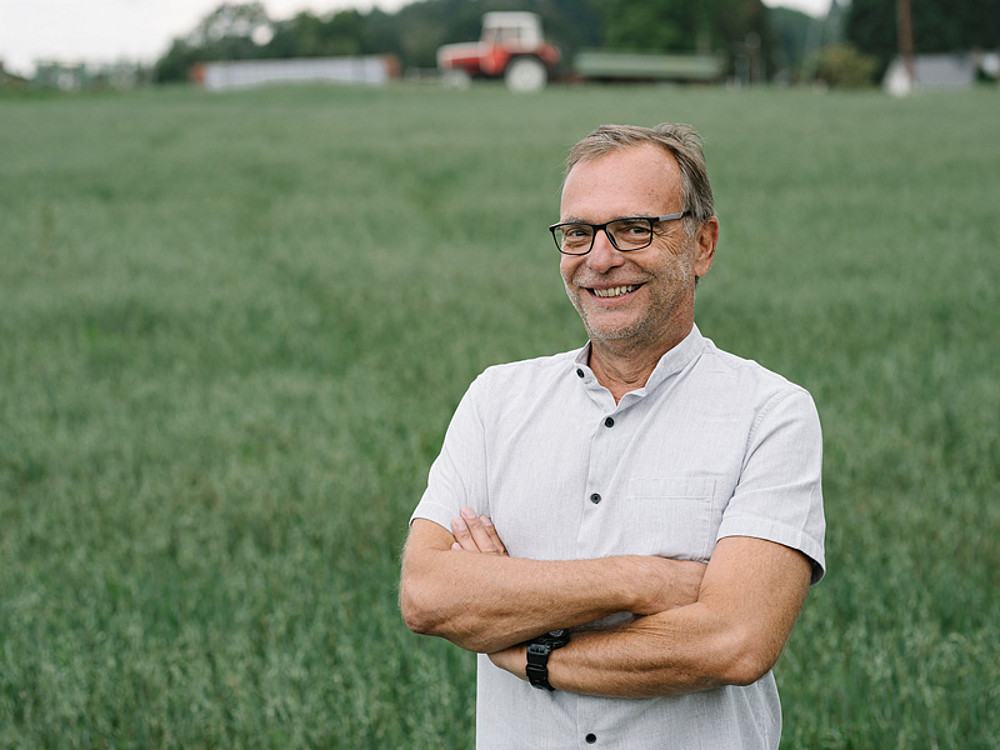
Martin Mittelbach analyses ecological vehicles. Photo: Uni Graz/Kernasenko

Martin Mittelbach analyses ecological vehicles. Photo: Uni Graz/Kernasenko

University of Graz chemist examines which form of fuel is best for climate protection

Are diesel engines really filthy polluters, electric cars clean, and hydrogen-powered vehicles the future? Martin Mittelbach is an expert in renewable resources at the University of Graz Institute of Chemistry; he has been analysing various different options. His conclusion is sobering: “New drive technologies are good and make sense, but affordable environmentally-friendly solutions for heavy transport remain a distant prospect.” On the other hand, his assessment of the much maligned particulate-emitters is not as bad as might be expected: “Diesel engines are the most efficient combustion engines and they will be difficult to replace for transporting freight by road or water for the next few decades.” Synthetic fuels or biodiesel can improve the environmental footprint. Biodiesel can be produced from residual and waste biomass, or from fast-growing plants – and Mittelbach sees great potential in this.

How green are e-vehicles?
The Graz researcher regards the massively hyped – and also much criticised – electric vehicles as an important alternative in the transport sector, even if it takes many thousand kilometres of use to balance out the energy consumed to manufacture the batteries. “Small e-cars have a significantly better environmental footprint than a Tesla, and they are ideal for short trips,” explains the chemist, “but we also have to consider where the electricity they use for charging has come from.”

The highest priority however, according to Mittelbach, is to avoid private cars altogether, as far as possible. “Individualised transport should be kept out of inner cities,” he emphasises. Local emissions, nitrogen oxide and particulates have a markedly significant impact in conurbations. It is essential to expand public transport networks, using only electric-driven systems - but not heavy, inflexible trams. “Studies show that trolley buses are actually a relatively economical, flexible and environmentally-friendly transport option – and of course battery-powered vehicles.”

Heroic hydrogen
Complex to produce, with poor efficiency – that is how Mittelbach describes the much-discussed hydrogen fuel cells. The hydrogen used to power them is produced using a great deal of energy, generated from natural gas – which is also not a sustainable resource. The advantages over electricity, he explains, are ease of storage, rapid refuelling and also the potential for use in trucks and planes. “On the other hand, at the moment this is about ten to one hundred times more expensive”, according to Mittelbach’s analysis. In the long term, however, he sees e-mobility and hydrogen as the only alternatives for the transport sector: “They will complement each other, and the competition factor will accelerate development.”

The real priority from Mittelbach’s perspective is to re-examine our entire transport and mobility systems: “A litre of milk travels on average several hundred kilometres before it gets to the supermarket shelf. That’s crazy!”

For more information on this subject see the current edition of UNIZEIT.

created by Dagmar Eklaude

Related news

Complying with the norm: Why Do Standards Shape Our Lives, Elisabeth Staudegger?

Standards determine whether a sheet of paper fits in a printer or whether a charging plug can power multiple devices. These standards shape our everyday lives. But who actually sets these standards? Where are the weaknesses, and how could science help to improve them? Elisabeth Staudegger, Head of the ‘Law and IT’ Department at the Institute for Legal Foundations at the University of Graz, host the Academic Standards Day on 16 June. Here she relays how sciences can contribute to the topic of standardisation and reveals her personal favourite standard.

More body awareness than a culture war

In Italy, sex education lessons will in future only be permitted with parental consent, and will be banned entirely in nurseries and primary schools. At the same time, Pride Month highlights why knowledge about the body, relationships, boundaries and diversity is important for young people. A study by the University of Graz shows how important knowledge about the body, contraception, relationship skills and protection against violence is

Will Austria win the World Cup? Mathematician reveals calculation method

Michael Fischer uses the football tournament as a practical example for highschool lessons.

Survival strategies: How plants respond to drought

According to Geosphere Austria, this spring was the driest in Austria since records began around 170 years ago. The low rainfall put particular pressure on the agricultural sector. And climate change is set to make the situation even worse in the coming decades. We asked Johannes Liesche, a professor at the Department of Biology at the University of Graz, how plants react to water shortages and how they survive periods of drought.

Begin of page section:
Additional information:

University of Graz
Universitaetsplatz 3
8010 Graz
Austria
  • Contact
  • Web Editors
  • Moodle
  • UNIGRAZonline
  • Imprint
  • Data Protection Declaration
  • Accessibility Declaration
Weatherstation
Uni Graz

End of this page section. Go to overview of page sections

End of this page section. Go to overview of page sections

Begin of page section:

End of this page section. Go to overview of page sections


